


Table of Contents
- Why Liver Treats Work So Well for Cat Training
- Choosing the Right Liver Treats for Training Sessions
- How to Clicker Train a Cat with Treats
- Getting Cat Training Treat Size Right
- How Often to Give Cats Liver Treats During Training
- Freeze-Dried Liver Treats for Kittens: What You Need to Know
- Troubleshooting Common Training Challenges with Liver Treats
- Conclusion
- Frequently Asked Questions
Last Updated: October 21, 2026
Why Liver Treats Work So Well for Cat Training
Using liver treats for cat training is one of the most effective reward-based training methods available. Cats find the intense flavor and aroma of liver almost irresistible, which makes these treats powerful motivators for learning new behaviors.
The reason liver works so well comes down to biology. Cats are obligate carnivores, meaning their taste preferences are hardwired toward meat. Freeze-dried liver preserves that rich, concentrated flavor that fresh liver has, but in a shelf-stable form. When a cat sees or smells a liver treat, their food motivation spikes instantly.
This matters for training because consistency is everything. A treat that barely interests your cat won't reinforce the behavior you're teaching. A treat that commands full attention? That's what changes behavior. Positive reinforcement works when the reward is something your cat genuinely wants.
Switch to high-value liver treats, and the same cats that ignored kibble-based rewards suddenly nail basic commands and behaviors. The difference isn't the training technique, it's the reward itself.
Choosing the Right Liver Treats for Training Sessions
Not all liver treats are created equal. When you're selecting treats for training, you need to think about ingredient quality, processing, and what's actually in the package.
The best liver treats contain one ingredient: liver. That's it. No fillers, no binding agents, no preservatives hiding behind vague labels. When a treat is truly single-ingredient, you know exactly what you're rewarding your cat with.
Freeze-dried processing is the gold standard for cat training treats. This method removes moisture while preserving nutrients and flavor. Your cat gets the nutritional benefit of whole liver without the spoilage risk of fresh meat. Freeze-dried treats are shelf-stable, portable, and easy to portion for training sessions.
Look for treats made from human-grade beef liver sourced from the United States. This ensures the meat meets food safety standards and comes from a transparent supply chain. Simplified Freeze Dried uses only American beef liver, no imported sources, and we only use meat that's safe for human consumption.

When you open a bag of quality liver treats, they should smell strongly of liver. That pungent aroma is what makes cats respond so quickly during training. A faint or mild smell means the freeze-drying process didn't preserve the flavor intensity you need for effective training.
How to Clicker Train a Cat with Treats
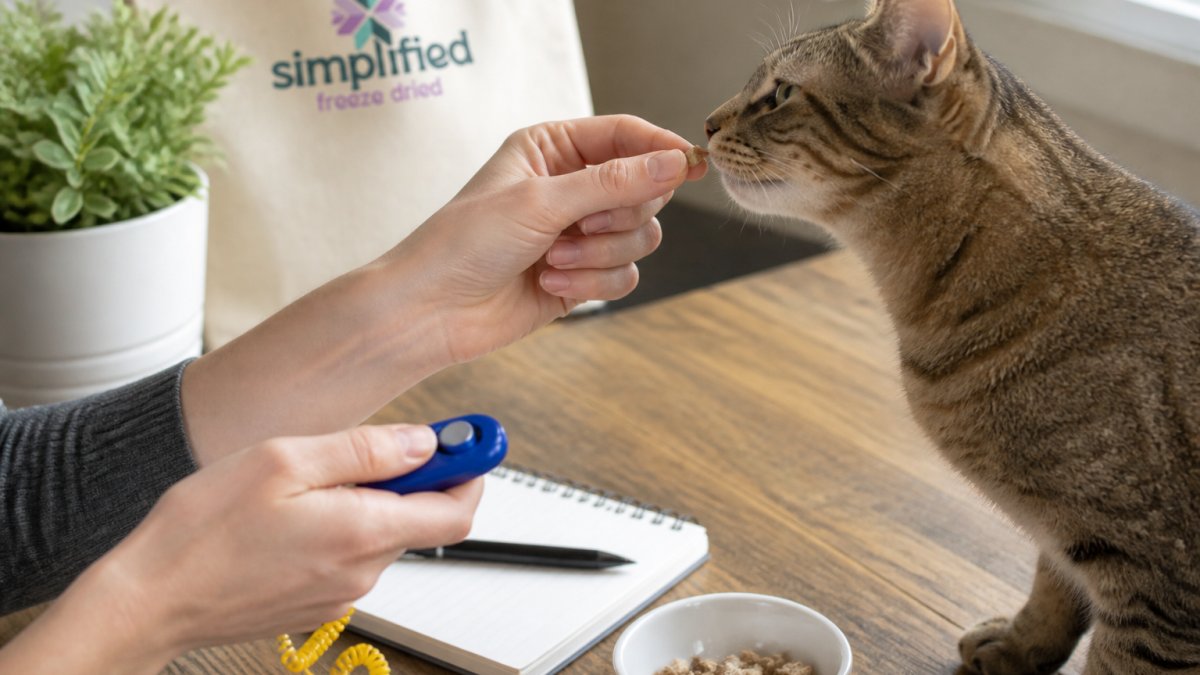
Clicker training pairs a distinct sound (the clicker) with an immediate reward to mark the exact moment your cat performs a desired behavior. This method works exceptionally well with liver treats because the timing creates a clear cause-and-effect connection in your cat's mind.
Here's how the process works:
-
Introduce the clicker first. Click once, then immediately give your cat a small liver treat. Repeat this 5-10 times in short sessions. Your cat learns that the click sound means a reward is coming.
-
Choose a simple behavior to start. Sitting, touching your hand with their nose, or stepping into a specific spot are good first behaviors. Pick something your cat can do easily.
-
Wait for the behavior, then click and reward. When your cat performs the action, even by accident, click immediately and give a liver treat within one second. The timing is critical. The click marks the exact moment they did the right thing.
-
Repeat in short sessions. Train for 2-5 minutes at a time. Cats have shorter attention spans than dogs, so brief, focused sessions work better than long ones.
-
Gradually reduce treat frequency. Once your cat reliably performs the behavior after the click, you can click and reward every other success, then every third success. This keeps them engaged without overfeeding.
The clicker becomes a bridge between the behavior and the reward. Your cat learns the pattern: behavior → click → treat. Eventually, the click itself becomes rewarding, and you can space out the physical treats.
Getting Cat Training Treat Size Right
Treat size is one of the most overlooked factors in cat training. Using pieces that are too large defeats the purpose of training because your cat spends time chewing instead of moving on to the next repetition.
For cat training, you want mini-sized pieces. These small morsels deliver the flavor and reward without the chewing time. Your cat gets the taste they love, gets rewarded quickly, and is ready for the next training repetition in seconds.
The difference between regular-sized and mini-sized treats matters more than most people realize. Regular-sized pieces are designed as treats for occasional snacking, they're meant to be savored. During training, you need rapid-fire rewards that your cat can consume instantly and stay focused on the next behavior.
Think about the training flow: your cat sits, you click, you deliver a treat, your cat eats it, you're ready for the next repetition. This cycle should take 3-5 seconds total. A large treat throws off this rhythm. Your cat is still chewing while you're trying to set up the next behavior.
Simplified Freeze Dried offers mini-sized pieces specifically designed for training. These kibble-sized morsels give you the high-value reward of freeze-dried liver without the bulk. You can hold multiple pieces in your hand, deliver one quickly, and keep training momentum going.
| Treat Size | Best For | Training Fit |
|---|---|---|
| Mini-sized pieces | Cat training sessions | Excellent, quick consumption |
| Regular-sized pieces | Occasional treats | Poor, slows training pace |
How Often to Give Cats Liver Treats During Training
The frequency of liver treats during training depends on your cat's daily food intake and your training goals. Balance is key, you want enough rewards to reinforce behavior without overfeeding.
Simplified Freeze Dried Beef Liver Treats for Dogs & Cats →
During a single training session, you can give multiple liver treats over 2-5 minutes. Since each mini-sized piece is small, you're not overloading your cat's stomach. The treats are rewards for specific behaviors, not meals.
Spread training across your week rather than doing one long session daily. Three short training sessions per week works well for most cats. This gives you consistency without overwhelming your cat or creating treat fatigue.
Pay attention to your cat's overall diet. If liver treats are part of your cat's daily food intake, they should make up only a small portion of total calories. Treats, including training rewards, should supplement, not replace, your cat's regular meals.
Some cats lose interest in training if they're already full from meals. Train before feeding times, or use training as an interactive way to deliver part of their daily food. This keeps motivation high and prevents overfeeding.
Watch your cat's response during training. If they're ignoring the treats or losing focus, they might be full or not hungry enough. Adjust timing and frequency based on what you observe. Every cat is different.
Freeze-Dried Liver Treats for Kittens: What You Need to Know
Kittens can start training with freeze-dried liver treats as soon as they're eating solid food, typically around 8-10 weeks old. Their natural prey drive and food motivation make them excellent candidates for reward-based training early on.
Freeze-dried liver is safe for kittens because it's a whole-food protein with no additives or fillers. The freeze-drying process preserves nutrients without adding anything harmful. Kittens benefit from the same high-quality, single-ingredient treats that adult cats do.
Start with even smaller portions for kittens than you would for adult cats. A kitten's stomach is smaller, and their caloric needs are different. Break mini-sized pieces in half if needed. The goal is to deliver a reward that motivates without overfeeding a young animal.
Kittens learn quickly with positive reinforcement. Teaching basic behaviors early, like coming when called, sitting on command, or using a scratching post, sets a foundation for good habits throughout their life. Freeze-dried liver treats make this learning process fast and enjoyable for both you and your kitten.
As your kitten grows into an adult cat, you can maintain training with the same treats. The consistency of the reward keeps the learned behaviors strong. Many cat owners find that cats trained with liver treats as kittens remain responsive to training throughout their lives.
Troubleshooting Common Training Challenges with Liver Treats
Even with high-value treats like freeze-dried liver, training sometimes hits snags. Understanding common problems helps you adjust your approach and keep progress moving forward.
Your cat refuses the liver treats. This is rare but happens occasionally. Some cats have strong taste preferences or sensory sensitivities. If your cat ignores liver treats, try a different protein source, some cats prefer chicken or beef in different forms.
Your cat drops or ignores treats mid-training. This usually means your cat is full or distracted. Stop the session and try again later, before meals. If distractions are the issue, move to a quieter room. Some cats train better in low-stimulation environments.
Your cat becomes distracted and stops responding. Training sessions that are too long cause this. Shorten your sessions to 2-3 minutes. Cats have shorter attention spans than dogs. Frequent short sessions beat occasional long ones every time.
You're not seeing behavior improvement after several sessions. Make sure you're clicking and rewarding within one second of the behavior. Timing is everything in clicker training. Also verify that you're training one behavior at a time. Trying to teach multiple behaviors simultaneously confuses cats.
Your cat seems to have forgotten a previously learned behavior. Cats need regular practice to maintain learned behaviors. If you take a break from training, refresh the behavior with a few practice sessions.
Conclusion
Using liver treats for cat training transforms how quickly and effectively your cat learns new behaviors. The high-value reward of freeze-dried liver creates strong motivation and clear cause-and-effect learning. Combined with clicker training and consistent practice, liver treats give you a practical, humane way to shape cat behavior.
Start with Simplified Freeze Dried's mini-sized freeze-dried liver treats, made from 100% American beef liver, single-ingredient, and designed specifically for training. Our freeze-dried process preserves maximum nutrition while keeping treats shelf-stable and easy to portion. Your cat will respond to the concentrated flavor, and you'll see training progress within the first few sessions.
Frequently Asked Questions
Are liver treats good for training cats?
Yes, liver treats are excellent for cat training because they're high-protein, flavorful, and highly motivating. Cats find the strong aroma and taste irresistible, making them ideal for positive reinforcement. Freeze-dried liver treats preserve the natural flavor and nutrition while being shelf-stable and mess-free during training sessions. Their small size makes them perfect for frequent rewards without overfeeding.
How often can I give my cat liver treats?
Liver treats should be used as training rewards within your cat's daily calorie intake. During active training sessions, you can offer multiple small pieces throughout the day, but balance this with their regular meals. Most cats benefit from 5-10 small training sessions daily with individual treats as rewards. Monitor your cat's overall intake and adjust meal portions if you're using treats frequently to maintain healthy weight.
Can kittens have freeze-dried liver treats?
Yes, kittens can enjoy freeze-dried liver treats, but introduce them gradually after 8 weeks of age. Start with tiny pieces to ensure they can chew and swallow safely. Freeze-dried liver is nutrient-dense and perfect for training young cats, but use it sparingly since kittens have smaller stomachs. Always supervise and ensure treats don't replace their kitten food, which is formulated for their growth and development needs.
How small should training treats be for cats?
Training treats for cats should be pea-sized or smaller, roughly the size of a grain of rice. This size allows for frequent rewards without excessive calories and keeps your cat engaged for longer training sessions. Mini-sized pieces are ideal because they're small enough for quick consumption and hand feeding, maintaining your cat's focus on the training cue rather than chewing. Freeze-dried liver naturally breaks into appropriate training sizes.