


Table of Contents
- Why Freeze Dried Liver Works as a Cat Food Topper
- Benefits of Freeze Dried Liver for Cats
- How to Serve Freeze Dried Liver: Step-by-Step
- How Much Freeze Dried Liver for Cats Is Safe?
- Best Cat Food Toppers for Picky Eaters
- How to Store Freeze Dried Pet Treats
- Common Mistakes and Allergy Troubleshooting
- Frequently Asked Questions
Last Updated: September 10, 2026
Why Freeze Dried Liver Works as a Cat Food Topper
Freeze dried liver is a single-ingredient protein that turns a refused bowl of kibble into something a cat will actually finish. It works because the freeze-drying process removes moisture while leaving the aroma, fat, and nutritional structure largely intact, so the scent that triggers a cat's appetite survives the bag.
That last point matters more than most owners realize. Cats decide whether to eat with their noses before their mouths ever touch the food. A topper that smells like real meat does the persuading for you.
This guide from Simplified Freeze Dried walks through serving methods, safe portions, storage, and the mistakes that cause owners to give up on toppers too early. Below, we'll show you exactly how to use freeze dried liver as a cat food topper without overdoing it or wasting product.
What Makes Liver So Appealing to Cats
Liver is one of the most nutrient-dense organ meats available, and cats are wired to want it. It carries a strong, distinct aroma that reads as "fresh kill" to a feline nose, plus a soft texture that crumbles easily into wet or dry food.
Cats are obligate carnivores. They have no biological need for grains, fillers, or plant proteins, and many will reject food that contains them. A plain liver topper sidesteps that problem entirely because there's nothing in it except liver.

The aroma is the real mechanism here. Warming a crumble slightly or adding a few drops of water releases more of that scent, which is why a topper that seems to do nothing dry can work almost immediately once it's moistened.
Benefits of Freeze Dried Liver for Cats
The main benefit of freeze dried liver for cats is straightforward: it adds highly bioavailable animal protein and fat to a meal without adding fillers, grains, or artificial flavoring. For a picky eater, that's often the difference between a full bowl and a wasted one.
Freeze-drying preserves nutrients by removing water at low temperature rather than cooking the meat. The result is a shelf-stable product that keeps much of the nutritional value of raw liver without the handling risks of raw meat.
Single-Ingredient Nutrition Without Fillers
A true single-ingredient liver treat lists one thing on the label: liver. No binding agents, no preservatives, no "natural flavors" doing quiet work in the background.
That simplicity matters most for cats with known sensitivities. When a food or treat contains ten ingredients, isolating the culprit behind a reaction is guesswork. With one ingredient, you either see a reaction or you don't, and you know exactly what caused it.
Simplified Freeze Dried builds its beef liver line around this idea. The company uses only 100% American beef liver, never imported product and never denatured meat, and cuts each piece once before freeze-drying rather than grinding and reforming it.

How to Serve Freeze Dried Liver: Step-by-Step
Serving freeze dried liver takes about two minutes once you've done it a few times. The method matters more than the amount at this stage, because how you present the topper determines whether your cat engages with it at all.
What you'll need:
- Freeze dried liver pieces or powder
- A small bowl for your cat's regular food
- Warm water (optional, for rehydration)
- Your fingers or a small spoon for crumbling
Step 1: Start with a small amount. [Time: 1 minute] Begin with roughly a quarter of a piece for a cat. You're testing acceptance, not feeding a meal.
Step 2: Crumble it over the food. [Time: 1 minute] Break the liver into a fine crumble and scatter it across the surface of the kibble or wet food. Don't bury it. The aroma needs to hit your cat before the first bite.
Step 3: Add moisture if needed. [Time: 1 minute] Sprinkle a few drops of warm water over the crumble. This releases more scent and softens the texture for cats who prefer wet food.
Step 4: Offer the bowl and step back. [Time: 1 minute] Give your cat space. Most will investigate within a minute or two if the aroma is doing its job.
Expected result: Your cat approaches the bowl and begins eating within a few minutes. If not, see the troubleshooting section below before increasing the amount.
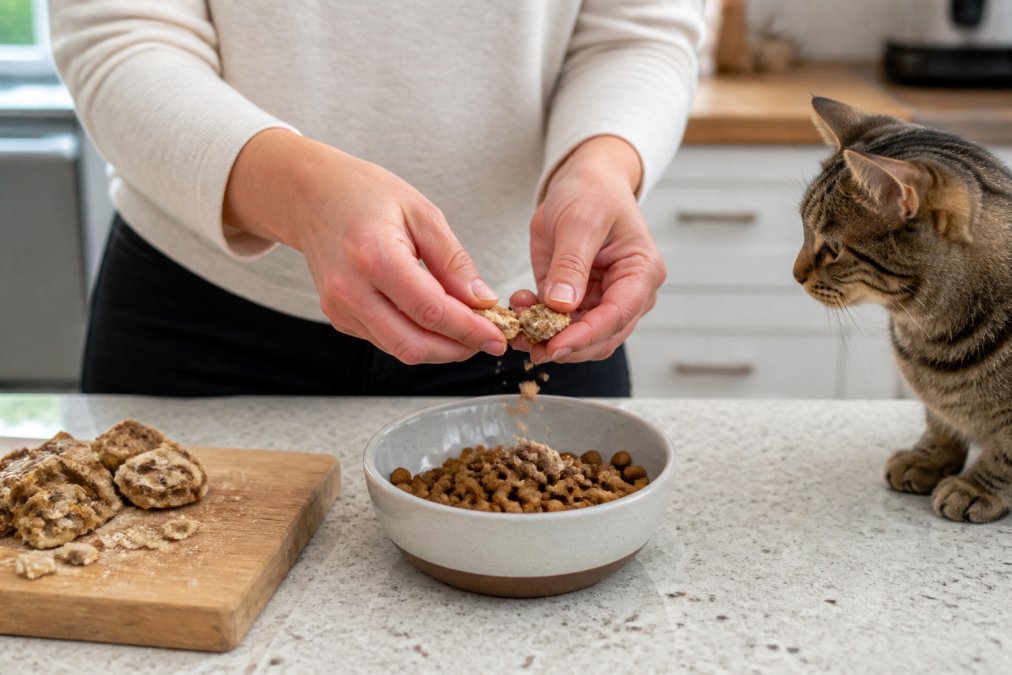
Crumbling and Rehydrating Techniques
Crumbling is the default method, and it works for most cats. Rub the piece between your fingers or press it with the back of a spoon until it breaks into small flakes. A finer crumble spreads the aroma more evenly across the bowl.
Rehydration is the technique most owners skip, and it's often the one that works. Place a piece in a small dish, add a tablespoon of warm (not hot) water, and let it sit for two to three minutes. The liver soaks up the water, softens, and releases a much stronger scent.
For cats who ignore dry crumbles entirely, rehydrated liver mashed into wet food is the next step. Warm water works better than cold because heat carries aroma. Never use boiling water, which can degrade nutrients and create a texture cats reject.
If you'd rather skip the crumbling step, a ground liver powder does the same job with less mess. Simplified Freeze Dried's Magic Dust is beef liver ground into a fine powder, designed to be sprinkled directly over kibble or wet food.
How Much Freeze Dried Liver for Cats Is Safe?
The safe amount of freeze dried liver for cats is small: roughly one to two small pieces per day for an average adult cat, or about a teaspoon of crumble. Liver is a supplement, not a meal, and treating it as a primary food source creates real nutritional problems.
The reason is vitamin A. Liver stores vitamin A in high concentrations, and cats can't clear excess amounts efficiently the way humans can. Over time, chronic overfeeding of liver can lead to vitamin A toxicity, which affects bone health and can cause stiffness, pain, and joint changes.
Fresh liver is the higher-risk form because the vitamin A concentration per gram is higher. Freeze-dried liver is more concentrated by weight than fresh, since the water has been removed, so portions should be smaller than you might expect.
Vitamin A Toxicity and Portion Control
Vitamin A toxicity in cats is a cumulative problem, not an overnight one. A single oversized serving won't cause harm. Weeks or months of daily overfeeding can.
Watch for these signs if you've been generous with liver:
- Stiffness or reluctance to jump
- Sensitivity around the neck or front legs
- Reduced appetite despite food being available
- Changes in gait or posture
If you notice these, cut liver out of the diet entirely and talk to your veterinarian. Most cases improve once the excess stops, but the earlier you catch it, the better.
Portion control is easier with a set routine than with eyeballing. Use this reference:
| Cat Size | Daily Liver Topper | Frequency | Notes |
|---|---|---|---|
| Small (under 8 lbs) | 1/2 to 1 small piece | Daily or every other day | Start smaller, adjust up |
| Average (8-12 lbs) | 1 to 2 small pieces | Daily | Split across two meals if preferred |
| Large (over 12 lbs) | 2 small pieces | Daily | Watch for weight changes |
Treat liver as a topper, not a treat. The distinction matters: a topper enhances a complete meal, while a treat replaces part of it. Keep liver under roughly a tenth of daily calories and the rest of the diet balanced.
Best Cat Food Toppers for Picky Eaters
The best topper for a picky eater is the one your cat will actually eat, and that usually means a single-ingredient animal protein with a strong natural aroma. Liver tops that list for most cats, but texture and format matter as much as the ingredient.
Here's how the common formats compare for a cat that turns its nose up at everything:
| Format | Best For | Effort | Aroma Strength |
|---|---|---|---|
| Whole liver pieces | Cats who chew and self-regulate | Low | Moderate |
| Hand-crumbled pieces | Most cats, any food type | Low | Strong |
| Ground liver powder | Fastest application, wet food | Very low | Strong |
| Rehydrated pieces | Cats who prefer wet food | Moderate | Strongest |
A few practical notes from working with picky cats:
- Powder is the fastest option and the easiest to control. A light dusting over the bowl takes seconds and distributes aroma evenly.
- Whole pieces work for some cats but can be too large for small cats to manage comfortably. Break them down.
- Wet food accepts crumbles better than kibble because the moisture holds the powder in place instead of letting it fall to the bottom of the bowl.
- Rotate formats if your cat loses interest. The same topper in a new texture can reset a cat's attention.
Simplified Freeze Dried's beef liver treats come in regular and mini-sized pieces, which makes portioning simpler if you're feeding both a cat and a dog in the same house. The mini-sized pieces are perfect for training.
How to Store Freeze Dried Pet Treats
Freeze dried pet treats stay shelf-stable for months when stored properly, but they lose their appeal fast once moisture gets in. The storage rule is simple: keep them dry, keep them sealed, keep them out of heat and direct light.
Storage checklist:
- Keep the original resealable bag sealed after every use
- Store in a cool, dry cabinet away from the stove and sink
- Transfer to an airtight container if the original bag no longer seals
- Keep away from direct sunlight, which degrades fats over time
- Never store in the refrigerator unless the package says to
- Discard any pieces that feel soft, damp, or smell off
The refrigerator question comes up often. For most freeze-dried products, the fridge is the wrong choice because condensation forms each time you open the container, and that moisture is exactly what you're trying to avoid. A cool pantry shelf is better.
If you live somewhere humid, an airtight container with a desiccant packet extends shelf life noticeably. Buy smaller quantities if you're not using them quickly. A fresh bag beats a stale bulk bag every time.
Common Mistakes and Allergy Troubleshooting
The most common mistake with freeze dried liver is starting too big. Owners see a cat enjoy a piece and immediately double the portion, which is how vitamin A intake creeps up without anyone noticing.
Other mistakes worth avoiding:
Mixing the topper in instead of on top. Burying liver under kibble hides the aroma. Cats eat with their noses first, so the topper needs to sit on the surface.
Giving up after one refusal. Cats are neophobic about new food. A refusal on day one says nothing about day five. Offer the same topper at the same meal for several days before deciding it doesn't work.
Using liver as a meal replacement. Liver is a topper. It does not contain the calcium, taurine, and other nutrients a complete diet provides.
Ignoring a reaction. If your cat develops itching, digestive upset, or paw chewing after starting a new topper, stop and reintroduce it slowly later. Beef is a common protein, but that doesn't mean every cat tolerates it.
For cats with known allergies, single-ingredient toppers are the safer starting point because there's nothing else to react to. If your cat has reacted to chicken before, a beef liver topper removes that variable entirely. Simplified Freeze Dried uses only American beef liver with no imported or denatured meat, which keeps the sourcing traceable if you're tracking down a sensitivity.
If a reaction does appear, stop the topper for two weeks, then reintroduce a very small amount. If symptoms return, that protein is the likely trigger and worth discussing with your vet.
Picky cats are frustrating, but the fix is usually simpler than owners expect: a strong-smelling single-ingredient topper, applied correctly, in a portion small enough to be safe. Simplified Freeze Dried makes that straightforward with 100% American beef liver, minimally processed and cut once before freeze-drying to preserve nutrition. The Magic Dust beef liver topper is built for exactly this job, sprinkling over kibble or wet food to entice cats and dogs alike, while the whole-piece beef liver treats work well for cats who prefer to chew. Get started with Simplified Freeze Dried and give your picky eater a meal worth finishing.
Frequently Asked Questions
Is freeze-dried beef liver safe for cats to eat?
Yes, freeze dried liver is safe for cats when fed in moderation. It is a single-ingredient, protein-rich treat that cats digest well. The key is portion control, since liver contains high levels of vitamin A. Keep liver toppers to no more than about 10 percent of your cat's daily calories and balance the rest with a complete diet. If your cat has a diagnosed health condition, check with your veterinarian before adding any new food.
How much freeze dried liver should I add to my cat's food?
A good starting point is one to two small crumbles or a half-teaspoon of powder per meal for an average adult cat. Watch how your cat responds and adjust from there. Because freeze dried liver is nutrient-dense, a little goes a long way. If you are using it as a food topper rather than a treat, aim for just enough to coat the food surface and release that natural aroma.
Can freeze dried liver help with picky eaters?
It often can. The strong natural aroma of liver is what draws cats to food, and that smell can convince a reluctant cat to start eating. Crumbling a small amount over the top of regular food adds scent and flavor without changing the base diet. For cats that refuse food entirely for more than a day, contact your veterinarian, since appetite loss can signal an underlying problem.
How do I store freeze dried liver to keep it fresh?
Keep freeze dried liver in its original sealed bag or an airtight container, stored in a cool, dry place away from direct sunlight. Once opened, reseal tightly after each use and use within a few weeks for best freshness. Avoid storing it in the refrigerator, where moisture can soften the texture. If the pieces feel soft or smell off, discard them.