


Table of Contents
- What Single Ingredient Freeze Dried Treats Actually Are
- Freeze-Dried vs. Air-Dried vs. Dehydrated: What Changes
- Safe Treats for Pets with Food Allergies
- Freeze Dried Beef Liver for Cats: Why It Works
- How to Use Freeze Dried Treats for Training
- Single-Ingredient vs. Multi-Ingredient: Pros and Cons
- Sourcing, Safety, and What to Look For
- Common Mistakes When Switching
- Frequently Asked Questions
Last Updated: September 14, 2026
What Single Ingredient Freeze Dried Treats Actually Are
Single ingredient freeze dried pet treats are snacks made from exactly one food item, such as beef liver or pumpkin, frozen and then dried under vacuum so the ice turns directly into vapor. Nothing is added: no binders, no preservatives, no flavoring. This guide from Simplified Freeze Dried covers why that simplicity matters for training, allergies, and everyday feeding.

The process is called sublimation. Because the food never passes through a heat cycle, its cellular structure stays largely intact, and nutrients that normally degrade during cooking remain.
How Freeze-Drying Preserves Nutrients
Nutrient retention is the core advantage. Heat-based drying degrades certain vitamins and damages natural enzymes, while freeze-drying removes moisture at low temperature. The protein, fat, and vitamin content of the original liver or pumpkin survives largely unchanged.
Moisture drops low enough to make the treat shelf-stable without artificial preservatives, and the light, dry piece keeps its flavor, which matters because palatability drives whether a picky cat or dog will eat it.
Freeze-Dried vs. Air-Dried vs. Dehydrated: What Changes
The three methods differ in how they remove water, and that variable drives nearly every downstream difference, nutrient retention, texture, aroma, shelf life, and how the treat behaves in your hand.
Dehydrating is the oldest and simplest approach. Food sits in a chamber with circulating warm air, typically 130°F to 160°F, for hours, and water evaporates from the surface inward. The heat is gentle compared to cooking but still degrades heat-sensitive vitamins like vitamin C and certain B vitamins, and denatures some natural enzymes in raw liver or muscle meat.
Air-drying is a slower cousin of dehydrating, using lower temperatures and moving air over a day or more to pull moisture down gradually. Nutrient loss is somewhat reduced, but long oxygen exposure still oxidizes fats and dulls aroma. Air-dried treats come out firm and chewy, and many commercial versions add glycerin or a humectant to keep them pliable.
Freeze-drying sidesteps heat entirely. The food is frozen solid, then placed in a vacuum chamber where pressure drops below the triple point of water, so the ice sublimates directly from solid to vapor. With no liquid phase and low temperatures, cell walls keep their shape, proteins and fats stay largely intact, and the volatile aroma compounds that make liver smell like liver stay locked in. That matters: a cat's acceptance of a treat is driven heavily by aroma, and heat-based drying strips much of it away.
The trade-off is time and energy. A freeze-dry cycle can run 20 to 40 hours depending on thickness and moisture load, and the vacuum equipment is expensive to run and maintain.
Comparison at a Glance
| Method | Heat Used | Typical Cycle | Nutrient Retention | Texture | Additives Needed |
|---|---|---|---|---|---|
| Freeze-dried | None (vacuum sublimation) | 20-40 hours | High | Light, crisp, crumbles | None |
| Air-dried | Low warm air | 12-36 hours | Moderate | Firm, chewy | Sometimes (glycerin, humectants) |
| Dehydrated | 130-160°F | 4-12 hours | Lower | Leathery, dense | Often (preservatives, binders) |
For pets with food sensitivities, the additive-free column is the one that matters most. For picky cats, the aroma column is the one that decides whether the treat gets eaten at all.
What This Means in Practice
Texture is not just cosmetic. Freeze-dried pieces crumble cleanly between your fingers, so you can pinch off a pea-sized training reward without a knife. Dehydrated and air-dried treats bend and tear, and leave a residue that transfers to your treat pouch, pocket, and couch.
Shelf life also diverges. All three methods produce a shelf-stable product when moisture is driven low enough, but freeze-dried treats are more sensitive to humidity once opened. A dehydrated treat can sit out for a week; a freeze-dried piece softens within a day or two in a humid kitchen. Store them sealed, and in humid climates transfer a portion to an airtight container.
Safe Treats for Pets with Food Allergies
Safe treats for pets with food allergies start with a single, named protein source and nothing else. With one ingredient, you can isolate exactly what your pet reacts to, nearly impossible with a multi-ingredient biscuit listing ten items, three of them vague terms like "meat meal" or "animal digest."
But picking a single-ingredient treat is only the first step. The harder part is figuring out which ingredient is the problem, then getting your pet onto a safe treat without triggering another flare.
Why Single-Ingredient Treats Simplify the Puzzle
A limited ingredient diet works the same way at snack time as at mealtime. If your dog has a confirmed chicken allergy, a single-source beef liver treat removes the guesswork; if your cat reacts to grains, a plain pumpkin treat sidesteps the issue. Fewer ingredients means fewer variables to track when something goes wrong.
Simplified Freeze Dried uses 100% American beef liver and 100% American pumpkin, never imported beef and never denatured meat, so the sourcing is traceable to one ingredient. That traceability matters during an elimination trial, because you need to know that the protein in the bag is the same protein every time you open a new one.

Running an Elimination Trial the Right Way
Most veterinarians recommend an 8-to-12-week elimination trial when a food allergy is suspected. The mechanics are straightforward but easy to get wrong:
- Pick one novel protein. "Novel" means your pet has never eaten it before. If your dog has had chicken, beef, and lamb, none of those are novel, try something like venison, rabbit, or a single plant-based treat like pumpkin.
- Feed only that protein for treats. No table scraps, no flavored toothpaste, no chews, no rawhide. A single slip can reset the clock.
- Keep the main diet consistent. If you are also changing the food, change one variable at a time so you know what worked.
- Log everything. Note stool quality, itching, ear redness, and paw licking daily. Patterns emerge over weeks, not days.
- Reintroduce one ingredient at a time after the trial ends, spacing each new item several days apart.
Transitioning a Pet with a Sensitive GI Tract
This is the step most guides skip, and where owners get into trouble. A pet with a history of diarrhea or vomiting should not get a full piece of any new treat on day one, however clean the ingredient list.
Start with a grain-of-rice-sized piece, feed it once, and wait 24 hours to watch the stool. If normal, repeat at that size for two or three days, then step up to a pea-sized piece and hold a few days before increasing. A slow ramp gives a damaged gut lining time to adapt and lets you catch a reaction while it is mild.
If diarrhea or vomiting appears, stop the treat, return to the previous safe diet, and let the gut settle for a few days before trying again, or ask your veterinarian whether a different protein fits better.
What to Look For on the Label
Three things separate a genuinely safe single-ingredient treat from one that just markets itself that way:
- A named protein or produce item. "Beef liver" is specific. "Liver" is not.
- A named country of origin. Domestic sourcing means you can trace the supply chain if a recall ever happens.
- No denaturing, no fillers, no "natural flavor." Natural flavor is a catch-all term that can hide dozens of sub-ingredients.
If a bag answers all three clearly, it is a reasonable candidate for a pet with known sensitivities. If it hedges on any of them, keep looking.
Freeze Dried Beef Liver for Cats: Why It Works
Freeze dried beef liver for cats works because liver is naturally high in protein and rich in vitamin A and iron, and cats find its strong aroma irresistible. Freeze-drying keeps that aroma intact, which is why even fussy cats often accept it.
Cats are obligate carnivores, so a meat-based, single-source protein treat fits their biology better than a grain-heavy snack. The same beef liver pieces work for dogs and cats; just feed smaller portions. Simplified Freeze Dried makes its liver treats for both, so one bag covers a multi-pet household.
How to Use Freeze Dried Treats for Training
How to use freeze dried treats for training comes down to size and timing. Break each piece into kibble-sized rewards so you can reward frequently without overfeeding, and deliver it within a second or two of the behavior you want to reinforce.
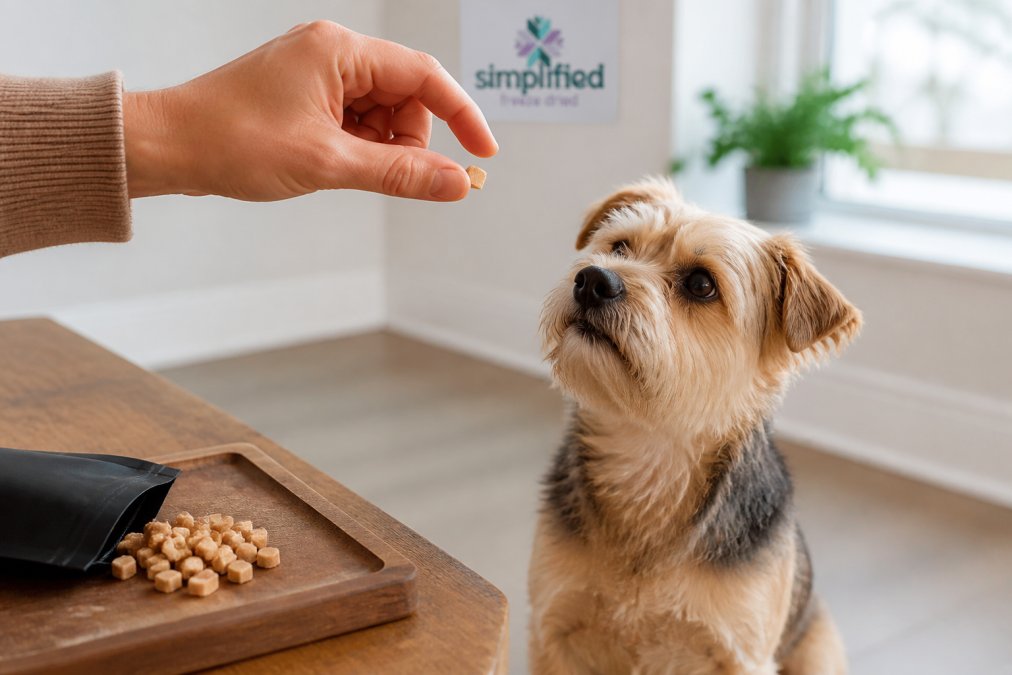
For training, reach for the mini-sized pieces. The regular size pieces are for treats only; they are too big to hand out repeatedly during a session. Small, frequent rewards keep a puppy or cat engaged, and because freeze-dried pieces crumble cleanly, they leave no greasy residue on your fingers or your treat pouch.
Single-Ingredient vs. Multi-Ingredient: Pros and Cons
Single-ingredient treats win on transparency and allergy safety. You know exactly what you are feeding, the label is short, and there is little room for hidden fillers. The trade-off is variety: one flavor is one flavor, and some pets get bored.
Multi-ingredient treats offer flavor combinations and sometimes added vitamins, but introduce more chances for a reaction and more label reading. For a pet with a known sensitivity, single-ingredient is the safer default; for a pet with no issues, a mix can work fine.
Single-ingredient pros: transparent label, hypoallergenic potential, easy portion control, no artificial preservatives. Single-ingredient cons: limited variety, can cost more per piece. Multi-ingredient pros: flavor range, sometimes fortified. Multi-ingredient cons: harder to trace allergens, often contains fillers.
Sourcing, Safety, and What to Look For
Sourcing standards separate good single-ingredient treats from mediocre ones. Look for a named country of origin, a human-grade claim, and a short production chain. Simplified Freeze Dried is a veteran-owned, rural Iowa family business that cuts its beef liver once and freeze-dries it, with no denatured meat and no imported beef.
Ask three questions before you buy: Where is the protein sourced? Is it human-grade? How many processing steps happen between farm and bag? A treat that answers all three clearly is one you can trust. The FDA guidance on pet food labeling explains what label terms legally mean, and the American Veterinary Medical Association's pet nutrition resources covers how to evaluate a treat's role in the diet.
Common Mistakes When Switching
The biggest mistake when switching is going too fast. Introduce any new treat one piece at a time over several days to catch a reaction early, especially if your pet has a history of food sensitivities or GI upset.
A second mistake is overfeeding. Freeze-dried treats are calorie-dense, so a handful adds up quickly; keep treats to a small share of daily calories and adjust the main meal. A third is storing them wrong, even shelf-stable treats last longer in a cool, dry place with the bag sealed, since humidity softens the texture and shortens shelf life.
Switching to single-ingredient treats is one of the simplest upgrades you can make for a pet with allergies, a sensitive stomach, or a training routine that needs a clean, high-value reward. Simplified Freeze Dried offers single-ingredient beef liver and pumpkin treats for both dogs and cats, with mini-sized pieces built for training and regular pieces for everyday snacking, all made from American-sourced ingredients in the Midwest. Get started with Simplified Freeze Dried and give your pet a treat you can actually read on the label.
Frequently Asked Questions
Are freeze-dried treats healthy for dogs and cats?
Yes, when they are truly single-ingredient. Freeze-drying removes moisture while keeping the original cellular structure and natural enzymes largely intact. That means your pet gets the protein, vitamins, and flavor of the whole food without artificial preservatives or fillers. Single-ingredient options like freeze dried beef liver for cats and dogs deliver concentrated nutrition in a shelf-stable form, making them a clean choice for everyday rewards or training.
Can cats and dogs eat the same single-ingredient freeze-dried treats?
Many single-ingredient treats work for both species. Plain freeze-dried beef liver or pumpkin contains no species-specific additives, so it is safe for cats and dogs alike. The key is checking that the label lists one item and nothing else. If your cat has a sensitive stomach, start with a small piece and watch for any gastrointestinal upset before making it a regular reward.
How do I switch my pet to single-ingredient treats without digestive upset?
Transition gradually over five to seven days. Mix a small piece of the new single-ingredient treat with your pet's current treat, increasing the ratio each day. This gives digestive enzymes time to adjust and lowers the chance of gastrointestinal upset. If your pet has food sensitivities, introduce one new protein at a time so you can pinpoint any reaction. Keep training sessions short and reward with mini-sized pieces to avoid overfeeding.
What should I look for on a single-ingredient treat label?
The ingredient list should have exactly one item, such as beef liver or pumpkin. Watch for vague terms like natural flavoring, binding agents, or preservatives, which signal a multi-ingredient product. Look for human-grade sourcing and domestic suppliers when possible. A treat that is minimally processed and freeze-dried from a single protein source gives you the most control over what your pet with food allergies is actually eating.