


Table of Contents
- What Are Fillers in Dog Treats and Why They Matter
- How to Read Dog Treat Labels: A Step-by-Step Approach
- Common Dog Treat Fillers List: What to Avoid
- Hidden Sugar Names and Misleading Label Tricks
- Healthy Alternatives to Processed Dog Treats
- Identifying Fillers for Dogs with Allergies
- Conclusion
- Frequently Asked Questions
Last Updated: September 1, 2026
What Are Fillers in Dog Treats and Why They Matter
Fillers in dog treats are inexpensive, low-nutrient ingredients added to bulk up products without providing meaningful nutritional value. They typically include corn, wheat, soy, and grain-based carbohydrates that dogs don't actually need.
Fillers often trigger digestive issues, allergies, and nutritional imbalances that lead to expensive vet visits.
The real cost of fillers isn't the price tag on the bag. A dog with chronic allergies triggered by grain-based fillers can cost thousands in vet bills, special diets, and medications. Prevention through ingredient transparency is far cheaper than treatment after the damage is done.
How to Read Dog Treat Labels: A Step-by-Step Approach
Reading a dog treat label correctly requires knowing where to look and what to ignore. The guaranteed analysis section, ingredient list, and marketing claims tell three different stories, and only one of them is accurate.
Step 1: Check the Ingredient Order
The ingredient list is ordered by weight at the time of manufacturing. The first ingredient makes up the largest percentage of the treat. If you see corn, wheat, or "meat by-products" listed first, that's the primary component of what you're feeding.
Look for a named meat source as the first ingredient. "Beef," "chicken," or "turkey" is specific and traceable. Avoid vague terms like "meat meal," "poultry by-products," or "animal fat." The first five ingredients represent roughly 80% of the product's composition. If four of the first five are grains or fillers, you're looking at a filler-heavy treat regardless of marketing claims.
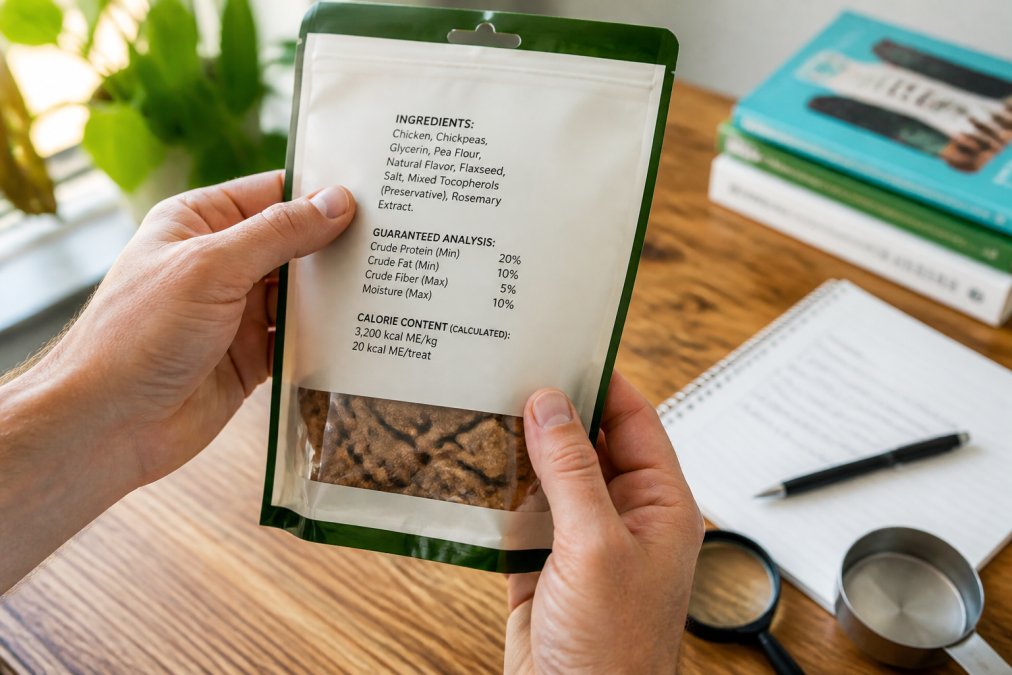
Step 2: Spot Hidden Fillers by Their Real Names
Manufacturers don't label something "filler." They use technical terms that sound legitimate but hide low-quality ingredients. Corn appears as "corn," "corn meal," "corn flour," or "corn gluten meal." Wheat hides as "wheat flour," "wheat gluten," or "wheat middlings." Soy appears as "soybean meal" or "soy protein isolate." Each is a cheap carbohydrate source used to bulk up treats.
"Meat by-products" is a legal term for parts of an animal that aren't muscle meat, including organs, bone, feathers, and hides. It's not necessarily harmful, but it's lower-quality protein than named meat. Binders like "gum arabic," "guar gum," "xanthan gum," and "carrageenan" serve no nutritional purpose and can cause digestive upset in sensitive dogs.
Step 3: Decode the Guaranteed Analysis
The guaranteed analysis section lists minimum protein, fat, and maximum fiber and moisture. A quality single-ingredient treat will have high protein (15% or above), moderate fat (5-10%), and low fiber (less than 5%). Filler-based treats often show lower protein, higher fiber, and higher moisture content, meaning you're paying for water weight.
The "crude" measurements are minimums and maximums, not exact amounts. "Crude protein" is the total nitrogen content, which includes amino acids and non-protein nitrogen. Single-ingredient treats eliminate this problem because what you see is what you get.
Common Dog Treat Fillers List: What to Avoid
Understanding specific fillers and their alternatives helps you navigate the treat aisle with confidence.
Grain-Based Fillers
Corn is the most common grain filler in dog treats. It's inexpensive and provides minimal nutritional benefit to dogs. Dogs don't have a nutritional requirement for corn, and many develop allergies or sensitivities to it over time. When corn appears in the first three ingredients, you're buying a corn-based product.
Wheat and wheat by-products are equally problematic. Wheat gluten is sometimes added specifically to boost the protein percentage on paper while relying on cheap grain filler. Dogs may develop wheat sensitivities without obvious symptoms; itching, ear infections, and chronic diarrhea can persist for months before you connect them to diet.
Soy protein isolate is a cheap protein source that artificially inflates the protein percentage on the guaranteed analysis. It's poorly digestible for dogs and offers minimal bioavailability compared to animal-based proteins. Barley and oats are sometimes marketed as "healthier" grain alternatives, but they're still fillers that dogs don't require.
Protein Substitutes and By-Products
Meat by-products are legal catch-all categories that can include rendered animal parts and organs unsuitable for human consumption. "Meat meal" or "poultry meal" indicates the protein source has been rendered, reducing digestibility and nutrient density compared to whole meat.
Soy protein isolate and other plant-based protein sources are used to meet protein percentages on paper while keeping costs low. Dogs don't digest plant proteins as efficiently as animal proteins. "Animal fat" without a named source is a red flag; quality treats specify "chicken fat" or "beef fat."
Binders, Additives, and Preservatives
Xanthan gum, guar gum, and carrageenan are thickeners and binders that serve no nutritional purpose. Dogs with sensitive digestive systems often react negatively to these additives, experiencing bloating, gas, or diarrhea.
Artificial colors like "Red 40," "Yellow 5," and "Blue 1" are purely for human appeal. These synthetic dyes have been linked to behavioral issues and allergies in sensitive dogs. Corn syrup and other hidden sugars are added to improve palatability when the treat's actual ingredients aren't appealing. Excess sugar contributes to obesity, dental problems, and metabolic issues.
Hidden Sugar Names and Misleading Label Tricks
Manufacturers use creative language to hide sugar and other problematic ingredients. Sugar appears on labels as "corn syrup," "high-fructose corn syrup," "molasses," "honey," and "cane juice." Manufacturers list these separately to push them lower on the ingredient list, but the cumulative effect is still excess sugar.
"Natural flavor" is a meaningless term that can include anything from meat extract to chemical compounds. Quality treats don't need to hide their flavor sources; they use whole meat or organs that are inherently flavorful.
"Meal" and "by-products" are technical terms that obscure what's actually in the treat. "Chicken meal" is rendered chicken parts. "Meat by-products" could include beaks, feathers, and hooves. Marketing claims on the front of the package are often misleading. "Natural" has no legal definition in pet food. "Grain-free" simply means no grains; it doesn't mean no fillers, as peas and potatoes often replace grains. "High-protein" can mean as little as 8-10% protein.
Healthy Alternatives to Processed Dog Treats
Single-ingredient freeze-dried treats represent the opposite end of the spectrum from filler-heavy commercial products. They're minimally processed, transparent, and nutritionally dense. When you feed a freeze-dried beef liver treat, your dog is eating beef liver, nothing else.

Freeze-drying preserves the nutritional profile of whole food by removing water while keeping nutrients intact. This process doesn't require binders, fillers, or synthetic preservatives. Simplified Freeze Dried offers single-ingredient beef liver treats that are 100% American, never denatured (human-grade quality), and minimally processed. Your dog gets pure nutrition in every piece.
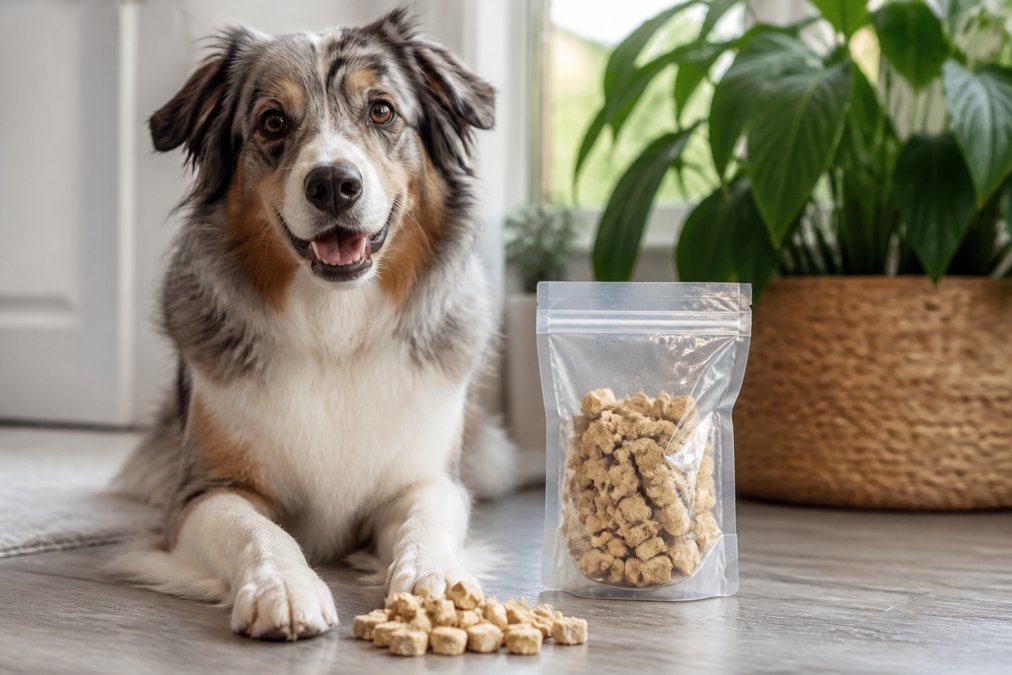
Simplified Freeze Dried's pumpkin treats are 100% American pumpkin sourced from the Midwest, freeze-dried to preserve fiber and nutrients. Pumpkin supports digestive health naturally without additives or fillers. Raw diets and whole food toppers are alternatives if you have access to quality ingredients and proper food handling, though they require refrigeration and careful sourcing.
Identifying Fillers for Dogs with Allergies
Dogs with allergies require a different approach to treat selection. Fillers are often the culprit behind chronic allergies, but identifying which ingredient is triggering the reaction requires systematic elimination and careful label reading.
Common allergens in commercial treats include chicken, beef, dairy, wheat, corn, soy, and eggs. Check the ingredient list and the "may contain" statement. Single-ingredient treats eliminate cross-contamination risk because there's nothing to cross-contaminate.
For dogs with multiple allergies, single-ingredient treats allow you to introduce one new food at a time and monitor for reactions. If your dog reacts to a freeze-dried beef liver treat, you know beef is the issue. This systematic approach is impossible with multi-ingredient treats.
Novel proteins like venison, duck, or fish are sometimes recommended for allergic dogs. However, check that the treat is truly single-ingredient and doesn't include fillers or binders. Rotation diets, alternating between different protein sources, can help prevent new allergies from developing.
Conclusion
Identifying hidden fillers in dog treats comes down to reading labels carefully, understanding manufacturer terminology, and recognizing marketing tricks. The ingredient list and guaranteed analysis tell you what's actually in the product. Your dog's health depends on the choices you make at every meal and treat.
Filler-heavy treats might save money short-term, but they often lead to allergies, digestive issues, and expensive vet bills. Single-ingredient treats eliminate this gamble because what you see is what you get. Simplified Freeze Dried's beef liver and pumpkin treats offer the transparency and nutritional density dogs actually need. Made with 100% American, human-grade ingredients and minimally processed through freeze-drying, these treats provide pure nutrition without fillers, binders, or synthetic preservatives.
Ready to switch to truly healthy treats? Simplified Freeze Dried's single-ingredient beef liver treats and pumpkin biscuits are available in regular and kibble-sized pieces, perfect for training rewards and daily snacking. Visit Simplified Freeze Dried today and discover why dogs with allergies, sensitive stomachs, and picky palates choose pure, simple nutrition.
| Filler Type | Common Names | Why It's Used | What to Look For |
|---|---|---|---|
| Grain-based fillers | Corn, corn meal, wheat flour, soy | Cheap bulk, long shelf life | Named meat in first ingredient instead |
| Protein substitutes | Meat by-products, soy protein isolate, poultry meal | Low cost, boosts protein percentage on paper | Named whole meat proteins |
| Binders and additives | Xanthan gum, guar gum, carrageenan | Holds treats together when formulation is unstable | Single-ingredient treats need no binders |
| Hidden sugars | Corn syrup, molasses, honey, cane juice | Improves palatability of low-quality ingredients | Treats with whole meat need no added sweeteners |
| Artificial preservatives | BHA, BHT, ethoxyquin | Extends shelf life | Mixed tocopherols or ascorbic acid instead |
Frequently Asked Questions
What's the difference between "meat meal" and whole meat in dog treats?
Meat meal is rendered animal tissue that's been cooked and processed into a powder. Whole meat is fresh muscle tissue. Meat meal is cheaper and less digestible, with lower bioavailability of nutrients.
Can grain-free treats still have fillers?
Yes. Grain-free treats often replace corn and wheat with peas, potatoes, or tapioca starch, which are equally low in nutritional value. Check the ingredient list regardless of grain-free marketing claims.
How do I know if my dog has an allergy versus a sensitivity?
Allergies trigger immune responses like itching, hives, or vomiting. Sensitivities cause digestive upset like diarrhea or gas without immune involvement. Both respond well to elimination diets using single-ingredient treats.
Are by-products ever acceptable in dog treats?
Named by-products (like "chicken by-products") are organs and tissues that are legal and safe, though lower quality than whole meat. Unnamed "meat by-products" are a red flag. For dogs with allergies or sensitivities, avoid by-products entirely and stick to named whole meat sources.
Why do some treats need so many binders if they're high-quality?
Quality treats don't need multiple binders. If a treat lists three or more binders, it's a sign the formulation is unstable, usually because it's mostly fillers with minimal actual meat.
Is "natural" on a pet treat label meaningful?
No. "Natural" has no legal definition in pet food and isn't regulated. Read the ingredient list instead of relying on marketing claims.
How do I transition my dog from filler-heavy treats to single-ingredient options?
Introduce new treats gradually over 7-10 days, mixing small amounts with familiar treats. Most dogs adjust quickly to single-ingredient treats because they're more digestible and palatable.
Can freeze-dried treats go bad?
Freeze-dried treats are shelf-stable for years if kept dry. Once opened, store them in an airtight container away from moisture. Properly stored freeze-dried treats won't spoil like fresh food.
What should I do if my dog has a reaction to a new treat?
Stop feeding the treat immediately and monitor your dog for 24-48 hours. If symptoms persist, contact your veterinarian. Single-ingredient treats make it easy to identify which food caused the reaction.
Are there treats safe for dogs with kidney disease or other health conditions?
Dogs with kidney disease, diabetes, or other conditions require treats tailored to their specific needs. Single-ingredient treats like beef liver or pumpkin are often safe, but check with your veterinarian before introducing any new treat.
Frequently Asked Questions
What ingredients should I avoid in dog treats?
Avoid meat by-products, poultry meal, soy protein, maize, carrageenan, xanthan gum, synthetic dyes, and artificial preservatives. These are common fillers that add bulk without nutritional value. Look for treats with a single, recognizable ingredient like beef liver or pumpkin. Check the ingredient label carefully, if you can't identify an ingredient, it's likely a filler or additive your dog doesn't need.
How can I tell if a dog treat label is misleading?
Misleading labels often use vague terms like 'meat meal' or 'poultry by-products' instead of specific meat sources. Watch for hidden sugars listed as corn syrup, molasses, or honey. Check the ingredient order, the first ingredient should be the primary component. If a treat claims to be 'chicken' but lists chicken meal third after corn and soy, fillers dominate the product. Always verify the guaranteed analysis to confirm protein and fat percentages match quality standards.
Are grain-free treats always free of fillers?
No. Grain-free treats often replace grains with other fillers like potato starch, pea starch, or soy protein to maintain texture and shelf stability. These carbohydrate-heavy substitutes can be just as problematic as grains. True filler-free treats focus on whole-food ingredients, like freeze-dried beef liver or pumpkin, rather than relying on starches or binders for structure. Read the full ingredient list, not just the marketing claim.
What makes single-ingredient freeze-dried treats different from regular commercial treats?
Single-ingredient freeze-dried treats contain only one whole food with no binders, preservatives, or fillers. Freeze-drying removes moisture while preserving nutrients and bioavailability, meaning your dog's body absorbs more nutrition. Regular commercial treats often combine multiple fillers, artificial additives, and processed ingredients for cost and shelf stability. Products like Simplified Freeze Dried beef liver treats deliver 100% whole food nutrition without hidden ingredients, what you see on the label is exactly what's in the package.
This article was written using GrandRanker