


Table of Contents
- Why Picky Eaters Turn Up Their Noses at Most Treats
- What Makes a Single Ingredient Cat Treat Worth Buying?
- The Dangers of Fillers in Cat Treats
- Freeze-Dried vs. Dehydrated: Which Texture Wins?
- Top Picks: Natural Single Ingredient Cat Treats for Picky Eaters
- Key Benefits of Freeze-Dried Cat Treats for Sensitive Cats
- How to Transition Cat to Healthy Treats Without the Drama
- What to Ignore: Marketing Claims That Don't Matter
- Frequently Asked Questions
Last Updated: September 7, 2026
If your cat sniffs a treat and walks away, the reason often comes down to what is inside that bag. The search for natural single ingredient cat treats for picky eaters usually ends with a product that has no fillers, no mystery flavors, and nothing to hide. At Simplified Freeze Dried, we make those treats daily and know what turns a fussy feline into a devoted fan.

Below, we show what separates a treat your cat will devour from one they will ignore, and why texture and protein source matter more than clever marketing.
Why Picky Eaters Turn Up Their Noses at Most Treats
Picky eating rarely means your cat is difficult; it usually means the treat is not registering as food. Cats rely heavily on smell and texture to decide what is edible, and many commercial treats are packed with plant fillers, artificial flavors, and binding agents that dilute the meat protein your cat seeks.
A cat's digestive system is designed for a protein-first diet. When a treat lists grains, starches, or by-products before the animal protein, the aroma profile changes and many cats refuse it. Texture also plays a massive role, if the treat is too hard or too chewy, even a hungry cat may reject it.
What Makes a Single Ingredient Cat Treat Worth Buying?
Single ingredient cat treats are worth buying when the one ingredient is a high-quality, nutrient-dense protein that provides real nutritional value. The point is simplicity: one animal protein, nothing else, no grains, no artificial preservatives, no synthetic vitamins, and no "natural flavors" that mask lower-quality ingredients.
Reading the Label: Protein First, Nothing Else
A quality single-ingredient label lists the animal source and nothing more, "beef liver" or "chicken breast," not a paragraph of additives. The source should be identifiable, such as American beef liver rather than generic "liver."
Human-grade sourcing matters here. Meat labeled human-grade has passed stricter safety inspections than feed-grade meat. Some manufacturers use denatured meat, meat deemed unsafe for humans due to disease or infection. A trustworthy brand will never use this and will state that clearly.
The Dangers of Fillers in Cat Treats
Fillers in cat treats are not just a waste of money; they can work against your cat's health. Ingredients like corn, wheat, soy, and starches add bulk without nutritional value and can trigger food sensitivities. Over time, a steady diet of filler-heavy treats can contribute to weight gain and reduce nutrition quality.
The biggest danger of fillers is that they displace the protein your cat needs. If a treat is 40% grain, your cat is eating a carbohydrate snack, not a meat reward. For cats with allergies, fillers are an even bigger risk, many owners discover the culprit was a "treat" loaded with grains and additives.
Freeze-Dried vs. Dehydrated: Which Texture Wins?
For a picky eater, texture is often the deciding factor between a sniff-and-walk-away and an enthusiastic crunch. While both freeze-dried and dehydrated treats remove moisture to preserve meat, they produce fundamentally different mouthfeels.
The Texture Spectrum: Crunchy, Airy, Chewy, and Lickable
Picky eaters don't think in categories, they think in textures. Here’s how the processing method translates to what your cat feels in its mouth:
- Freeze-Dried (Crunchy & Airy): This process freezes raw meat and then sublimates the ice directly into vapor in a vacuum. The result is a light, brittle, almost sponge-like structure. When you snap a piece, it shatters with a clean break, releasing a potent aroma. This texture is ideal for cats who like to 'hunt' their food, they can bite down, crush it, and swallow without much effort. It’s the closest texture to fresh-kill muscle meat.
- Dehydrated (Chewy & Dense): Dehydration uses low, sustained heat (typically 130-160°F) to drive out moisture. This renders the meat into a tougher, leathery, or jerky-like consistency. While some cats love the chew, many picky eaters, especially seniors or those with dental pain, will reject it because it requires significant effort to tear. The lower heat also means less aroma is released until the cat has worked to break it down.
- Freeze-Dried Ground (Powder/Topper): This is a third texture that is often overlooked. By grinding freeze-dried meat into a fine powder, you bypass the texture issue entirely. This is a powerful tool for cats that refuse any solid treat but will eagerly lick a dusting of meat powder off their kibble or a plate. It engages the 'licking' instinct without forcing a bite.
Why Texture Trumps Flavor for Some Cats
A common pattern among picky eaters is a strong preference for a specific texture, regardless of the protein. A cat that refuses a dense, dehydrated duck breast might eagerly devour the same duck when it’s freeze-dried and airy. This isn't about flavor, it's about tactile sensation and effort required to eat.
In the wild, cats are accustomed to the texture of fresh prey, muscle, skin, and bone, which is moist and yielding. Freeze-drying preserves a similar cellular structure that crumbles like cooked meat. Dehydration creates a jerky-like product, which is not a natural food texture for a cat.
A Practical Guide to Texture Selection
To determine your cat's preference, run a simple 'texture trial' at home. Offer three formats of the same protein (e.g., freeze-dried whole, dehydrated strips, and ground powder) on separate plates and observe which one your cat finishes completely.
Texture Profile |
Best For |
Common Rejection Reason |
|---|---|---|
Crunchy (Freeze-Dried) |
Cats that like to bite and shatter; high-value training rewards. |
None, this is the most universally accepted format. |
Chewy (Dehydrated) |
Cats that enjoy prolonged chewing; dental health enthusiasts. |
Senior cats, cats with gingivitis, or those that prefer quick bites. |
Lickable (Powder/Topper) |
Cats that refuse solids, are post-surgery, or are extremely finicky. |
None, it’s the 'safest' bet for a total refusal. |
The Role of Aroma Release
Texture and aroma are intertwined. Freeze-dried treats release their meaty scent almost immediately upon being broken because the structure is porous. Dehydrated treats, being denser, hold their aroma inside until significant chewing occurs. For a picky eater that decides 'edibility' within the first two seconds of sniffing, the immediate aroma payoff of a freeze-dried treat is a critical advantage.
By understanding that 'picky' often means 'texture-averse,' you can move beyond guesswork and select a specific mouthfeel designed to match your cat's instinctive preferences.
Top Picks: Natural Single Ingredient Cat Treats for Picky Eaters
The best natural single ingredient cat treats for picky eaters focus on a single protein source, use human-grade meat, and offer a texture your cat can manage.
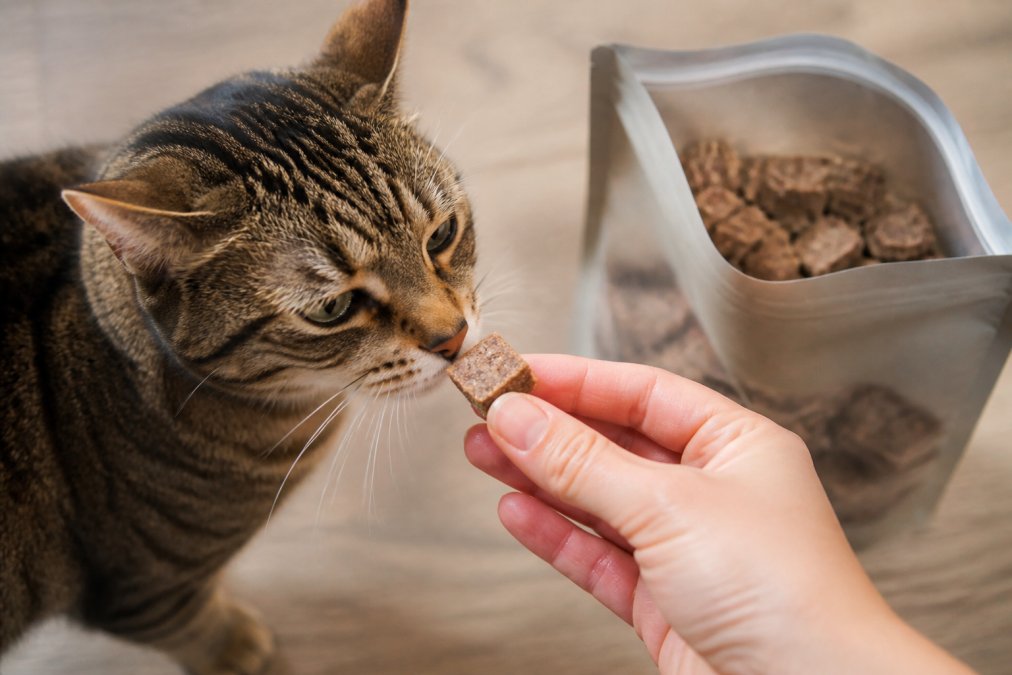
Simplified Freeze Dried Beef Liver Treats
Our top pick is Simplified Freeze Dried Beef Liver Treats because they check every box that matters for a picky eater. Made from 100% American beef liver sourced entirely from the Midwest, the liver is cut once and freeze-dried, retaining maximum nutrition and a texture cats instinctively recognize as food.
The ingredient list is exactly one item: beef liver. There are no binding agents, no preservatives, and no hidden additives. Because the treats are minimally processed, the natural aroma stays strong, the single most important factor for a cat that refuses to eat. These treats offer clean-label nutrition that supports your cat's health.
Magic Dust: A Meal Topper for the Fussiest Felines
If your cat refuses treats entirely but still eats kibble, Magic Dust is the solution. This is 100% freeze-dried beef liver ground into a fine powder that you sprinkle over your cat's regular food, transforming ordinary kibble into a nutrient-dense, irresistible meal without fillers or artificial flavors.
For cats that are genuinely reluctant to eat, Magic Dust provides a strong protein boost. Rich in vitamins A and B12, iron, and amino acids that support energy and coat health, it works for both dogs and cats and can be mixed with warm water to create a hydrating liver gravy.

Key Benefits of Freeze-Dried Cat Treats for Sensitive Cats
The primary benefit of a freeze-dried single-ingredient treat for a sensitive cat is not just what it contains, but what it excludes. For cats with food allergies, the treat is a controlled variable. To truly leverage this benefit, you must think in terms of specific protein allergies and caloric management.
The Allergy-Specific Approach: Poultry-Free and Novel Proteins
Most generic articles recommend 'single-ingredient' treats without guiding the owner on which protein to choose. This is a critical oversight. The most common feline food allergies are to chicken, beef, and fish. If your cat is itchy, has chronic ear infections, or suffers from gastrointestinal upset, a chicken-based single-ingredient treat will still trigger a reaction.
Here is how to use freeze-dried treats as a diagnostic and management tool:
- Poultry-Free Protocol: If you suspect a poultry allergy, eliminate chicken, turkey, and duck from all food and treats for 8-12 weeks. During this period, a freeze-dried beef liver or pork treat is a safe, high-value reward. The single-ingredient format ensures you are not accidentally introducing chicken fat or broth, which are common hidden allergens in multi-ingredient treats.
- Novel Protein Rotation: For cats with multiple sensitivities, rotating between two novel proteins (e.g., rabbit and venison) can prevent new allergies from developing. Freeze-dried treats make this rotation simple, as the ingredient list is unambiguous.
- The 'One-at-a-Time' Rule: When introducing a new treat to a sensitive cat, offer it exclusively for 3-4 days. Monitor for signs of reaction (excessive scratching, soft stool, or vomiting). If no reaction occurs, the protein is safe to keep in rotation. This method is impossible with treats that contain multiple proteins or fillers.
The Caloric Math: Treats Are Not Free
A significant gap in most treat guides is the failure to address how treats impact a cat's daily caloric budget. A single freeze-dried beef liver piece might contain only 2-3 calories, but those calories add up quickly. For an average 10-pound indoor cat requiring roughly 200-250 calories per day, treats should constitute no more than 10% of that intake, about 20-25 calories.
Here is the practical math:
- Freeze-Dried Beef Liver: A typical 1-inch piece is approximately 2-3 calories. You can safely offer 6-8 pieces per day without disrupting your cat's balanced diet.
- Dehydrated Meat Strips: These are denser and often larger. A single 3-inch strip can be 15-20 calories. Offering more than one or two per day can push your cat into a caloric surplus, leading to weight gain over time.
- Powdered Toppers (Magic Dust): A standard sprinkle (about 1/4 teaspoon) is roughly 5 calories. This is a low-calorie way to enhance a meal without adding significant bulk.
Digestibility and Bioavailability: The Real Mechanism
The 'gentle processing' claim is often vague. Here’s the concrete mechanism: Freeze-drying does not use heat, which preserves the natural enzymes (like protease and lipase) that are destroyed during high-heat cooking or dehydration. These enzymes assist in the initial breakdown of food in the stomach, reducing the workload on a sensitive cat's digestive tract and leading to more efficient nutrient absorption.
Furthermore, because the treat is a whole-food organ or muscle, it contains naturally occurring taurine, an essential amino acid for cats. Unlike synthetic taurine added to kibble, which can degrade over time, the taurine in freeze-dried meat remains bioavailable and is absorbed directly.
Storage and Shelf-Life: Preserving the 'Single Ingredient' Promise
Natural, preservative-free treats have a distinct weakness: they are perishable. The absence of chemical preservatives means that exposure to air, light, and moisture will degrade the product and cause fats to oxidize (become rancid).
- The 30-Day Rule: Once a bag of freeze-dried treats is opened, the aroma and nutritional quality begin to decline. Most manufacturers recommend using the product within 30 days for optimal freshness.
- The Oxygen Absorber Myth: Do not transfer freeze-dried treats to a glass jar with an oxygen absorber packet. While this works for dry kibble, it can trap residual moisture and accelerate spoilage. Instead, keep the treats in their original resealable bag, squeeze out excess air, and store in a cool, dark pantry.
- The Freezer Hack: For long-term storage, freeze-dried treats can be kept in an airtight container in the freezer for up to 6 months. This halts oxidation and preserves the aroma. Thaw only the portion you need for the day, as refreezing thawed treats degrades their texture.
By understanding the specific allergen profile, the caloric impact, and the storage requirements, you turn a simple treat into a precise nutritional tool that supports your sensitive cat's health without unintended consequences.
How to Transition Cat to Healthy Treats Without the Drama
To transition cat to healthy treats successfully, start slowly and respect your cat's pace. Sudden changes in diet can cause digestive upset, so introduce the new treat alongside the old one for the first few days.
Begin by offering a tiny piece of the freeze-dried treat before a regular meal. Cats are more willing to try new food when slightly hungry. If your cat refuses, crumble the treat over their food as a topper, exposing them to the aroma without forcing them to commit.
The full transition typically takes one to two weeks. Increase the proportion of the new treat gradually while decreasing the old one. Monitor your cat for any signs of digestive upset, and if you see any, slow down the process. Most cats will come around once they realize the new treat is actually meat.
What to Ignore: Marketing Claims That Don't Matter
Marketing language like "natural," "premium," and "veterinarian-approved" is largely unregulated and tells you very little about the actual product. What matters is the ingredient list and sourcing transparency. If a brand cannot tell you where its meat comes from, that is a red flag.
Ignore claims about "grain-free" if the treat still contains potatoes, peas, or other starchy fillers. These are often used as cheap replacements for grains and offer no benefit to your cat. Also be skeptical of "added vitamins" in a single-ingredient product. If the treat is a whole food like beef liver, it already contains the vitamins and minerals your cat needs in their natural, bioavailable form.
The claims that do matter are specific and verifiable. A brand that states it uses 100% American beef liver, sources from the Midwest, and uses no denatured meat is giving you concrete information you can check. That level of transparency is what separates a quality treat from a marketing exercise. For more on identifying safe, high-quality treats, the FDA's guidance on pet food labeling provides a useful baseline, and the Association of American Feed Control Officials sets the standards for ingredient definitions.
Finding the right treat for a picky eater requires patience and a willingness to read labels carefully. The solution is usually simpler than you think: a single, high-quality protein with no fillers and a texture your cat can manage. Simplified Freeze Dried offers exactly that, with 100% human-grade American beef liver that is cut once and freeze-dried to preserve maximum nutrition. Whether you choose the classic beef liver treats for training or Magic Dust to entice a reluctant eater, you are giving your cat a clean, protein-first snack you can trust. Get started with Simplified Freeze Dried and see how quickly a simple, honest treat wins over your fussy feline.
Frequently Asked Questions
What are the best treats for picky cats?
Picky cats usually respond best to treats with a strong meat aroma and a texture they can't ignore. Freeze-dried beef liver is a top choice because it is protein-first and has an intense natural scent. The key is offering a single-ingredient option like Simplified Freeze Dried Beef Liver Treats, which contains nothing to mask the flavor. Try crumbling it over their food or offering a small piece by hand to spark interest.
Are freeze-dried treats safe for cats with sensitive stomachs?
Yes, freeze-dried treats are often easier on sensitive stomachs than processed treats because they contain one ingredient and no artificial additives. This reduces the chance of triggering a food sensitivity. The freeze-drying process removes moisture while preserving natural enzymes and nutrients, making the protein more digestible. Always introduce a new treat slowly, offering a small piece and monitoring your cat for any digestive upset before making it a regular part of their routine.
How do I transition my cat to a new healthy treat?
Start by offering a piece the size of a pea once a day, placing it near their bowl or offering it by hand. If they refuse, crumble the treat over their regular food to get them used to the smell. Over a week, gradually increase the amount while watching for any digestive changes. Cats often need several exposures to a new texture before they accept it, so patience matters more than persistence.
What is the healthiest lickable treat for cats?
For a lickable option, look for a single-ingredient puree with no added gums or flavorings. The texture works well for cats who prefer licking over chewing.