


Table of Contents
- Why Freeze Dried Beef Liver Makes Sense for Cats
- The Real Benefits of Beef Liver for Cats
- How Freeze-Drying Preserves Nutrients Better Than Dehydrating
- Why Single Ingredient Cat Treats Are Worth the Switch
- Safe Dosage of Liver for Cats: Vitamin A Toxicity Explained
- Sourcing and Quality: What to Look for Before You Buy
- Storage, Shelf Life, and Keeping Freeze Dried Beef Liver Fresh
- Conclusion
Last Updated: August 25, 2026
Why Freeze Dried Beef Liver Makes Sense for Cats
Freeze dried beef liver for cats is one of those rare treats where the simplest option is genuinely the best one. Cats are obligate carnivores, their digestive systems are built to extract nutrition from animal protein, and organ meat like beef liver sits at the top of that list. Unlike plant-based fillers or grain-heavy kibble toppers, beef liver delivers bioavailable nutrients in a form cats are designed to process efficiently.

The problem with most commercial cat treats is what's in them alongside the protein: binding agents, artificial preservatives, unnamed "meat by-products," and synthetic flavoring. A single-ingredient freeze dried treat removes all of that noise. For cats with sensitive digestion or dietary restrictions, those additives are often the source of the problem.
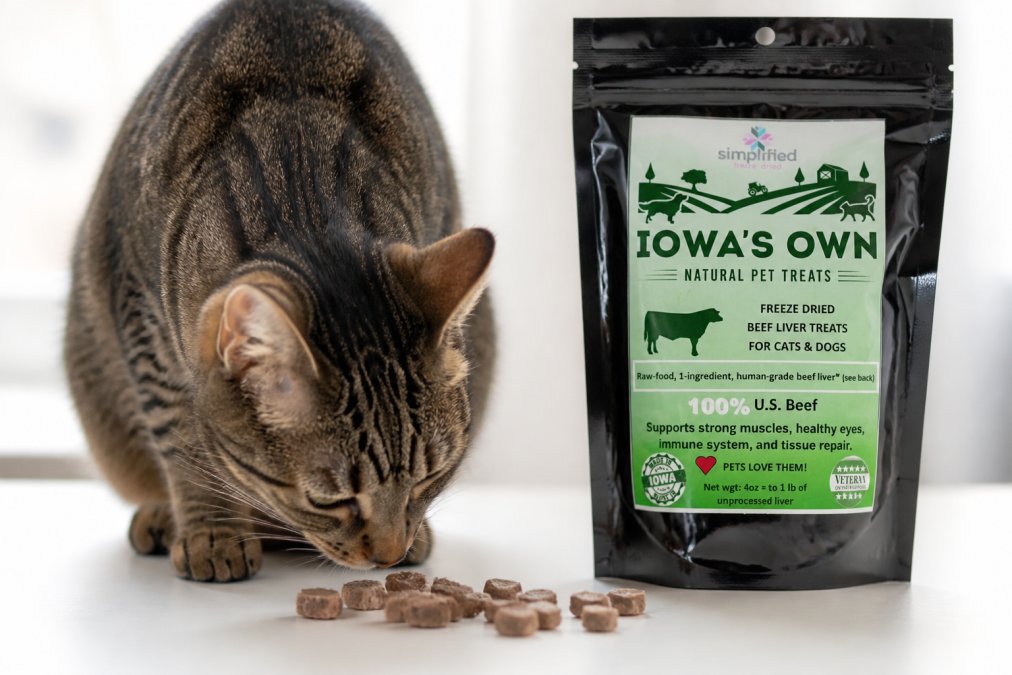
Freeze dried beef liver is also one of the most effective high-value training rewards available for cats. Because the flavor is concentrated and the caloric density is high relative to portion size, even a small piece gets a cat's full attention without overfeeding.
The Real Benefits of Beef Liver for Cats
Beef liver is one of the most nutrient-dense foods you can give a cat, gram for gram, covering a range of needs that standard cat food often addresses only partially.

Protein, Taurine, and Muscle Maintenance
Beef liver is a complete source of essential amino acids, including taurine, a compound cats cannot synthesize on their own. According to Cornell University College of Veterinary Medicine's feline nutrition resources, taurine deficiency in cats is directly linked to dilated cardiomyopathy and vision problems. Unlike dogs, cats require dietary taurine without exception.
The high-protein content in beef liver also supports muscle maintenance, which matters more as cats age. Freeze dried beef liver retains this protein content because the freeze-drying process removes moisture without applying heat that would denature the proteins. For cats on a raw diet or high-protein feeding plan, it integrates naturally as a topper or standalone treat.
Iron, Trace Minerals, and Energy Levels
Beef liver is iron-rich and packed with trace minerals including zinc, copper, and selenium. Iron supports red blood cell production and oxygen transport, connecting directly to energy levels and metabolic health. Copper supports connective tissue health and immune function, while selenium acts as an antioxidant. These nutrients support systemic health in ways that standard cat food formulations don't always prioritize.
The key caveat: these benefits apply when liver is given in appropriate portions.
How Freeze-Drying Preserves Nutrients Better Than Dehydrating
Freeze-drying and dehydrating both remove moisture, but through fundamentally different methods with different nutritional outcomes.
Freeze-drying works by first freezing raw beef liver at very low temperatures, then placing it in a vacuum chamber where ice converts directly to vapor. The result retains the cellular structure of the original raw meat, along with its vitamins, enzymes, and amino acids.
Dehydrating uses heat, typically between 140°F and 165°F, to evaporate moisture. This heat degrades heat-sensitive nutrients like Vitamin C, certain B vitamins, and some enzymes. As documented in USDA guidelines on food preservation methods, freeze-drying is widely recognized as one of the most effective preservation methods for retaining the nutritional profile of raw food.
Raw vs. Freeze-Dried vs. Dehydrated: What the Difference Means
| Format | Heat Applied | Nutrient Retention | Shelf Life | Handling |
|---|---|---|---|---|
| Raw | None | Highest | Days (refrigerated) | Requires cold chain |
| Freeze-Dried | None | Very high | 1-2 years (sealed) | Room temperature |
| Dehydrated | Yes (140-165°F) | Moderate | 6-12 months | Room temperature |
Raw beef liver has the highest nutrient retention, but refrigeration requirements, short shelf life, and handling challenges make it impractical as a daily treat. Freeze dried beef liver delivers near-raw nutritional value in a shelf-stable, mess-free format. For cats with sensitive stomachs, the difference in digestibility between freeze-dried and dehydrated can be meaningful.
Why Single Ingredient Cat Treats Are Worth the Switch
Most cats with food sensitivities aren't reacting to protein, they're reacting to additives, fillers, and secondary ingredients. Single ingredient cat treats solve that problem directly. When the only ingredient is beef liver, you know exactly what your cat is eating, and if a reaction occurs, you have a clear answer.
This matters especially for cats with hypoallergenic dietary restrictions. Many commercial treats include chicken, fish, or dairy derivatives as flavoring agents even when the primary protein is something else. A cat with a chicken sensitivity reacting to a "beef" treat is almost certainly reacting to secondary ingredients.
Single-ingredient, preservative-free treats are also the cleaner choice for cats on prescription diets or those managed for specific health conditions. Many veterinary dietary protocols require strict ingredient control, and a treat with a single, food-grade ingredient is far easier to clear with a vet.
Safe Dosage of Liver for Cats: Vitamin A Toxicity Explained
Beef liver is nutritious but requires portion control. Beef liver is exceptionally high in Vitamin A, a fat-soluble vitamin the body stores rather than excretes. Over time, feeding liver in large quantities can lead to Vitamin A toxicity, known as hypervitaminosis A. According to the ASPCA Animal Poison Control Center's guidance on vitamin toxicity, chronic overconsumption of liver is a recognized cause of Vitamin A toxicity in cats, with symptoms including bone deformities, joint pain, and neurological issues in severe cases.
The practical guideline is that liver should make up no more than 5% of a cat's total diet. As a treat, that translates to a few small pieces per day. Freeze dried beef liver has higher caloric density than raw liver because moisture has been removed, so portion awareness is essential.
How to Transition Your Cat to High-Protein Treats
Cats are resistant to new foods. Here's a practical transition approach:
- Start with scent. Place a piece near your cat's food bowl without offering it directly.
- Offer a tiny piece by hand. Hand-feeding creates a positive association.
- Use as a food topper first. Crumble a small amount over existing wet food or kibble.
- Introduce as a training reward. The high-value scent makes it effective for clicker training.
- Increase gradually over 5-7 days. Build to regular portion size slowly.
Cats with sensitive digestion should be transitioned even more slowly. Any loose stool or vomiting is a signal to slow down.
Sourcing and Quality: What to Look for Before You Buy
Not all freeze dried beef liver treats are the same. The first question to ask: is the liver human-grade? Human-grade means the meat met standards required for human consumption before processing.
The second question: where does the beef come from? Domestic sourcing is preferable for traceability and quality control.
Third: how minimally processed is it? Every additional processing step is an opportunity for nutrient loss. A treat that's cut once and freeze dried is as close to the source as a shelf-stable product can get.
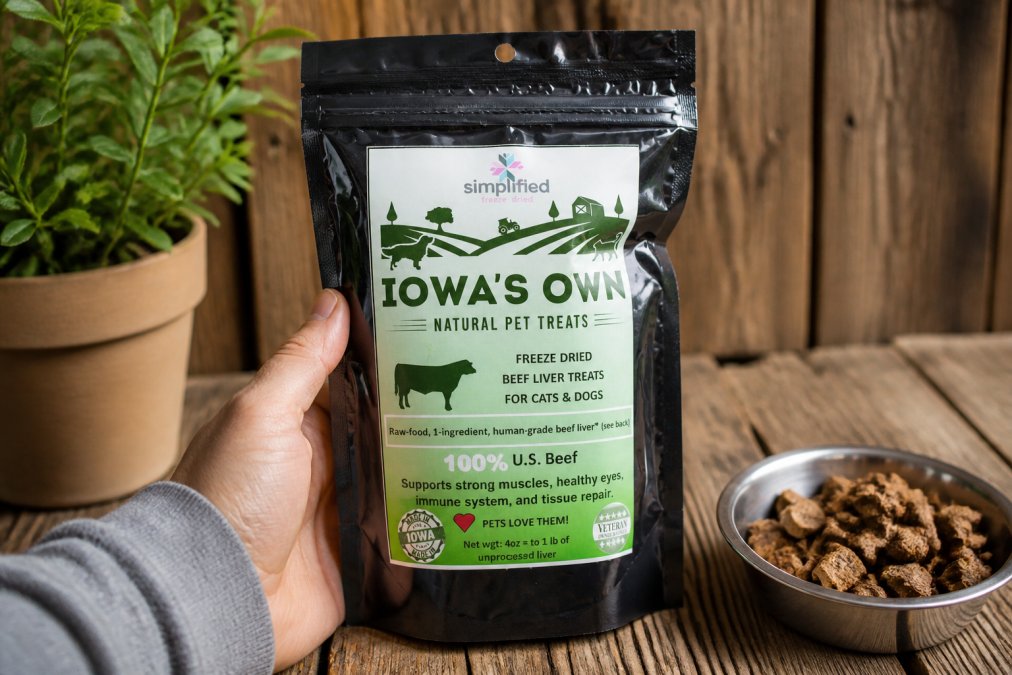
Simplified Freeze Dried uses 100% American beef liver, sourced from the Midwest, with no imported ingredients. The liver is human-grade and cut once before freeze drying, with nothing added or removed except moisture. The Beef Liver Treats for Dogs & Cats are available at $11.99, and the Magic Dust Beef Liver Topper, a ground powder version ideal for picky eaters or kibble toppers, is available at $19.99.
Storage, Shelf Life, and Keeping Freeze Dried Beef Liver Fresh
Freeze dried beef liver has very low moisture content, typically below 3%, which makes it shelf-stable. The risk isn't spoilage, it's rehydration. If moisture gets back into the product, preservation is compromised and mold or bacterial growth can develop.
Storage best practices:
- Keep the bag sealed between uses.
- Store in a cool, dry location away from direct sunlight and humidity.
- Avoid storing near heat-generating appliances.
- Once opened, most freeze dried treats maintain quality for 4-6 weeks when stored properly.
- Do not refrigerate unless the label specifically instructs it.
A sealed, unopened bag typically has a shelf life of 1-2 years from the production date. If you notice any change in smell, texture, or color after opening, discard the product. A properly freeze dried treat should smell intensely of beef liver, rich and savory.
Choosing the right treat for your cat means cutting through noise. Freeze dried beef liver checks every box that matters: single-ingredient transparency, bioavailable nutrition, high palatability, and practical shelf stability. Simplified Freeze Dried is a veteran-owned, Midwest-based business that uses 100% American, human-grade beef liver, cut once and freeze dried with nothing added. Whether you're using it as a training reward, food topper, or standalone treat for a cat with dietary restrictions, the quality is traceable from source to bag.
Frequently Asked Questions
Q: Is freeze-dried beef liver safe for cats?
A: Yes, freeze-dried beef liver is safe for cats when fed in appropriate portions. It is a natural, organ meat that cats have eaten for centuries. The key is portion control: liver is rich in Vitamin A, which accumulates in the body over time. Keeping liver treats to roughly 5% or less of your cat's daily caloric intake prevents toxicity. Single-ingredient, additive-free products with no preservatives are a safe choice, especially for cats with sensitive digestion or dietary restrictions.
Q: How much beef liver can a cat eat in a day?
A: A general guideline is to keep liver at no more than 5% of a cat's total daily food intake. For most adult cats eating around 200-250 calories per day, that translates to a small pinch of freeze-dried liver, roughly 2-4 small pieces depending on size. Feeding liver daily at high volumes raises the risk of Vitamin A toxicity over time. Use it as a high-value training reward or occasional topper rather than a meal replacement, and consult your veterinarian if you are unsure about your cat's specific needs.
Q: What are the potential drawbacks of freeze-dried cat treats?
A: The main concerns are caloric density and Vitamin A levels, both of which are higher in organ meat like liver than in muscle meat treats. Overfeeding can contribute to weight gain or, with liver specifically, hypervitaminosis A over time. Some cats also need a gradual introduction to avoid digestive upset when switching to high-protein treats. Cost is another consideration: quality freeze-dried beef liver for cats costs more than conventional treats, though the nutrient density means smaller portions are needed.
Q: Are single ingredient cat treats better for cats with food sensitivities?
A: Single-ingredient treats are significantly easier to manage for cats with food sensitivities or known allergies. When a treat contains only one ingredient, like 100% beef liver, there are no hidden fillers, binding agents, or flavoring additives that could trigger a reaction. This makes it straightforward to identify whether a specific protein causes a problem. Freeze-dried beef liver for cats is naturally simple relative to multi-ingredient treats, and the minimal processing preserves bioavailable nutrients without introducing new allergens.
This article was written using GrandRanker