


Table of Contents
- Why Dehydrated Dog Snacks Stand Out for Pet Nutrition
- How the Dehydration Process Preserves Essential Nutrients
- Benefits of Single-Ingredient Dog Treats
- Dehydrated vs Freeze-Dried Dog Treats: What's the Difference
- Safe Alternatives to Processed Dog Treats
- Digestibility and Palatability Benefits for Picky Eaters
- Dehydrated Snacks for Dogs with Food Sensitivities
- Conclusion
- Frequently Asked Questions
Last Updated: September 29, 2026
Why Dehydrated Dog Snacks Stand Out for Pet Nutrition
Dehydrated dog snacks have become a go-to choice for pet owners who want to move beyond conventional kibble and processed treats. Unlike mass-produced options loaded with fillers and artificial preservatives, dehydrated dog snacks offer a nutrient-dense alternative that delivers real food in its simplest form. At Simplified Freeze Dried, we've focused on creating single-ingredient treats that preserve the nutritional integrity of whole foods while removing only moisture. This approach means your dog gets maximum nutrition without the additives.

The appeal goes beyond marketing claims. When moisture is removed through proper dehydration, the nutrients become more concentrated. A piece of dehydrated beef liver contains far more protein and essential vitamins per ounce than fresh liver of the same weight. Dogs and cats recognize this difference immediately, the palatability is noticeably higher because the natural flavors intensify during the dehydration process.
What most pet owners discover after switching is that their dogs eat with more enthusiasm. Picky eaters suddenly show genuine interest in mealtime rewards. This isn't coincidence. The concentrated flavor profile and the absence of grain fillers mean every bite delivers real sustenance rather than empty calories.
How the Dehydration Process Preserves Essential Nutrients
The dehydration process works by removing water content while preserving the cellular structure of the food. Low-temperature dehydration is critical here, it prevents nutrient degradation that occurs with high-heat cooking methods. When beef liver is dehydrated at controlled temperatures, vitamins like B12 and A remain bioavailable, and the amino acid profile stays intact.
Understanding the science behind nutrient retention requires comparing processing methods side by side. Heat-extruded kibble, the industry standard, subjects ingredients to temperatures between 300-400°F during the extrusion process. This high heat denatures heat-sensitive vitamins, B vitamins can lose 20-50% of their potency, and vitamin A (retinol) is particularly vulnerable. Freeze-drying, by contrast, operates at temperatures below 32°F, with moisture removed through sublimation rather than heat. Research on freeze-dried pet foods shows retention rates of 85-95% for B-complex vitamins and 90%+ for vitamin A, compared to 50-70% retention in kibble.
The key difference between dehydration and cooking is enzyme activity. Raw freeze-dried treats retain enzymatic compounds that support digestive function. Cooked treats, by contrast, denature these enzymes entirely. For dogs with sensitive digestive systems, this distinction matters significantly. The minimally processed approach means the food enters the digestive tract in a form closer to what nature intended. Enzymes like protease and lipase, which assist in protein and fat breakdown, remain active in freeze-dried beef liver, reducing the metabolic burden on your dog's pancreas and improving nutrient absorption efficiency.
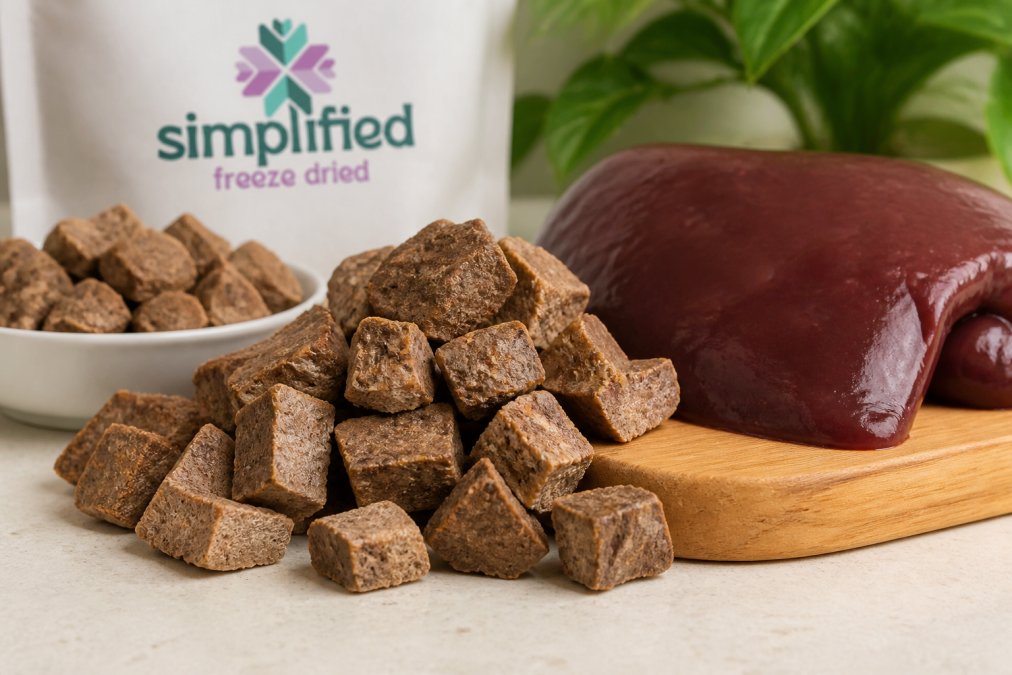
Simplified Freeze Dried uses a single-cut, freeze-dry method for beef liver. This means the product is cut once and then freeze-dried immediately, no additional processing steps that introduce oxidative stress or nutrient loss. The result is a treat with maximum nutritional density and shelf stability without chemical preservatives.
When rehydrating freeze-dried treats for dogs that require softer food or when mixing into meals, adding water back restores some of the original food structure and makes nutrients more readily available. However, many pet owners overlook a critical detail: dehydrated and freeze-dried treats are hygroscopic, meaning they absorb moisture from the environment. Proper storage in airtight containers preserves nutrient integrity and prevents oxidative degradation that can occur when freeze-dried foods are exposed to humidity or oxygen over time.
Benefits of Single-Ingredient Dog Treats
Single-ingredient treats eliminate the guesswork around what your dog is actually eating. No hidden binding agents, no mystery meat by-products, no grain fillers masquerading as nutrition. When the label says "beef liver," that's the entire ingredient list.
This simplicity becomes essential for dogs with food sensitivities. Many commercial treats contain multiple proteins, grains, or additives that trigger allergic reactions. A single-ingredient approach isolates the protein source, making it far easier to identify what works and what doesn't for your pet's system.
The nutritional profile is also transparent. Beef liver is protein-rich and packed with iron, B vitamins, and amino acids critical for lean muscle maintenance and metabolic health. Pumpkin treats offer different benefits, fiber support and antioxidants, but again, you know exactly what you're providing. There's no calculation needed to determine actual nutritional value.

Pet owners also report better digestion with single-ingredient treats. The absence of fillers and artificial additives means less work for the digestive system. Dogs process whole food ingredients more efficiently than complex formulations designed for shelf stability and cost reduction.
Dehydrated vs Freeze-Dried Dog Treats: What's the Difference
While these terms are sometimes used interchangeably, there's an important distinction. Dehydration removes moisture through heat and air circulation. Freeze-drying removes moisture through a process called sublimation, freezing the food first, then removing ice crystals under vacuum. The end result feels different, rehydrates differently, and preserves nutrients differently.
Freeze-dried treats retain more of the original food structure at the cellular level. This means better nutrient bioavailability and faster rehydration if mixed with water. Dehydrated treats tend to be denser and may require longer soaking if you're adding them to meals. For training purposes, freeze-dried pieces often work better because they break apart cleanly without crumbling into powder.
Temperature control during processing is where the real difference emerges. Freeze-drying happens at extremely low temperatures, protecting heat-sensitive vitamins and enzymes. Traditional dehydration uses higher temperatures that, while still lower than cooking, can cause some nutrient degradation. For pets with health optimization goals, freeze-dried options typically deliver superior nutritional retention.
The texture also matters for palatability. Freeze-dried treats have a lighter, airier quality that many dogs find more appealing. They also rehydrate quickly if your dog prefers softer food due to dental issues or age-related concerns.
Safe Alternatives to Processed Dog Treats
Processed dog treats often contain ingredients that serve the manufacturer more than the pet. Corn, soy, wheat, and meat by-products are cheap fillers that extend shelf life and reduce production costs. Artificial preservatives like BHA and BHT prevent rancidity but offer zero nutritional benefit and carry potential health concerns for long-term consumption.
The safer alternative is whole food treats with minimal processing. Single-ingredient freeze-dried options eliminate the need for artificial preservatives because the dehydration process itself creates shelf stability. Moisture removal prevents microorganism growth naturally, without chemical intervention.
Simplified Freeze Dried Beef Liver →
Another consideration is sourcing. Human-grade beef liver, the kind safe for human consumption, comes from animals that have passed food safety standards. Some manufacturers use denatured meat, which is unsuitable for human consumption due to disease or infection risk. Knowing your treat source matters when you're feeding your pet daily.
Limited ingredient diets work well for dogs prone to digestive upset. By rotating between beef liver and pumpkin treats, you provide nutritional variety without overwhelming a sensitive system. Each single-ingredient option delivers specific benefits: beef for protein and iron, pumpkin for digestive support and fiber.
Digestibility and Palatability Benefits for Picky Eaters
Picky eaters often reject treats because they lack flavor intensity or contain ingredients their system rejects. Dehydrated treats solve both problems. The concentration of natural flavors during dehydration makes even finicky dogs take notice. There's no masking taste with artificial flavoring, just pure, concentrated food flavor.
Digestibility improves when treats are minimally processed. The closer food remains to its whole-food state, the easier your dog's digestive system processes it. Dogs that struggle with conventional treats often thrive on freeze-dried alternatives because there's less work involved in breaking down the food and extracting nutrients.
Palatability also connects to texture. Some dogs prefer the crunch of a freeze-dried treat. Others respond better to something that softens quickly in their mouth. Understanding your dog's preference helps you choose the right format. Simplified Freeze Dried offers both regular-sized pieces and smaller kibble-sized options.
For training, mini-sized pieces work better because they don't interrupt focus or require lengthy chewing. Dogs can consume the reward quickly and return attention to the training task. The concentrated nutrition means even tiny portions deliver significant reward value, making training sessions more efficient.
Dehydrated Snacks for Dogs with Food Sensitivities
Dogs with food sensitivities require careful ingredient selection. Chicken allergies, beef sensitivities, or grain reactions can make finding safe treats frustrating. Single-ingredient dehydrated snacks remove the mystery and the risk of hidden allergens.
Beef liver treats work well for dogs sensitive to poultry. Pumpkin treats suit dogs that need digestive support without protein complexity. By offering truly single-ingredient options, you eliminate the possibility of accidental exposure to trigger ingredients.
The absence of artificial additives also matters for sensitive dogs. Many experience reactions not to the primary ingredient but to preservatives, colorants, or binding agents. Freeze-dried treats eliminate this entire category of potential irritants.
Introducing new treats to a sensitive dog requires patience. Start with small portions and observe for 48-72 hours before increasing serving size.
Health-Condition-Specific Considerations:
Critical Hydration Requirement:
Conclusion
Choosing dehydrated dog snacks means prioritizing your pet's long-term wellness over convenience and cost-cutting. These treats deliver nutrient-dense nutrition without artificial additives or fillers that compromise digestibility and health outcomes.
Frequently Asked Questions
Are dehydrated dog treats healthy for all breeds?
Dehydrated dog snacks work well for most breeds, but portion size matters. Mini-sized pieces are ideal for training small dogs and cats without overfeeding. Larger dogs can handle regular-sized treats. Always introduce new treats gradually, and consult your vet if your dog has specific health conditions or food sensitivities. Single-ingredient dehydrated treats are particularly safe because they contain no fillers, artificial preservatives, or binding agents that might trigger allergies.
What makes single-ingredient dog treats safer for picky eaters?
Picky eaters often react to additives, fillers, or complex ingredient lists. Single-ingredient treats eliminate guesswork, you know exactly what your dog is eating. This simplicity also makes it easier to identify if a specific ingredient causes digestive upset or allergic reactions. Dehydrated single-ingredient options like beef liver or pumpkin provide pure nutrition without hidden binders or preservatives that can upset sensitive stomachs.
How do dehydrated treats compare to traditional processed snacks?
Traditional processed dog treats often contain fillers, artificial preservatives, and binding agents that add calories without nutritional value. Dehydrated treats preserve the whole-food nutrition of the original ingredient through low-temperature processing, maintaining enzyme activity and bioavailability. They're shelf-stable without artificial additives, making them a minimally processed alternative that supports better digestibility and long-term pet health.
Do vets recommend dehydrated snacks for dogs with allergies?
Many vets recommend dehydrated treats for dogs with food allergies because single-ingredient options eliminate common allergens like grains, soy, and chicken by-products. The minimal processing means no hidden additives that might trigger reactions. However, always verify the sourcing, human-grade, single-ingredient beef or pumpkin products are safer choices than treats with unclear ingredient origins or processing methods.