


Table of Contents
- What You'll Need to Store Freeze Dried Pet Treats
- Step 1: Keep Treats in an Airtight Container
- Step 2: Control Moisture, Light, and Heat
- Step 3: Know How Long Freeze Dried Treats Last
- Step 4: Store Treats for Travel and Training Sessions
- Step 5: Inspect Treats for Spoilage and Texture Changes
- Common Mistakes to Avoid When Storing Freeze Dried Pet Treats
- Frequently Asked Questions
Last Updated: September 19, 2026
What You'll Need to Store Freeze Dried Pet Treats
Freeze dried pet treats stay fresh for months when you keep them away from air, moisture, and heat. Learning how to store freeze dried pet treats to maintain freshness comes down to a few simple habits: the right container, a cool dark spot, and a quick visual check before each serving.
This guide from Simplified Freeze Dried walks through the exact steps we recommend to pet parents. Our treats are single-ingredient and minimally processed, so proper storage protects the nutrition and crunch your pet loves.
Here is what you'll need before you start:
- Airtight glass or food-grade plastic container
- Resealable mylar bag or the original packaging
- Oxygen absorber or food-grade desiccant packet
- A cool, dark cabinet away from the stove
- A small travel tin for training sessions
- A marker for labeling dates
The USDA food safety guidance on storing dry goods offers useful background on moisture control and shelf-stable foods. The same principles apply to freeze dried pet treats.
Step 1: Keep Treats in an Airtight Container
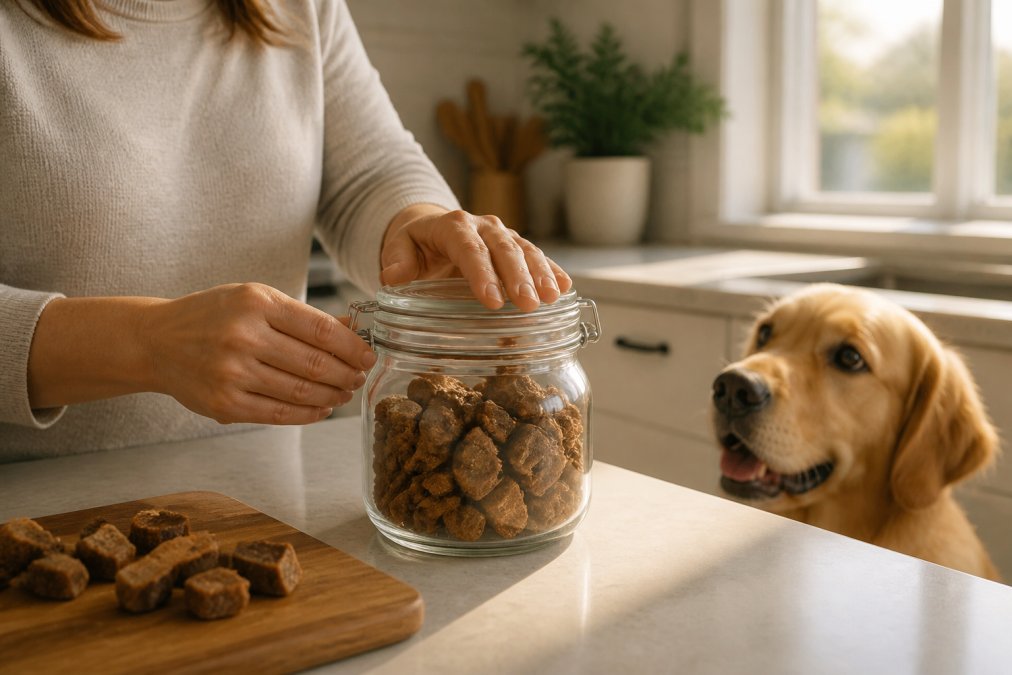
Transfer treats to an airtight container as soon as you open the bag. Air is the number one enemy of freeze dried food. Oxygen causes oxidation, which dulls flavor and breaks down nutrients over time.
Containers to Avoid
- Thin plastic bags that let air seep in
- Open bowls or dishes left on the counter
- Containers with cracked or worn seals
- Cardboard boxes that absorb humidity
A common mistake is pouring treats into a pretty jar that doesn't seal tight. Press the lid down and listen for the seal. If air moves in and out, moisture will follow.
Step 2: Control Moisture, Light, and Heat
Moisture control is the core of freeze dried treat storage. These treats contain almost no water, which is why they stay shelf-stable. When humidity levels rise, the treats pull moisture from the air and lose their crunch. Light and heat accelerate the same decline by driving oxidation and creating condensation inside the container.
How Desiccants and Oxygen Absorbers Actually Work
Most guides warn about moisture but stop short of explaining the tools that remove it. Here is the practical version.
- Food-grade silica gel packets: Silica gel adsorbs water vapor from the air inside the container. Use one packet per quart of container volume. Replace it when the packet feels heavy or the indicator beads change color (many food-grade packets include a color-change indicator).
- Oxygen absorbers: These are typically iron-based. They react with oxygen inside a sealed container and pull it down to a fraction of normal levels, which slows oxidation and protects flavor and color. They work only in a truly airtight container, in a loose bag, they saturate and stop working.
- DIY desiccant: Dry plain white rice in a cloth pouch and tuck it into the container. Never let the rice touch the treats. Rice is a weaker desiccant than silica gel, so it is a backup, not a replacement.
Safety Rules for DIY Desiccant Storage
- Never open a silica gel packet or let its contents touch the treats.
- Never use oxygen absorbers that have been left out in open air, they may already be spent.
- Do not use scented or non-food-grade desiccants. Scent transfers to the treats.
- Keep desiccant packets out of reach of pets and children. A swallowed packet is a veterinary emergency.
- Replace desiccants on a schedule. A spent packet gives false confidence.
The FDA guidance on food storage and moisture explains why dry environments keep shelf-stable foods safe. Keep direct sunlight and heat exposure to a minimum, and your treats will hold their texture far longer.
Step 3: Know How Long Freeze Dried Treats Last
So how long do freeze dried treats last? Unopened, they hold quality for a long time. Once you open the bag, plan to use them within a few weeks to a couple of months for the best texture and flavor.
| Storage State | Container | Expected Freshness |
|---|---|---|
| Unopened | Original mylar bag | Longest shelf life |
| Opened | Airtight jar with desiccant | Several weeks to a few months |
| Opened | Loose bag, rolled shut | Days to a few weeks |
| Travel tin | Small airtight tin | Use within a week |
Step 4: Store Treats for Travel and Training Sessions
Training sessions are where freeze dried treats shine, and that is exactly where storage habits slip. A bag left open on the training field pulls in moisture fast. Travel adds heat, humidity, and repeated opening, the three conditions that degrade freeze dried treats fastest.
Training Session Storage
Pack a small airtight tin or a resealable pouch for each session. Take only what you need, and leave the main container sealed at home.
- Keep a travel tin in your training bag
- Refill it from the main container, not the original bag
- Seal the tin between reps
- Skip the car glovebox in summer
Batch Management for Bulk Bags
Opening a large bag every day exposes the whole batch to air. Portion bulk treats into smaller weekly containers so the main supply stays sealed. Label each portion with the date. This one habit extends freshness more than any single container upgrade.
- Divide a bulk bag into seven-day portions
- Store the main bag sealed with an oxygen absorber
- Refill the daily tin from one portion at a time
- Never pour leftovers back into the main bag
Travel and Road Trip Storage
For longer trips, use a mylar bag with an oxygen absorber inside a hard-sided case. Temperature control is the hard part. A car interior can exceed 100°F on a mild day, and that heat drives condensation as the container cools overnight.
- Use a hard-sided case or cooler with a sealed lid
- Keep treats in the cabin, not the trunk
- Avoid the glovebox and dashboard
- Add a fresh desiccant packet for trips longer than a few days
- Reseal the container after every use
Step 5: Inspect Treats for Spoilage and Texture Changes
A quick inspection before each serving catches problems early. Freeze dried treats should feel light, dry, and crisp. Any change in texture is your first signal.
Run through this visual inspection guide:
- Texture: Soft, chewy, or spongy means moisture got in.
- Color: Faded or dull color points to oxidation or light damage.
- Odor: A sour or musty smell means spoilage. Fresh beef liver smells mild and clean.
- Mold: Any fuzzy spots, white or green, mean toss the batch.
- Contaminants: Bits of packaging or foreign material mean discard the lot.
Common Mistakes to Avoid When Storing Freeze Dried Pet Treats
The biggest storage mistakes are small and easy to fix. Here are the ones we see most often.

- Leaving the bag open. Even five minutes of open air adds moisture.
- Storing in the fridge. Refrigeration is unnecessary and adds humidity every time you open the door.
- Skipping the original packaging. The original resealable bag is built for these treats. Use it until you transfer to a jar.
- Mixing old and new batches. Old crumbs can carry moisture into a fresh batch.
- Ignoring the seal. A worn gasket lets air in all day long.
Frequently Asked Questions
Do you have to refrigerate freeze dried pet treats?
No. Refrigeration is unnecessary because freeze-dried pet treats contain almost no moisture, so there is nothing for mold or bacteria to grow on. The bigger risk in a fridge is condensation when the bag warms up after you take it out. Store treats in an airtight container in a cool, dry place away from heat, and they will stay crisp without taking up fridge space.
How long do freeze dried treats last once opened?
An unopened bag can stay shelf-stable for months, often up to a year or more when kept cool and dry. Once opened, aim to use the treats within four to six weeks for the best texture and flavor. Transfer leftovers to an airtight container, squeeze out excess air, and keep them out of direct sunlight. If the pieces turn soft or smell off, replace them.
What are the best containers for freeze dried pet food?
Glass jars with rubber gaskets, hard plastic containers with locking lids, and vacuum-sealed mylar bags all work well. What matters is an airtight seal that blocks moisture and oxygen. Avoid thin zip-top bags and open bowls, which let humidity in. If you buy in bulk, keep a small amount in a daily-use container and store the rest sealed to limit how often the whole batch is exposed to air.
Can bacteria grow in freeze dried food?
Bacteria need moisture to multiply, and properly freeze-dried treats have had nearly all their water removed, so they are shelf-stable. Problems start when moisture gets in through a torn bag or a container that does not seal. That is why airtight storage, dry hands, and keeping treats away from humidity matter. If you notice mold, a sour smell, or sticky pieces, throw the batch out.
Storing freeze dried pet treats well takes minutes, not hours. The challenge is consistency: sealing the lid, skipping the fridge, and checking texture before every serving. Simplified Freeze Dried makes that easy with single-ingredient treats built to stay fresh, including our veteran-owned, Midwest-made beef liver and pumpkin recipes. Get started with Simplified Freeze Dried and keep every reward crisp, clean, and ready for your pet.