


Table of Contents
- Understanding the Connection Between Food Allergies and Chronic Ear Infections
- Dog Ear Infection Symptoms and Treatment Options
- How to Distinguish Food Allergies From Environmental Causes
- Starting a Dog Elimination Diet for Food Allergies
- How Long Does an Elimination Diet Take for Dogs
- Can Treats Interfere With an Elimination Diet
- Tracking Progress and Preventing Future Flare-Ups
- Frequently Asked Questions
Last Updated: October 7, 2026
Understanding the Connection Between Food Allergies and Chronic Ear Infections
Managing chronic ear infections from dog food allergies starts with understanding how the two connect.
The connection isn't always obvious.
Our single-ingredient treats help during the elimination diet process because they contain no hidden allergens or fillers.
Food allergies cause systemic inflammation, and the ears are just where it shows up most visibly. Other signs include itchy skin, itchy paws, and constant scratching.
Dog Ear Infection Symptoms and Treatment Options
Recognizing ear infection symptoms early helps you act faster. Common signs include discharge, a strong odor, redness inside the ear canal, and visible inflammation.
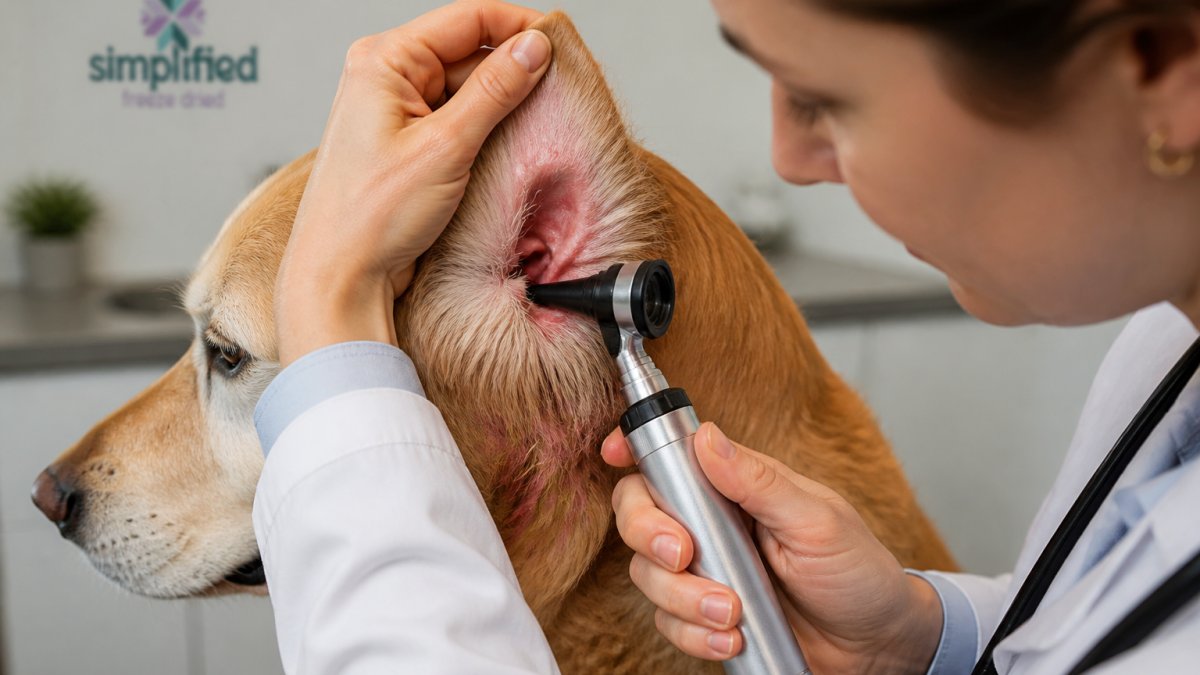
Bacterial and yeast overgrowth cause most ear infections in dogs with food allergies.
What Happens at the Veterinary Visit
A typical veterinary visit follows this sequence:
- Otoscopic examination. The veterinarian looks inside the ear canal with an otoscope to check for redness, swelling, discharge, debris, a ruptured eardrum, or a foreign body. If the canal is too swollen or painful to see clearly, sedation may be needed.
- Ear cytology. A sample of discharge is collected with a swab, stained, and examined under a microscope to identify whether yeast, bacteria, or both are present.
- Culture and sensitivity (when indicated). For severe, recurrent, or previously treated infections, a sample may be sent to a lab to identify the exact organism and which medications it responds to.
- Ear cleaning under veterinary direction. If the canal is packed with debris, the veterinarian may flush or clean it so medication can reach the tissue. Never flush an ear at home unless your veterinarian has shown you how and confirmed the eardrum is intact.
-
Prescribed treatment. Treatment is matched to what cytology or culture found. Options include:
- Topical ear drops containing antibiotics, antifungals, or steroids
- Long-acting otic medications placed in the office
- Oral antibiotics or antifungals for severe or deep infections
- Anti-inflammatories or steroids to reduce swelling and itch
- Pain medication when the ear is very sore
- Recheck. Most veterinarians want to see the dog again in roughly 1 to 3 weeks, often with another cytology to confirm the infection has cleared. Stopping treatment when the ear merely looks better is a common reason infections return.
Why Home Remedies and Leftover Medication Delay Care
It is tempting to reach for a home remedy or an old bottle of ear drops. Both can make things worse:
- Hydrogen peroxide, vinegar, alcohol, and essential oils can irritate inflamed tissue, damage the eardrum, or worsen the infection.
- Leftover prescription drops may be expired, target the wrong organism, or contain a steroid that masks symptoms without clearing the infection.
- Over-the-counter ear cleaners are not treatments; they do not kill bacteria or yeast.
- Delaying the visit lets a minor infection become a deep one, and chronic inflammation can thicken the ear canal, making it harder to treat.
These treatments provide relief but do not address why the infection happened. Once you stop the medication, the inflammation returns and the ear becomes vulnerable again. Treating the infection buys you time; the real solution is removing the food allergen causing the inflammation.
How to Distinguish Food Allergies From Environmental Causes
Not every chronic ear infection stems from food allergies. Environmental allergens, pollen, dust mites, mold, also cause ear inflammation and infection.
Food allergies typically cause year-round symptoms, with itchy skin and ears regardless of season.
Food allergies often appear with skin symptoms, so itchy paws and scratching accompany ear problems.
Your veterinarian can help narrow this down. They'll ask about the pattern of symptoms, when they started, and what else you've noticed.
One way to test your hypothesis: start an elimination diet. If symptoms improve significantly within 4-6 weeks, food allergy was likely the issue. If nothing changes, environmental allergens are probably the main problem.
Starting a Dog Elimination Diet for Food Allergies
Start by choosing a novel protein your dog has never eaten. Beef, chicken, and dairy are common allergens.
Next, select a single carbohydrate source. Sweet potato, pumpkin, or rice work well. Avoid grains initially, as they're common allergens.
For treats during the elimination diet, use only single-ingredient options with no fillers or binders so you don't accidentally introduce an allergen.
The elimination diet protocol:
- Choose one novel protein source
- Choose one carbohydrate source
- Feed ONLY these two ingredients plus approved treats for 6-8 weeks
- Keep a symptom log tracking ear health, itching, and skin condition
- Resist the urge to introduce new foods during this period
- Work with your veterinarian to monitor progress
Most dogs show improvement within 4-6 weeks if food allergy is the cause. Itching decreases. Ear inflammation reduces.
After 6-8 weeks, introduce one new ingredient at a time. Wait 1-2 weeks between introductions.
How Long Does an Elimination Diet Take for Dogs
Most veterinarians frame an elimination diet as a structured trial with two phases: strict elimination and controlled reintroduction. The timeline depends on your dog, the severity of the allergy, and how strictly the trial is run.
Phase 1: Strict Elimination (Typically 8 Weeks)
The strict phase usually runs about 8 weeks, though some veterinarians extend it to 12 for dogs with severe or long-standing ear disease, because inflamed tissue and secondary yeast or bacterial populations need time to normalize.
Why so long? Allergic inflammation does not disappear overnight; the immune system and ear canal need weeks to calm down and heal. Assess too early and you may conclude the diet failed when it simply had not run long enough.
Phase 2: Reintroduction (Typically 4 to 8 Weeks)
After the strict phase, reintroduce one ingredient at a time, waiting 1 to 2 weeks between introductions and watching for symptoms to return. If itching, ear redness, or discharge comes back, you have identified a trigger; remove it and continue testing.
Total timeline: roughly 12 to 16 weeks from start to finish. Some dogs improve faster, and some need longer. Your veterinarian can set realistic expectations based on your dog's history.
How to Choose a Trial Diet
There are two common approaches:
- Novel protein diet. Pick a protein your dog has never eaten, such as venison, duck, lamb, rabbit, or fish, paired with a single carbohydrate like sweet potato, pumpkin, or rice. This works only if the dog has truly never been exposed to those ingredients.
- Hydrolyzed protein diet. The protein is broken into pieces too small for the immune system to recognize. These prescription diets are often chosen when a dog has already eaten many proteins.
Whichever route you choose, the diet must be complete and balanced for your dog's life stage. Home-cooked trials should be formulated with veterinary guidance to avoid nutritional deficiencies over the 8-plus weeks.
Pitfalls That Invalidate a Trial
A trial is only as good as its strictness. Common ways owners accidentally break it:
- Flavored medications. Chewable heartworm preventives, flavored antibiotics, and flavored supplements can contain beef, chicken, or other proteins. Ask your veterinarian for unflavored or alternative forms.
- Table scraps and human food. Even a small piece of cheese or a bite of chicken can reset the trial.
- Toothpaste and dental chews. Many contain animal proteins or flavorings.
- Multiple treats at once. Introducing several new treats at once makes it impossible to know which one caused a reaction.
- Other pets' food. A dog that raids the cat's bowl or a housemate's dish is no longer on the trial.
For treats during the trial, use only single-ingredient options that match the trial protein and contain no fillers, binders, or flavorings. Our mini-sized freeze-dried pieces work well for training during this period because they are pure single-ingredient pieces with nothing hidden inside. The regular-size pieces are for treats only; they are too big for training.
Track the Trial With a Symptom Log
A simple daily or every-other-day log turns a subjective guess into a clear record. Note:
- Ear odor (none, mild, strong)
- Ear discharge (none, waxy, pus-like, color)
- Ear redness (normal, pink, bright red)
- Scratching and head shaking (frequency per day)
- Skin and paw condition (normal, dry, itchy, red)
- Treatment dates (medications given, ear cleanings)
- Diet adherence (any accidental exposures)
After 4 to 6 weeks, review the log with your veterinarian. Clear improvement in ear odor, discharge, and scratching suggests food allergy is a factor. No change suggests another cause, such as environmental allergy, ear mites, or a structural problem, and further testing is needed.
Can Treats Interfere With an Elimination Diet
Yes, treats absolutely interfere with an elimination diet if they contain allergens or unknown ingredients.
Many commercial treats contain multiple ingredients: proteins, grains, binders, preservatives, and flavorings. Any of these could be an allergen.
Read every treat label carefully. Look for:
- Multiple protein sources (these complicate the elimination)
- Grains or fillers (common allergens)
- Binders or preservatives (hidden ingredients)
- Vague ingredient lists like "meat by-products" (you don't know what's actually in them)
The safest approach: use only treats that match your elimination diet protein and carbohydrate.
Single-ingredient freeze-dried treats work best during elimination diets because you know exactly what's in them: no hidden allergens, fillers, or mystery ingredients.
Some owners worry about using treats during training, but skipping training isn't the answer. Use appropriate single-ingredient treats in small amounts to support training progress while keeping the elimination diet clean.
Tracking Progress and Preventing Future Flare-Ups
Tracking your dog's symptoms throughout the elimination diet reveals patterns and confirms whether the diet is working.
Update the log daily or every few days.
If symptoms don't improve, food allergy might not be the primary cause.
Most dogs do well once the allergen is removed. Ear infections become rare or stop completely. Itching decreases.
Regular veterinary check-ups help catch problems early.
Frequently Asked Questions
Can food allergies cause chronic ear infections in dogs?
Yes. Food allergies trigger inflammation throughout the body, including in the ear canal. When a dog's immune system reacts to a food allergen, it releases histamine and other inflammatory compounds that cause the ear tissue to swell, create excess yeast and bacterial overgrowth, and lead to recurring infections. This cycle continues until the allergen is removed from the diet. Veterinary care is essential to rule out other causes and confirm a food allergy is responsible.
How can I tell if my dog's ear infections are caused by a food allergy?
Food-allergy ear infections often appear alongside itchy skin, itchy paws, and chronic scratching. Your veterinarian can perform allergy testing and examine ear discharge under a microscope to identify yeast or bacterial overgrowth patterns. However, the most reliable way to confirm food allergy is an elimination diet trial under veterinary guidance. Environmental allergies, ear mites, and bacterial infections produce different symptom patterns and respond to different treatments.
Can treats interfere with a dog's elimination diet?
Yes. Even small treats can disrupt an elimination diet if they contain the allergen your dog reacts to. During the trial phase, treats must match the elimination diet ingredients exactly. Single-ingredient treats like freeze-dried beef liver or pumpkin are safest choices because they eliminate the risk of hidden allergens, fillers, or binding agents. Always confirm with your veterinarian that any treat is safe before offering it during the trial.
What should I feed my dog during an elimination diet trial?
Your veterinarian will recommend a limited-ingredient or prescription diet with novel proteins your dog has not eaten before. Common options include venison, duck, or fish paired with a single carbohydrate source. All treats, table scraps, and flavored medications must be eliminated. Single-ingredient treats in mini-sized pieces designed for training are ideal because they contain no hidden allergens or additives that could interfere with the trial results.