


Table of Contents
- Why Picky Eaters Reject Processed Dog Treats
- Single-Ingredient Dog Treats Benefits Worth Knowing
- Freeze-Dried vs Dehydrated Dog Treats: Which Wins for Picky Dogs
- Best High-Value Training Treats for Picky Dogs
- Budget-Friendly Homemade Alternatives to Processed Dog Treats
- How to Transition a Picky Dog to Natural Snacks
- Ingredients to Avoid in Commercial Dog Treats
- Conclusion
Last Updated: August 26, 2026
Most dog owners have experienced it: your dog sniffs a commercial treat and walks away. Picky eating isn't stubbornness, it's often a sensory response to what's actually in the treat. At Simplified Freeze Dried, we've worked with pet parents who switched from processed treats to single-ingredient, whole-food options and never looked back.

Below, we'll break down why picky dogs reject processed treats, which natural alternatives work, and how to transition without conflict. This guide covers homemade recipes, allergy-specific options, and a veterinary-backed protocol for dogs with sensitive stomachs.
Why Picky Eaters Reject Processed Dog Treats
Picky eating in dogs is rarely about stubbornness. Dogs experience the world primarily through scent, their olfactory system is estimated to be tens of thousands of times more sensitive than a human's, according to American Kennel Club's guide to canine senses. When a treat smells like artificial flavoring rather than real food, many dogs simply aren't fooled.
The Role of Scent in Palatability
Palatability is how appealing a food is to an animal based on scent, taste, and texture. For dogs, scent accounts for the vast majority of that equation.
Freeze-dried and dehydrated single-protein treats carry concentrated natural aroma that processed treats can't replicate. The scent-driven appeal of organ meats, particularly beef liver, comes from volatile compounds that survive minimal processing but are destroyed by high-heat extrusion or artificial flavor masking. Dogs that appear "fussy" around commercial treats often respond immediately to high-value, scent-rich alternatives. That's chemistry, not coincidence.

How Artificial Additives Dull Flavor Appeal
Processed treats frequently contain synthetic preservatives, artificial colorings, and binding agents that alter the flavor profile dogs naturally seek. Ingredients like propylene glycol and BHA/BHT are common in commercial formulations. Fussy eaters often reject treats where artificial additives overpower natural meat aroma, a "picky eating" problem that was never really about pickiness at all.
Single-Ingredient Dog Treats Benefits Worth Knowing
Single-ingredient dog treats contain one protein, nothing else. No fillers, no synthetic preservatives, no grain-based binders. The most immediate advantage is transparency: when a treat contains only beef liver, you know exactly what your dog is eating. For dogs with dietary sensitivities, this is the difference between a safe snack and a vet visit.
Digestibility and Gastrointestinal Health
Single-protein treats are significantly easier on the digestive system than multi-ingredient commercial options. Many processed treats contain grain fillers, artificial binders, and low-quality protein sources that irritate the gastrointestinal tract, especially in sensitive dogs.
Organ meats like beef liver are highly bioavailable, meaning nutrients are absorbed efficiently rather than passing through undigested. This matters for dogs recovering from illness, older dogs with slower digestive systems, or any dog prone to loose stools after commercial treats.
Allergy-Specific Treat Guides: Choosing Hypoallergenic Options
Dogs with food allergies need treats matching their elimination diet. The most common food allergens in dogs include chicken, beef, dairy, wheat, and egg. Many commercial treats contain several in a single product, making it impossible to identify the trigger.
A hypoallergenic treat approach means choosing single-protein options from a protein source your dog hasn't been exposed to, or one confirmed safe by a veterinary elimination trial. Practical guidelines:
- Confirm your dog's allergen list with a vet before selecting a protein source
- Choose treats with a single named protein (e.g., "beef liver" not "meat by-products")
- Avoid treats processed in facilities that handle common allergens if cross-contamination is a concern
- Introduce one new treat at a time and monitor for 2-3 weeks before adding another
- Check that the treat's sourcing is consistent; ingredient substitution between batches is a real risk with some manufacturers
For dogs with chicken allergies, beef liver treats from a verified single-ingredient source are often safe and well-tolerated.
Freeze-Dried vs Dehydrated Dog Treats: Which Wins for Picky Dogs
Freeze-drying removes moisture by freezing the food and reducing surrounding pressure so ice converts directly to vapor. The result retains the original nutrient profile, color, and critically, the natural aroma of the raw ingredient. Protein density stays high.
Dehydration removes moisture through heat, which is effective and produces a shelf-stable product, but the thermal process degrades some heat-sensitive vitamins and partially alters the flavor compounds that make organ meats appealing to dogs.
| Feature | Freeze-Dried | Dehydrated |
|---|---|---|
| Moisture removal method | Cold vacuum process | Low heat over time |
| Nutrient retention | Very high | Moderate |
| Natural aroma preservation | Excellent | Good |
| Texture for picky dogs | Light, crispy | Chewy to firm |
| Shelf life (unopened) | Long | Long |
| Best for | Fussy eaters, training rewards | Chew-focused dogs |
For picky dogs, freeze-dried wins on palatability. The minimal processing preserves the natural aroma that drives appetite. Dehydrated treats are solid for dogs who prefer chew intensity, but if scent-driven appeal is the goal, freeze-dried is stronger.
Best High-Value Training Treats for Picky Dogs
High-value training treats are so appealing that a dog will work for them even in distracting environments. For picky dogs, "high value" isn't about novelty, it's about nutrient-rich, scent-driven treats that register as genuinely desirable.
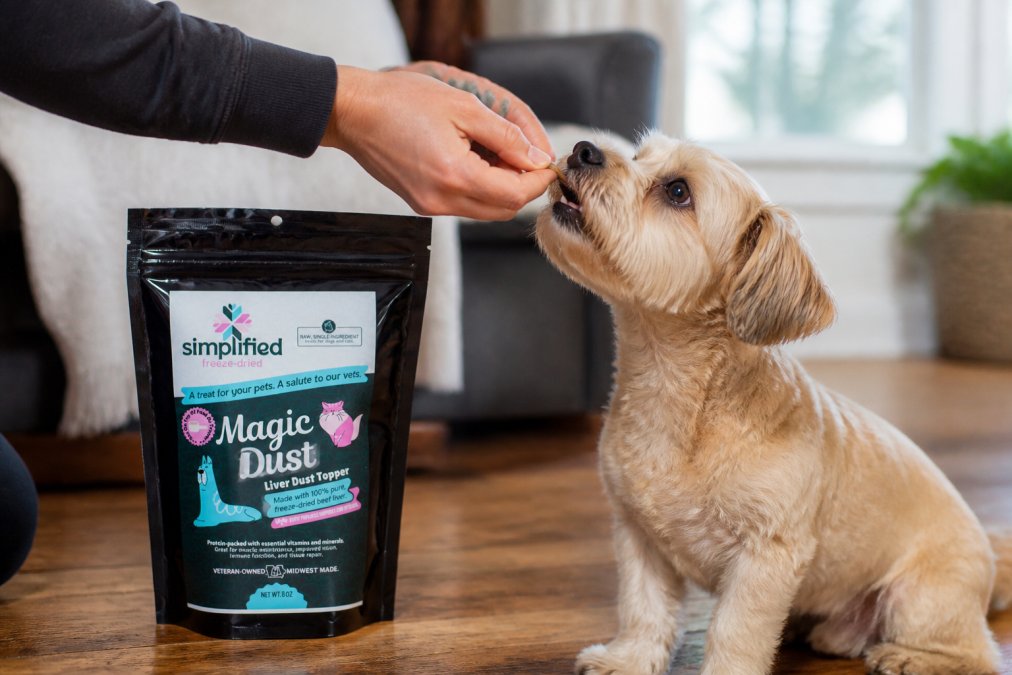
The Simplified Freeze Dried Beef Liver Treats for Dogs & Cats ($11.99) are designed for this use case. Single-ingredient, freeze-dried beef liver in regular or kibble-sized pieces, the kibble-sized option is particularly useful for training because it delivers the same high-value reward in a small, mess-free portion.

Organ Meats and Protein Density
Organ meats are among the most nutrient-dense foods available for dogs. Beef liver is rich in vitamins A and B12, iron, and essential amino acids. This nutritional profile makes it a natural high-value reward: dogs instinctively recognize the scent and respond to it. For training purposes, protein density matters. A treat that delivers real nutritional value keeps dogs engaged longer than empty-calorie snacks.
Natural Food Toppers for Meal Enhancement
Food toppers are a practical solution for dogs that refuse their regular kibble or wet food. Rather than switching foods entirely, which can cause gastrointestinal upset, a topper adds appetite stimulation through aroma and flavor without disrupting the base diet.
The Simplified Freeze Dried Magic Dust Beef Liver Topper ($19.99) is 100% raw freeze-dried beef liver ground into fine powder, coating every piece of kibble with natural aroma and flavor. For picky eaters who pick around their food or eat inconsistently, this often resolves the issue without dietary overhaul.
Practical ways to use a food topper:
- Sprinkle lightly over dry kibble for daily meal enhancement
- Mix with warm water to create a liver gravy for dogs who prefer wet food texture
- Use as a high-value reward powder during training sessions
Budget-Friendly Homemade Alternatives to Processed Dog Treats
Homemade treats are the most cost-effective route for owners who want whole-food ingredients without premium pricing. The trade-off is time, but many recipes are genuinely simple.
Simple DIY Recipes Using Whole-Food Ingredients
Baked Pumpkin Biscuits
- 1 cup canned 100% pumpkin puree (no additives, no spice mix)
- 2 cups oat flour or whole wheat flour
- 2 eggs
- Mix, roll to 1/4 inch thickness, cut into small pieces, bake at 350°F for 25 minutes. Cool completely before storing.
Frozen Beef Liver Bites
- Raw beef liver, cut into small cubes
- Freeze on a parchment-lined tray, then transfer to an airtight container
- Keep frozen; thaw a small portion before training sessions
Carrot and Sweet Potato Chews
- Slice carrots or sweet potato into thin rounds
- Bake at 250°F for 2-3 hours until dehydrated and chewy
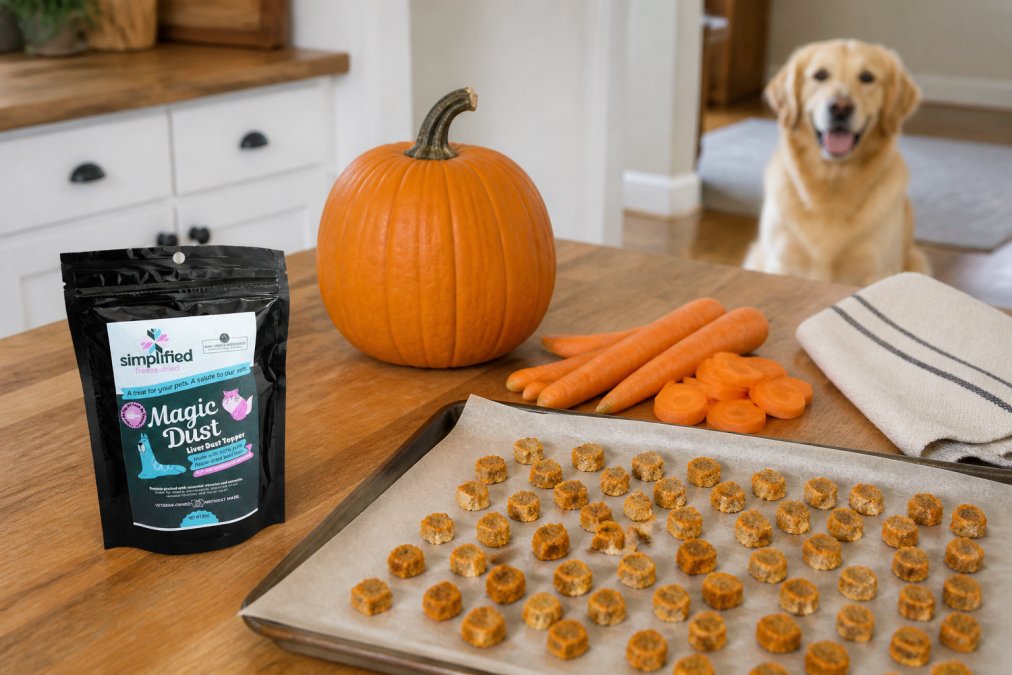
For owners who want the convenience of a ready-made single-ingredient option, the Simplified Freeze Dried Pumpkin Biscuits ($11.99) deliver the same whole-food simplicity as homemade, 100% American pumpkin, freeze-dried, nothing else added.
How to Transition a Picky Dog to Natural Snacks
The biggest mistake most owners make when switching treats is going cold turkey. A dog adapted to processed treats for months has adjusted to those flavor compounds. Introducing a completely different texture, aroma, and flavor profile all at once can cause rejection, not because the new treat is inferior, but because it's unfamiliar.
Veterinary-Backed Transition Protocol
According to guidance from the American Veterinary Medical Association on dietary transitions, gradual introduction over 7-10 days reduces the likelihood of gastrointestinal upset and behavioral food aversion. The same principle applies to treat transitions.
A practical protocol for transitioning to natural snacks:
- Days 1-3: Offer the new treat alongside the familiar one. Let the dog investigate without pressure.
- Days 4-5: Use the new treat as a secondary reward during training, paired with the old treat as primary.
- Days 6-7: Reverse the ratio. New treat becomes primary; old treat is phased to occasional use.
- Days 8-10: Complete the switch. Most dogs have accepted the new treat by this point.
For dogs with gastrointestinal sensitivity, start with the smallest possible portion and monitor stool quality for 48 hours before increasing.
The Trio bundle ($39.58) from Simplified Freeze Dried includes the Magic Dust Liver Topper, regular freeze-dried beef liver treats, and freeze-dried pumpkin treats, three formats that give you flexibility to introduce new textures and flavors gradually.
Ingredients to Avoid in Commercial Dog Treats
Not all processed treats are equal. Knowing which ingredients to flag helps you make faster decisions.
According to the FDA's guidance on pet food ingredients and labeling, ingredient lists must be listed in descending order by weight.
Ingredients that warrant concern:
- Propylene glycol: A humectant used to keep semi-moist treats soft; its long-term effects in dogs are debated.
- BHA and BHT: Synthetic antioxidants used to extend shelf life; listed as "reasonably anticipated to be a human carcinogen" by the National Toxicology Program.
- Artificial colors (Red 40, Yellow 5, Blue 2): No nutritional value; added purely for visual appeal to the owner.
- Meat by-products: The term covers many ingredients including organ meats (fine) and lower-quality material (less ideal). Single-named proteins are more transparent.
- Corn syrup and added sugars: Contribute to weight gain and dental issues over time.
- Ethoxyquin: A synthetic preservative sometimes used in fish-based treats; many manufacturers have moved away from it.
The simplest filter: if you can't trace every ingredient back to a whole-food source, it's worth asking why it's there.
For a clean alternative, the Simplified Freeze Dried product line uses 100% human-grade beef liver and 100% American pumpkin, ingredients you can verify because there's literally nothing else in the bag.
| Treat Type | Best For | Key Benefit | Watch Out For |
|---|---|---|---|
| Freeze-dried single-ingredient | Picky eaters, training rewards | Maximum aroma, nutrient retention | Cost per treat higher than commercial |
| Dehydrated single-ingredient | Chew-focused dogs | Long shelf life, natural flavor | Heat may reduce some vitamins |
| Homemade whole-food treats | Allergy dogs, budget-conscious owners | Full ingredient control | Short shelf life, prep time required |
| Food toppers (powder) | Meal refusal, appetite stimulation | Coats every bite, no food change needed | Not a standalone treat for training |
| Commercial multi-ingredient treats | Convenience | Wide availability | Additives, allergen risk, palatability issues |
Managing a picky eater is genuinely frustrating, especially when you've tried multiple products without success. The underlying issue, artificial additives masking poor palatability, allergens hiding in complex ingredient lists, scent profiles that don't register as real food, doesn't get solved by trying yet another processed treat. Simplified Freeze Dried offers a direct answer: single-ingredient, human-grade beef liver and pumpkin treats made in Iowa, with no fillers, no synthetic preservatives, and no imported ingredients. Get started with Simplified Freeze Dried and give your picky eater something worth eating.
Frequently Asked Questions
What are some good treats for dogs who are picky eaters?
The most effective treats for picky eaters are high-scent, single-protein options with minimal processing. Freeze-dried organ meats like beef liver rank among the most appealing because they retain their natural aroma and nutrient profile without synthetic preservatives or fillers. Kibble-sized pieces work especially well for training. Simplified Freeze Dried Beef Liver Treats ($11.99) are a single-ingredient option made from 100% human-grade beef liver that many fussy eaters respond to immediately.
Are single-ingredient treats better for dogs with sensitive stomachs?
Yes. Single-ingredient treats eliminate the guesswork around dietary sensitivity. Multi-ingredient processed treats often contain artificial additives, synthetic preservatives, and fillers that can irritate a dog's gastrointestinal tract. A treat with one identifiable whole-food ingredient, such as freeze-dried beef liver or pumpkin, makes it far easier to pinpoint and avoid triggers, especially for dogs managing food allergies or chronic digestive issues.
Can freeze-dried treats help with picky eating habits?
Freeze-drying preserves the natural aroma and bioavailable nutrients that make treats scent-driven and appealing to fussy eaters. Unlike dehydrated treats, which use heat that can degrade flavor compounds, freeze-drying locks in the raw flavor profile. Dogs that refuse heavily processed alternatives to processed dog treats often accept freeze-dried options readily because the scent and taste more closely resemble fresh food. Sprinkling a topper like Magic Dust ($19.99) over kibble is a practical way to test this.
What can I substitute for dog treats during training?
Whole-food substitutes work well for training rewards. Small pieces of freeze-dried beef liver, plain cooked chicken breast, freeze-dried pumpkin biscuits, or thin slices of apple (without seeds) are all viable options. The key is high palatability and small size so the dog stays motivated without filling up. Kibble-sized freeze-dried pieces are particularly convenient because they are mess-free, shelf-stable, and easy to carry during training sessions.
How can I tell if a dog treat is high-quality or overly processed?
Check the ingredient list first. A high-quality treat has one or two recognizable whole-food ingredients and no artificial preservatives, synthetic dyes, or vague fillers like 'meat by-products.' Human-grade sourcing and minimal processing are strong indicators of snack quality. Treats that list the specific protein source, such as '100% beef liver' rather than 'animal protein', give you full transparency. If the ingredient list reads like a chemistry label, the treat is likely overly processed.
This article was written using GrandRanker