


Table of Contents
- What Is a Freeze Dried Raw Diet for Dogs?
- Freeze Dried Raw vs. Kibble: The Real Difference
- The Benefits of Single-Ingredient Dog Treats
- How to Transition Dog to Raw Diet Safely
- Managing a Dog Allergic Reaction to Dog Food
- Safety, Handling, and Sourcing Standards
- Cost-Per-Day and Convenience Analysis
- Conclusion: Is a Raw Diet Right for Your Dog?
- Frequently Asked Questions
Last Updated: September 5, 2026
What Is a Freeze Dried Raw Diet for Dogs?
A freeze dried raw diet for dogs starts with raw meat, organs, and sometimes produce, then removes moisture through a low-temperature vacuum process while keeping the food uncooked. The result is a shelf-stable product that retains the nutritional profile of raw ingredients without requiring freezer storage.
The freeze-drying process preserves nutrients that high-heat cooking destroys. Unlike kibble, which is extruded at temperatures that can degrade enzymes and amino acids, freeze-dried raw keeps ingredients closer to their natural state.
A freeze dried raw diet is not a magic bullet, but it is a fundamentally different approach to canine nutrition. Where kibble relies on starches to bind ingredients, freeze-dried raw centers on animal protein, organ meat, and whole-food nutrition.
Freeze Dried Raw vs. Kibble: The Real Difference
The core difference between freeze-dried raw and kibble comes down to processing temperatures and moisture content. Kibble is cooked at high heat and sprayed with synthetic vitamins to replace what processing destroys. Freeze-dried raw is minimally processed, so the bioavailable nutrients from the original ingredients remain intact.
Kibble typically contains carbohydrates to hold its shape, while freeze-dried raw is predominantly protein and fat from real meat sources. For dogs with gastrointestinal health issues or food sensitivities, the simpler ingredient list often translates to easier digestibility.
| Factor | Freeze-Dried Raw | Kibble |
|---|---|---|
| Processing temperature | Low (freeze-dried) | High (extruded) |
| Moisture content | Very low (rehydrate before serving) | Low (10% or less) |
| Primary ingredients | Whole meats, organs | Cooked meats, grains, starches |
| Nutrient retention | High | Reduced, often supplemented |
| Shelf life | Shelf-stable | Shelf-stable |
Freeze-dried raw requires rehydration before serving. Feeding it dry is possible, but adding warm water restores moisture content and aids digestion. A common mistake is skipping this step entirely, which can lead to dehydration in dogs that do not drink enough water on their own.
The Benefits of Single-Ingredient Dog Treats
Single-ingredient dog treats solve a problem that multi-ingredient products create: ingredient ambiguity. When a treat lists beef, chicken meal, brewers rice, and natural flavor, you cannot know which component triggered your dog's itching or digestive upset. A single-ingredient treat removes that guesswork entirely.
Nutritional Density Without the Fillers
The primary advantage of a single-ingredient treat is nutrient density. Organ meats like beef liver are among the most nutrient-concentrated foods available. A single ounce of beef liver provides more vitamin A, B12, copper, and iron than an equivalent serving of muscle meat.
Consider the specific nutrient profile of freeze-dried beef liver:

- Vitamin A: Supports vision, immune function, and skin cell turnover. A deficiency can manifest as dry, flaky skin and a dull coat.
- B Vitamins (B12, riboflavin, niacin): Essential for energy metabolism and red blood cell production. Dogs with digestive issues often have trouble absorbing B12 from food, making a highly bioavailable source like liver particularly valuable.
- Iron and Copper: Critical for hemoglobin formation. Anemia, often undiagnosed in dogs, presents as lethargy and poor exercise tolerance.
- Zinc: Plays a role in skin barrier integrity and wound healing. Zinc-responsive dermatosis is a known condition in breeds like Siberian Huskies and Alaskan Malamutes.
These nutrients are present in their natural, co-factored state. In kibble, synthetic vitamin premixes are sprayed on after processing to compensate for heat degradation.
Managing Specific Health Conditions
Single-ingredient treats are a precision tool for managing specific health conditions:
Food Allergies and Skin Health: For a dog with suspected allergies, the diagnostic gold standard is an elimination diet, which requires feeding a single novel protein source for 8 to 12 weeks. Single-ingredient treats allow you to test a protein without contaminating the trial.
Digestive Sensitivity: Dogs with inflammatory bowel disease (IBD) or chronic gastroenteritis often react to the complex carbohydrate and additive load in commercial treats. A single-ingredient treat minimizes antigenic load.
Weight Management: For overweight dogs, treat calories matter. A single-ingredient freeze-dried liver treat is roughly 3 to 5 calories per piece, compared to a commercial biscuit at 20 to 40 calories each.
Dental Health: While not a substitute for brushing, the texture of freeze-dried meat treats provides mild abrasive action. More importantly, they lack the sticky carbohydrates that contribute to plaque formation.
A Framework for Choosing a Single-Ingredient Treat
Not all single-ingredient treats are created equal. The label may list one ingredient, but sourcing and processing vary widely:
- Verify the species. "Beef liver" should mean liver from cattle, not a mixture of unspecified animal livers.
- Check the origin. The label should state whether the meat is from the United States, Australia, New Zealand, or another country. Imported meat may be subject to different safety and antibiotic standards.
- Look for human-grade claims. "Human-grade" means the product is fit for human consumption and processed in a facility that meets human food safety standards. This is a higher bar than "feed-grade."
- Assess the processing. Freeze-drying is gentler than dehydrating at high heat. Ask whether the product is truly freeze-dried or merely dehydrated.
- Consider the cut. "Cut once" or "single-cut" indicates minimal handling. Some manufacturers grind and reform meat, which increases surface area and oxidation risk.
The Unique Angle: Treats as a Diagnostic and Management Tool
Most articles treat single-ingredient treats as a simple alternative to processed biscuits. The deeper value is their role as a diagnostic and management tool. For a dog with chronic ear infections, itchy paws, or recurrent diarrhea, the treat bowl is often the last place owners look for the culprit.
This approach is especially useful for puppies and senior dogs. Puppies are developing their immune systems and may be more reactive to novel proteins.
Simplified Freeze Dried produces its beef liver treats from 100% American beef liver with no imported beef and no denatured meat, meaning the source is human-grade and safe for human consumption. For dogs with confirmed beef sensitivity, pumpkin treats offer a different nutrient profile without animal protein.
How to Transition Dog to Raw Diet Safely
Transitioning a dog to a freeze-dried raw diet requires more than a simple ratio chart. The digestive system must adapt to a fundamentally different macronutrient profile, moisture level, and bacterial load. A sudden switch can cause gastrointestinal distress because the pancreas and intestinal flora need time to upregulate enzyme production and shift microbial populations.
The Physiology of Transition
A dog's digestive system is remarkably adaptable, but not infinitely flexible. When a dog eats kibble, the pancreas produces enzymes to break down cooked starches and proteins, and the intestinal microbiome is dominated by bacteria that ferment carbohydrates. When you introduce raw meat, the protein and fat load increases significantly, and the carbohydrate load drops to near zero.
This shift requires two adaptations:
- Pancreatic enzyme upregulation: The pancreas must increase production of proteases (for protein) and lipases (for fat). This takes time. If the load increases too quickly, undigested protein and fat reach the colon, where they are fermented by bacteria, producing gas, cramping, and loose stools.
- Microbiome shift: The bacterial population must shift from carbohydrate-fermenting species to protein- and fat-metabolizing species. This is not instantaneous. A too-rapid shift can cause dysbiosis, leading to diarrhea and reduced nutrient absorption.
This is why the transition must be gradual. The standard 7-to-10-day timeline is a minimum, not a guarantee.
The Step-by-Step Protocol
Use the following ratio schedule as a baseline. Weigh the food portions to ensure accuracy.
| Days | Freeze-Dried Raw (rehydrated) | Current Food | Notes |
|---|---|---|---|
| 1-2 | 25% | 75% | Monitor stool consistency. Expect slightly softer stools as the microbiome begins to shift. |
| 3-4 | 50% | 50% | If stools are loose, hold at this ratio for an extra 2 days. Do not advance. |
| 5-6 | 75% | 25% | Watch for signs of gas or bloating. Reduce fat content if symptoms appear. |
| 7-8 | 100% | 0% | Begin feeding full raw. Stools should firm up within 3-4 days. |
| 9-14 | 100% | 0% | Continue monitoring. Adjust portion size based on energy level and body condition. |
Puppies (under 1 year): Extend the timeline to 14 days minimum. Puppies have higher metabolic demands and less digestive reserve.
Senior dogs (over 7 years): Extend the timeline to 14-21 days. Senior dogs often have reduced pancreatic function and a less resilient microbiome.
Dogs with a history of pancreatitis: This is a high-risk group. Do not transition without veterinary supervision. If you proceed, use a low-fat protein source and extend the timeline to 21 days.
Rehydration: The Most Common Mistake
Rehydration is the step most owners get wrong. Freeze-dried raw has a moisture content of approximately 5% or less, while a dog's natural prey diet is 70% moisture. Feeding freeze-dried raw without rehydration can lead to chronic dehydration.
Proper rehydration protocol:
- Use warm water (not hot, not cold). Warm water (around 100°F) accelerates rehydration without cooking the food.
- Add water gradually. Start with 1/2 cup of water per 1 cup of freeze-dried raw. Stir and let sit for 5 minutes.
- Check the texture. The food should be moist but not soupy. If it is dry in the center, add more water and wait another 2 minutes.
- Do not over-soak. Soupy food can cause dogs to lap rather than chew, which reduces dental benefits and can lead to gulping and regurgitation.
For dogs that are picky about texture, start with less water and gradually increase.
Troubleshooting Common Transition Issues
Loose stools or diarrhea: This is the most common issue. If stools are loose but not watery, hold at the current ratio for 2-3 days before advancing.
Vomiting: Vomiting within 30 minutes of a meal often indicates the dog ate too quickly or the food was too cold. Serve the food at room temperature.
Gas and bloating: This is a sign that the microbiome is struggling to adapt. Reduce the fat content of the raw portion and extend the transition timeline.
Refusal to eat: Some dogs resist the change in texture and smell. Mix the raw food with a small amount of warm water and a topper like a teaspoon of plain yogurt (if the dog tolerates dairy) or a splash of low-sodium bone broth.
Constipation: This occurs when the dog is not getting enough moisture or fiber. Increase the rehydration water and add a teaspoon of canned pumpkin or a small amount of steamed green beans to the meal.
Portioning During Transition
A common mistake is overfeeding during transition. Freeze-dried raw is more nutrient-dense than kibble on a per-cup basis. The bag's feeding guide is a starting point, not a prescription.
Use this body condition check: You should be able to feel your dog's ribs without a thick fat layer, but you should not see them prominently. There should be a visible waist when viewed from above.
When to Consult Your Veterinarian
A raw diet transition is not a substitute for veterinary care. Consult your veterinarian before starting, especially if your dog has a chronic condition. Seek immediate veterinary advice if you observe:
- Diarrhea lasting more than 48 hours
- Vomiting more than twice in 24 hours
- Blood in stool or vomit
- Lethargy or weakness
- Signs of abdominal pain (whining, restlessness, hunched posture)
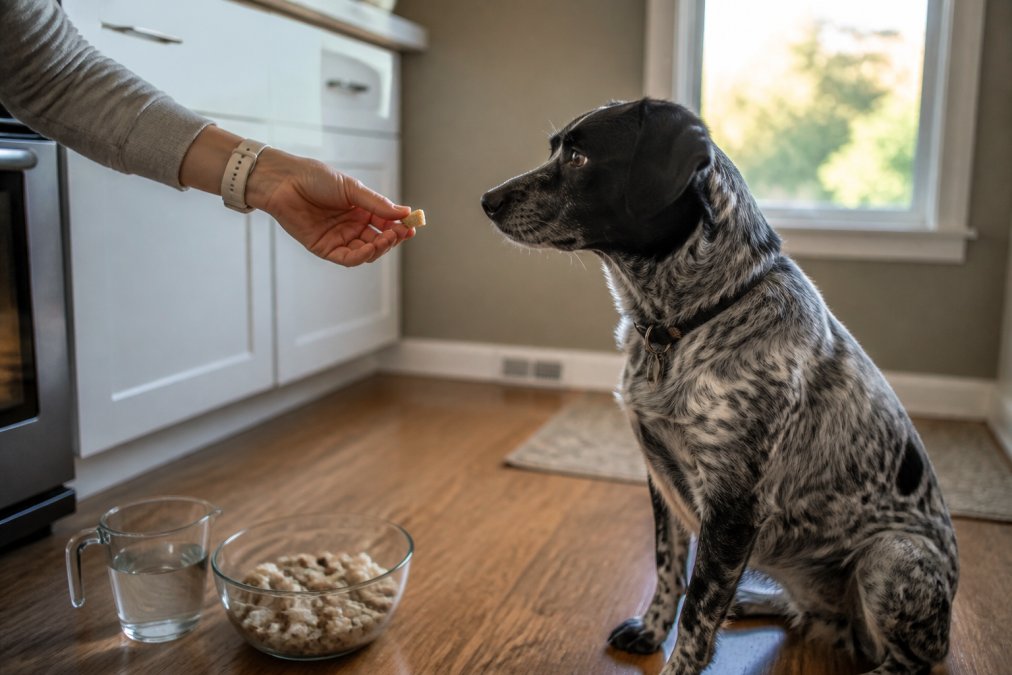
The transition to raw feeding is a biological process, not a calendar event. The 7-to-10-day timeline is a framework, but your dog's individual response should dictate the pace.
Managing a Dog Allergic Reaction to Dog Food
A dog allergic reaction to dog food typically presents as itchy skin, recurrent ear infections, or chronic gastrointestinal issues like gas and loose stools. If you suspect a food allergy, the diagnostic gold standard is an elimination diet, where you feed a single novel protein source for 8 to 12 weeks and monitor symptoms.
This is where single-ingredient freeze-dried treats become a practical tool. With a treat made from one protein, you can test tolerance without contaminating the elimination trial. Beef liver is a common allergen trigger for some dogs, so if your dog has not eaten beef before, start with a tiny piece and watch for 24 hours.
The distinction between a food allergy and a food intolerance matters. A true allergy involves an immune response and often shows up as skin problems. An intolerance is a digestive issue that causes gas, vomiting, or diarrhea. For allergies, strict avoidance is required; for intolerances, smaller portions or different preparation methods may suffice.
Safety, Handling, and Sourcing Standards
Freeze-dried raw food carries the same pathogen control considerations as any raw meat product. The freeze-drying process removes moisture, which inhibits bacterial growth, but it does not sterilize the food. Handling requires the same precautions as raw meat for human consumption.
Sourcing standards separate premium products from commodity ones. The safest freeze-dried raw uses meat from animals raised without antibiotics and hormones, ideally grass-fed and humanely raised. High-pressure processing is an additional safety step some manufacturers use to reduce pathogen load without cooking the food.
Simplified Freeze Dried sets a clear standard: no imported beef, only 100% American beef liver, and no denatured meat, which means the liver comes from animals fit for human consumption. The pumpkin puree is 100% American pumpkin sourced from the Midwest. These sourcing choices address the common objection that freeze-dried treats are "raw" in a risky way. Raw, yes. Careless, no.
Cross-contamination is a real concern for households with young children or pets with compromised immune systems. Store freeze-dried products in their original packaging or an airtight container. Rehydrate only the portion you plan to serve, because once water is added, the food becomes perishable and must be refrigerated and used within 24 hours.
Cost-Per-Day and Convenience Analysis
Freeze-dried raw costs more per day than kibble, but the gap narrows when you factor in feeding amounts and health outcomes. A 40-pound dog eating premium kibble might cost $2.00 to $2.50 per day. The same dog on a complete freeze-dried raw diet typically runs $4.00 to $6.00 per day.
The convenience equation favors freeze-dried raw in specific scenarios. It is shelf-stable, which makes it ideal for travel, camping, or emergency kits where refrigeration is unavailable. There is no thawing required, and portioning is straightforward.
| Scenario | Kibble | Frozen Raw | Freeze-Dried Raw |
|---|---|---|---|
| Daily cost (40 lb dog) | $2.00-$2.50 | $3.50-$5.00 | $4.00-$6.00 |
| Storage | Pantry | Freezer | Pantry |
| Prep time | Pour and serve | Thaw, then serve | Add water, wait 5 min |
| Travel friendly | Yes | No | Yes |
A cost-per-day analysis should also include potential veterinary savings. Dogs with chronic skin allergies or digestive issues often require repeated vet visits and prescription diets. For some owners, the higher upfront food cost of a freeze dried raw diet is offset by fewer allergy flare-ups and better gastrointestinal health.
The environmental impact is another angle worth weighing. Freeze-drying consumes more energy than kibble extrusion per pound of finished product, but the ingredient sourcing can be more sustainable when proteins come from grass-fed or humanely raised operations.
Conclusion: Is a Raw Diet Right for Your Dog?
A freeze dried raw diet for dogs is not the right choice for every household, but it deserves serious consideration for dogs with food sensitivities, picky eaters, or owners who want minimal processing in their pet's food.
Start with treats rather than a full diet overhaul. A single-ingredient freeze-dried beef liver treat lets you test your dog's tolerance and preference without committing to a complete feeding change. Simplified Freeze Dried offers regular and kibble-sized pieces, both suitable for dogs and cats, made from 100% American beef liver with no imported or denatured meat.
Simplified Freeze Dried Beef Liver Treats for Dogs & Cats are available for $11.99. For a variety, consider The Trio (Dogs) at $39.58, which includes beef liver treats, pumpkin treats, and Magic Dust Liver Topper. You can also get Simplified Freeze-Dried Magic Dust-Beef Liver Topper For Dogs & Cats for $19.99 to entice picky eaters.


The transition to raw feeding does not have to happen overnight. Begin with a treat as a reward, observe your dog's response over two weeks, and then decide whether a full meal replacement fits your routine and budget.
Frequently Asked Questions
Is a freeze dried raw diet good for dogs?
Yes, a freeze dried raw diet for dogs can be excellent. The freeze-drying process preserves natural nutrients, enzymes, and flavor that high-heat cooking destroys. It is minimally processed and often contains more bioavailable nutrients than kibble. Many owners report improved digestion, healthier coats, and better dental health. Choose a brand that uses human-grade ingredients and follows strict food safety protocols to ensure the best nutrition and safety for your pet.
What are the downsides of freeze-dried dog food?
The main downsides are cost and safety. Freeze-dried raw is more expensive per day than kibble. There is also a potential risk of bacteria like Salmonella, so you must follow handling instructions and wash bowls and hands. This is especially important if you have immunocompromised individuals in your home. Always buy from brands that test for pathogens to ensure safety while retaining nutrient density.
How do I transition my dog to a raw diet?
Transitioning needs to be gradual over 7-10 days. Start by mixing 25% freeze-dried raw with 75% of your dog's current food. Every two days, adjust the ratio until the bowl is 100% freeze-dried raw. Watch for changes in stool or gastrointestinal health, which are common as the digestive system adapts. For dogs with a sensitive stomach, slow the transition to two weeks. Rehydrate the food properly to avoid constipation and ensure adequate moisture content.
What are the benefits of single-ingredient dog treats?
Single-ingredient treats are the best way to avoid triggering a dog allergic reaction to dog food. When a treat contains only one protein source, like beef liver, you can pinpoint exactly what your dog is eating. This is crucial for elimination diets and managing food sensitivities. They are also free from fillers, synthetic vitamins, and binding agents found in processed treats. This whole-food nutrition provides a concentrated source of protein and nutrients without the risk of hidden allergens.
Choosing the right diet means balancing nutrition, cost, and your dog's individual needs. Simplified Freeze Dried makes that balance easier with single-ingredient, human-grade treats that support training, allergy management, and whole-food nutrition. Explore the beef liver treats and pumpkin options to see how a simpler ingredient list changes your dog's health. Get started with Simplified Freeze Dried and give your dog treats you can trace to the source.
This article was written using GrandRanker