


Table of Contents
- Signs of Food Allergies in Dogs
- Oatmeal Baths and Soothing Soaks for Itchy Skin
- Dog Allergic Reaction to Dog Food: Managing the Trigger
- Single-Ingredient Dog Treats for Allergies
- Topical Remedies: Coconut Oil, Aloe Vera, and Apple Cider Vinegar
- Dilution Ratios and Toxicity Warnings for Essential Oils
- When Natural Remedies for Dog Skin Allergies Need Veterinary Backup
- Frequently Asked Questions
Last Updated: September 10, 2026
Signs of Food Allergies in Dogs
Food allergies in dogs are immune reactions to specific proteins in food, most commonly beef, chicken, dairy, wheat, and lamb. Unlike food intolerance, which causes digestive upset, a true dog allergic reaction to dog food typically shows up on the skin first.
The telltale pattern: itching that never stops. Dogs with food allergies scratch their paws, face, ears, and belly relentlessly. You may notice red, inflamed skin, recurring ear infections, hair loss, or hot spots that heal and return. Some dogs develop a histamine response that triggers hives or facial swelling.
A common mistake is assuming seasonal allergies when the itching is year-round. Environmental allergens cause seasonal flare-ups; food allergies stay constant as long as the trigger stays in the bowl.
If your dog shows these signs, work with your veterinarian on an elimination diet before changing anything else.
Oatmeal Baths and Soothing Soaks for Itchy Skin
Oatmeal baths are the fastest topical relief for a dog with irritated skin. Colloidal oatmeal binds to the skin, restoring moisture retention and calming the inflammation that drives constant scratching. The key is getting the concentration and temperature right, because a weak bath does nothing and a hot one makes itching worse.
How to do it properly:
- Grind plain, unflavored rolled oats into a fine powder. A coffee grinder works better than a blender for a truly fine consistency.
- Fill a tub with lukewarm water, never hot. Test it on your inner wrist; if it feels warm to you, it is too warm for a dog with inflamed skin.
- Stir in the oatmeal until the water turns milky and slightly slippery. A common target is roughly one cup of ground oats per gallon of water for a medium dog; scale up or down by body size.
- Let your dog soak for 10-15 minutes, gently pouring water over the itchy areas. Use a cup or pitcher rather than a sprayer, which can startle nervous dogs.
- Rinse with cool water and pat dry. Do not scrub; friction on inflamed skin triggers more itching.
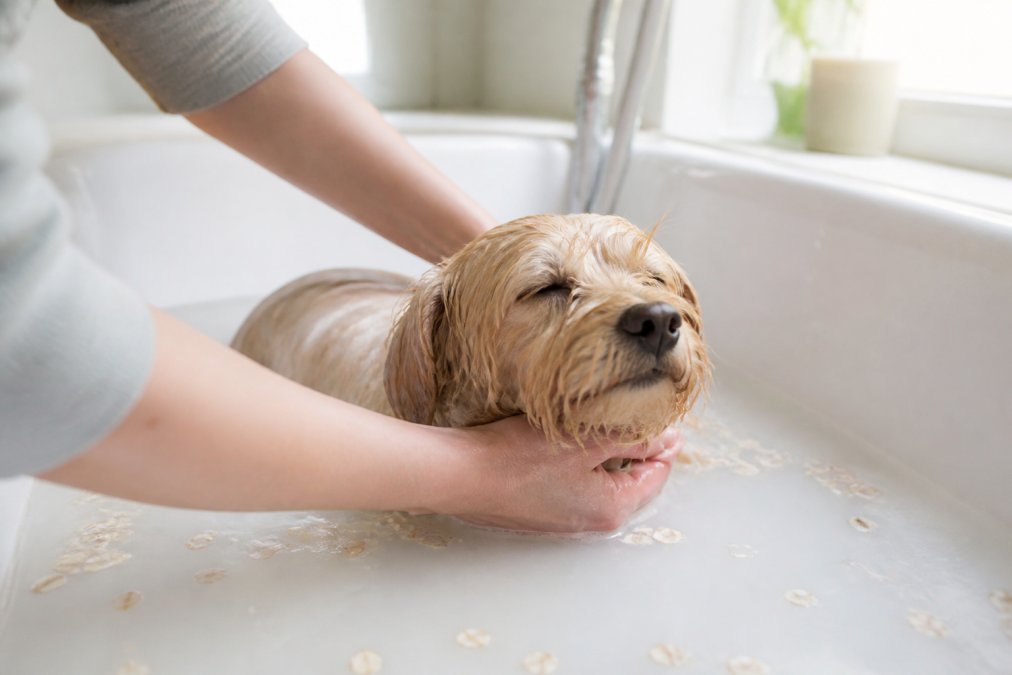
Soak duration matters. Longer isn't better; past 15 minutes, the skin starts drying out and the itching returns worse. For maintenance, one bath every one to two weeks keeps most mild cases comfortable. During a flare-up, a vet may suggest bathing every few days, but daily bathing strips the skin barrier and is rarely recommended.
Epsom salt paw soaks work similarly for paw maintenance. Dissolve roughly one tablespoon of Epsom salt per cup of warm water, then let your dog stand in a few inches of the solution for about five minutes. Rinse the paws thoroughly afterward, because salt left between the pads draws moisture out and can cause cracking. Check with your vet first if your dog has open sores, and never use Epsom salt soaks on a dog with heart or kidney conditions without veterinary clearance.
Breed-specific cautions: Flat-faced breeds like French Bulldogs and Pugs overheat quickly in warm water, so keep soaks short and the room cool. Dogs with heavy, double coats, such as Golden Retrievers and Huskies, need extra rinsing and thorough drying to prevent moisture trapped against the skin, which can feed yeast overgrowth. Short-coated breeds like Boxers and Dobermans dry fast but are more prone to visible dryness, so follow with a pet-safe moisturizer if your vet approves.
If your dog's itching does not improve after two or three consistent soaks, the problem is likely deeper than surface irritation. Move on to the dietary and veterinary sections below.
Dog Allergic Reaction to Dog Food: Managing the Trigger
Managing a dog allergic reaction to dog food starts with identifying the protein causing it. The gold standard is an 8-12 week elimination diet using a novel protein or hydrolyzed formula, then reintroducing ingredients one at a time to isolate the trigger.
What most guides miss is how often treats sabotage the whole process. A single piece of the wrong training treat can restart the reaction and undo weeks of progress. Every bite counts.
Once you've identified the trigger, read every label. "Natural" and "hypoallergenic" mean very little on pet packaging. Look for single-ingredient products with nothing to hide: one protein, no binding agents, no preservatives.
For dogs with confirmed protein allergies, single-ingredient freeze-dried treats make training possible again. Simplified Freeze Dried offers single-ingredient beef liver treats in mini-sized pieces designed for training.
Single-Ingredient Dog Treats for Allergies
Single-ingredient dog treats for allergies remove the guesswork. When a treat contains exactly one ingredient, you know immediately whether it's safe for your dog's trigger list.
The problem is that "single-ingredient" gets stretched. Some brands list one protein but process it on shared equipment with common allergens, or add "natural flavors" that hide undisclosed proteins. Ask the company directly how they source and process.
What to look for:
- One named ingredient, nothing else
- Human-grade sourcing, not denatured meat
- Minimal processing that preserves nutrition
- A size appropriate for your dog and use case
Here's where size matters more than people realize. Regular-sized pieces are too big for training sessions, where you need a dozen quick rewards in a row. Kibble-sized pieces let you reward frequently without overfeeding. At Simplified Freeze Dried, our mini-sized pieces are for training rewards. The regular size is for treats only.
Topical Remedies: Coconut Oil, Aloe Vera, and Apple Cider Vinegar
Coconut oil, aloe vera, and diluted apple cider vinegar are the three most common topical remedies for dog skin allergies, each with a distinct role in symptom management. The difference between relief and harm comes down to concentration, application frequency, and knowing when not to use them.
Coconut oil moisturizes dry, cracked skin and supports the skin barrier function. Melt a small amount and massage it into affected areas, or add a teaspoon to food for internal support. Start small; too much causes loose stools. For topical use, a pea-sized amount is enough for a small area on a small dog, and a teaspoon covers a larger patch on a medium dog. Apply once or twice daily. If your dog licks it off, that is generally safe in small amounts, but excessive ingestion can cause diarrhea.
Aloe vera calms inflammation and cools hot spots. Use pure, pet-safe gel, and never let your dog lick it off, since the latex layer of the plant is toxic to dogs. Apply to intact skin only. A thin layer is sufficient; more is not better. If your dog has a habit of licking, cover the area with a light bandage or an Elizabethan collar until the gel absorbs.
Apple cider vinegar rebalances pH and can discourage yeast overgrowth on the coat. Dilute it one part vinegar to one part water for a spray, then apply lightly to paws or coat. For small dogs or sensitive skin, dilute further to one part vinegar to three parts water. Never apply to broken skin, and skip it entirely if your dog has open hot spots. Use no more than once daily, and stop if you see redness or irritation worsen.
Size and breed adjustments: Small dogs and flat-faced breeds like French Bulldogs and Pugs have thinner skin and are more prone to irritation from vinegar, so start with the weaker dilution. Breeds with skin folds, such as Shar-Peis and Bulldogs, need extra care to keep folds dry; apply remedies sparingly and pat folds dry afterward. Dogs with white or light-colored coats may show temporary staining from apple cider vinegar, which is harmless but worth knowing.
These remedies manage symptoms. They don't remove the trigger, so pair them with the dietary work above. If your dog's skin worsens or develops open sores, stop topical treatment and call your veterinarian.
Dilution Ratios and Toxicity Warnings for Essential Oils
Essential oils are where natural remedies for dog skin allergies turn dangerous. Dogs metabolize oils differently than humans, and several popular oils are outright toxic to them.
Never use these on or around dogs: tea tree oil in undiluted form, pennyroyal, wintergreen, eucalyptus, citrus oils, pine, and cinnamon. Signs of toxicity include drooling, vomiting, wobbliness, and lethargy. If you see these, call your vet or a pet poison hotline immediately.
Safe options, properly diluted: lavender and chamomile can be used at a dilution ratio of one drop of essential oil per 50 drops of carrier oil, such as fractionated coconut oil. That's roughly a 2% dilution. For small dogs, halve it again.
Chamomile and green tea soaks offer a safer route to the same calming effect. Brew a strong cup, cool it completely, and use it as a final rinse after bathing. Calendula-infused rinses work the same way.
When Natural Remedies for Dog Skin Allergies Need Veterinary Backup
Natural remedies for dog skin allergies have a ceiling. Knowing when you've hit it prevents a manageable problem from becoming a chronic one.
Call your veterinarian if you see:
- Scratching that continues after two weeks of consistent home care
- Open sores, bleeding, or a foul smell, which signal secondary bacterial infection
- Hair loss spreading beyond the original itchy areas
- Your dog losing weight, vomiting, or acting lethargic
- Any suspected essential oil exposure
A naturopathic approach works best alongside conventional medicine, not instead of it. Your vet can run allergy testing, prescribe medication for acute flare-ups, and confirm whether yeast overgrowth or flea allergy dermatitis is complicating the picture. Many owners find that a vet-guided elimination diet plus gentle topical care delivers the fastest, longest-lasting relief.
Frequently Asked Questions
Does apple cider vinegar stop itching on dogs?
Apple cider vinegar can help with mild itching when diluted properly, but it is not a cure. Mix one part raw apple cider vinegar with three parts water and apply to intact skin only. Never use it on open hot spots or raw areas, as it will sting. If your dog has severe dog skin allergies or a secondary bacterial infection, vinegar alone will not resolve it. Always patch-test a small area first and stop if irritation worsens.
What is the most powerful natural antihistamine for dogs?
There is no single natural antihistamine that matches prescription strength. Quercetin, found in small amounts in apples and green tea, has mild antihistamine properties. Omega-3 fatty acids from fish oil help reduce histamine response over time. For serious dog skin allergies, these natural options work best alongside veterinary care, not as replacements. Talk to your vet before adding supplements, especially if your dog takes other medications.
What natural food can I give my dog for itchy skin?
Cooked pumpkin, plain oatmeal, and small amounts of coconut oil can support skin barrier function. For protein, single-ingredient treats like freeze-dried beef liver or pumpkin puree limit allergen exposure. If you suspect a dog allergic reaction to dog food, an elimination diet using novel proteins is the most reliable way to identify triggers. Keep a symptom log and review it with your vet before making major diet changes.
When should I see a veterinarian for my dog's skin allergies?
See a vet if your dog has open sores, hair loss, persistent scratching that disrupts sleep, or signs of secondary bacterial infection like pus or foul odor. Yeast overgrowth, characterized by a musty smell and greasy skin, also needs veterinary treatment. Natural remedies for dog skin allergies can manage mild symptoms, but professional diagnosis with skin scrapes or allergy testing gives you a clear treatment plan and rules out thyroid issues or mange.
Managing dog skin allergies is a long game, and the treats you choose matter as much as the baths and rinses. Simplified Freeze Dried makes single-ingredient, freeze-dried beef liver treats from 100% American, human-grade liver, available in mini-sized pieces built for training sessions with dogs and cats alike. When you need a reward that won't undo your elimination diet, get started with Simplified Freeze Dried and give your dog a treat you can actually trust.