


Table of Contents
- Recognizing Signs of Malabsorption in Dogs and Other Digestive Red Flags
- How Diet Helps Manage Chronic Digestive Issues in Pets
- Running an Elimination Diet for Dogs and Cats Step by Step
- How to Transition Dog Food Gradually Without Triggering Flare-Ups
- Choosing Single-Ingredient Treats for Dogs with Food Sensitivities
- Tracking Symptoms and Adjusting Your Pet's Diet Over Time
- Conclusion: Building a Long-Term Plan for Chronic Digestive Issues
- Frequently Asked Questions
Last Updated: October 6, 2026
Recognizing Signs of Malabsorption in Dogs and Other Digestive Red Flags
Chronic digestive issues in pets often show up slowly. At Simplified Freeze Dried, we hear from pet parents every week who spent months guessing before they got answers.
Signs of malabsorption in dogs include weight loss despite a normal appetite, dull coat, frequent gas, and stools that stay soft or change color.
Watch for these common signs:
- Vomiting more than once a week
- Diarrhea lasting longer than 48 hours
- Gas that clears a room
- Stool that's greasy, pale, or bloody
- Eating well but losing weight
- Low energy or hiding more often
Cats hide discomfort better than dogs. A cat with digestive trouble may just groom less, eat less, or vomit hairballs more often.
When to Call Your Veterinarian Immediately
Some symptoms can't wait for a Monday appointment. Call your vet right away if you see:
- Blood in vomit or stool
- Repeated vomiting with no food kept down
- A bloated, hard belly
- Weakness, collapse, or trouble breathing
- A pet that won't eat for more than 24 hours
The American Veterinary Medical Association's pet owner resources notes that sudden, severe symptoms often signal emergencies rather than simple upset stomachs. Trust your gut here. If something feels wrong, it probably is.
How Diet Helps Manage Chronic Digestive Issues in Pets
Diet is the most powerful tool you have for managing chronic digestive issues in pets.
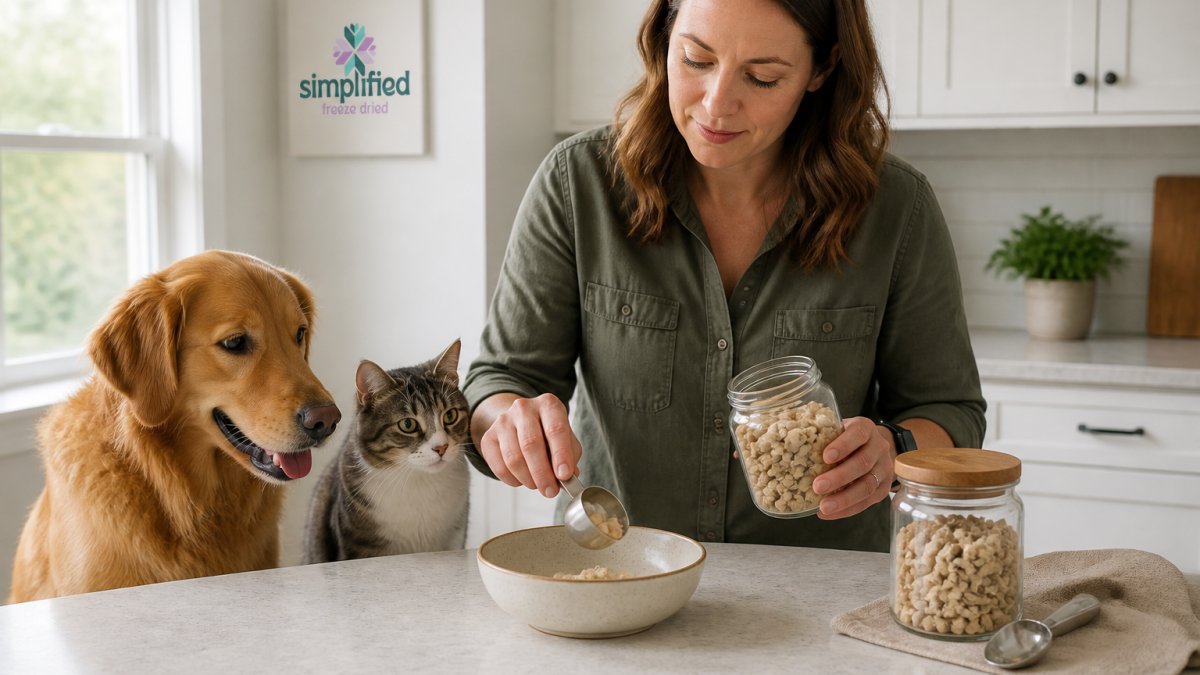
The goal is simple: reduce irritation while supplying complete nutrition. Many vets start with a fat-restricted diet because fat is harder to digest than protein or carbs.
Fiber plays a role too. Some pets do better with more soluble fiber, others with less. There's no single answer, which is why tracking matters.
Protein quality counts as much as quantity.
Running an Elimination Diet for Dogs and Cats Step by Step
An elimination diet is a structured test, not a food change. You feed a single novel protein or a hydrolyzed diet for a set period, watch for improvement, then reintroduce ingredients one at a time to identify the trigger. Most practitioners find that owners who plan the trial before the first bowl do far better than owners who improvise.
Before You Start
- Ask your veterinarian to confirm the plan and rule out other causes first. Chronic vomiting, diarrhea, and weight loss have many drivers, and a diet trial only answers the food-trigger question.
- Choose the diet with your vet. Options are a novel protein your pet has genuinely never eaten, a hydrolyzed diet in which proteins are broken into fragments too small for the immune system to recognize, or a limited-ingredient diet with a single protein and single carbohydrate.
- Read the label for hidden proteins. "Chicken flavor," "animal digest," and "poultry by-product" can appear in foods that look like lamb or fish formulas.
- Plan for the whole household. One unplanned treat, one lick of a housemate's bowl, or one flavored medication can invalidate weeks of work.
The Trial Itself
- Transition to the trial diet gradually over about 7 days, mixing old and new food in shifting proportions. A sudden switch can cause loose stool that you then misread as a trial failure.
- Feed only the trial diet and clean water for 8 to 12 weeks. No table scraps, no rawhide, no dental chews, no flavored heartworm or flea products, no flavored toothpaste.
- Keep every other variable steady, same bowl, same feeding times, same exercise routine, so the diet is the only thing that changed.
- Log daily: stool consistency, frequency, appetite, vomiting episodes, gas, energy, and weight if you can weigh your pet at home.
- If symptoms improve, reintroduce one ingredient at a time, every 1 to 2 weeks, and note when symptoms return. That reintroduction step is what actually identifies the trigger; stopping at "the pet got better" only tells you the diet worked, not why.
- If there is no improvement after the full trial period, stop and talk to your vet. A failed trial is still useful information.
Cats Need a Different Approach
Most guidance online is written for dogs, and cats fail trials for different reasons. Cats are often more attached to a specific texture, temperature, and shape of food, and they can develop food aversions quickly if they associate a new food with feeling unwell. A few adjustments matter:
- Introduce the trial diet slowly, in small amounts alongside the old food, and warm it slightly if your cat prefers warm food.
- Never let a cat go more than about 24 hours without eating. Cats that stop eating can develop serious liver problems, so a refusal is a reason to call your vet, not to push harder.
- Watch for feline-specific clues: hiding more, grooming less, vomiting hairballs more often, or eating litter or non-food items.
- Cats are obligate carnivores with different protein and amino acid requirements than dogs, so a diet formulated for a dog is not a substitute, even if the protein is novel.
When you are using treats during a trial, use mini-sized single-ingredient pieces so a training reward is a tiny, controlled amount rather than a meal-sized variable. The regular size pieces are for treats only, they are too big for training.
A trial only works if the diet is the only thing that changed. Control the treats, control the medications, control the household, and write everything down.
How to Transition Dog Food Gradually Without Triggering Flare-Ups
Learning how to transition dog food gradually protects a sensitive gut from shock.
Use this 7-day schedule:
| Day | Old Food | New Food |
|---|---|---|
| 1-2 | 75% | 25% |
| 3-4 | 50% | 50% |
| 5-6 | 25% | 75% |
| 7 | 0% | 100% |
If stools get loose, slow down and hold at the current mix for a few extra days. A slower transition beats a setback every time.
Hydration matters during any switch. Always offer clean water, and add a little warm water to kibble if your pet drinks poorly.
Choosing Single-Ingredient Treats for Dogs with Food Sensitivities
Single-ingredient treats for dogs with food sensitivities remove the guesswork. When a treat has one ingredient, you know exactly what you're feeding and what to blame if something goes wrong.
Simplified Freeze Dried Pumpkin Biscuits Treats for Cats & Dogs →
This is where we built our whole business. Our FDA guidance on pet food labeling reminds owners that ingredient lists are legal documents, not marketing. Read them closely.
A few rules we follow:
- Skip treats with binding agents or preservatives
- Avoid anything with a protein your pet hasn't tested
- Choose freeze-dried over baked when you can
- Keep pieces small for training
Our mini-sized freeze-dried pieces are built for training sessions. The regular size pieces are for treats only, since they're too big for quick rewards. Our pumpkin biscuits are single-ingredient and work for both dogs and cats.

One ingredient means one variable. That's the whole point when you're hunting a trigger.
Tracking Symptoms and Adjusting Your Pet's Diet Over Time
Most owners change three things at once, see the pet improve, and have no idea which change did it. Tracking is how you turn that guesswork into a decision. The goal is not a perfect diary, it is a short, consistent record you will actually keep for months.
Score Stool Consistency, Don't Describe It
Use a simple 1-to-5 scale every time your pet goes:
| Score | What It Looks Like |
|---|---|
| 1 | Hard, dry, difficult to pass |
| 2 | Firm, holds shape, easy to pick up |
| 3 | Soft but formed, log-like |
| 4 | Soft, loses shape, leaves residue |
| 5 | Watery, no form |
A score of 2 or 3 is the target. Scores of 4 and 5 on most days point to a problem; a single 4 after a new treat is a data point, not a crisis. Writing "loose" every day tells you nothing. Writing "4, 4, 5, 3, 4" over a week tells you the diet is not holding.
What to Log Daily
- Stool score and number of bowel movements
- Appetite, normal, increased, or reduced, and how fast your pet eats
- Vomiting episodes, with a note on what came up and when
- Gas frequency and severity
- Energy level compared with a normal day
- Any new food, treat, supplement, or medication, with the date
Review on a Schedule, Not on a Feeling
Look at your log every two weeks. Ask three questions:
- Is the trend improving, flat, or worsening? Compare this two-week block with the last one, not with yesterday.
- Did anything change in the last two weeks besides the diet? If yes, you cannot credit the diet yet.
- If nothing improved, is it time to call your vet? A flat two-week block on a trial diet is a reason to check in, not to keep waiting.
Change one variable at a time, and give each change at least two weeks before you judge it. Two weeks is long enough for most pets to show a direction and short enough that you are not wasting months on a diet that is not working.
Make the Log Easy Enough to Keep
- Photograph stools on your phone with the date. A picture from two weeks ago settles arguments your memory cannot.
- Keep the log where you feed your pet, not in an app you will forget to open.
- Note the brand and formula name, not just "new food." Formulas change, and you will want the exact version later.
- Bring the log to veterinary appointments. A two-week trend line is far more useful to your vet than "he seems a little better."
If you use treats during training or a diet trial, use mini-sized single-ingredient pieces so each reward is a small, known quantity you can log. The regular size pieces are for treats only, they are too big for training.
A log is only useful if it drives a decision. Score the stool, note every food exposure, review every two weeks, and change one thing at a time.
Conclusion: Building a Long-Term Plan for Chronic Digestive Issues
Managing chronic digestive issues in pets is a marathon, not a sprint.
That's the work we care about at Simplified Freeze Dried. Our single-ingredient, freeze-dried treats are made for pets with sensitive guts.
If you're building a long-term plan, start with treats you can trust. Our pumpkin biscuits and freeze-dried liver are single-ingredient, and our mini pieces are sized for training.
Frequently Asked Questions
What are the signs of malabsorption in dogs?
Signs of malabsorption in dogs include chronic diarrhea, weight loss despite a normal appetite, pale or greasy-looking stools, vomiting, excessive gas, and dull coat quality. These symptoms suggest the digestive tract is not absorbing nutrients properly. If your dog shows several of these signs for more than a few days, schedule a veterinary exam. Your vet can run bloodwork and stool tests to confirm malabsorption and rule out other conditions before you change the diet.
How can diet help manage chronic digestive issues in pets?
Diet is one of the most controllable factors in managing chronic digestive issues in pets. A highly digestible diet with quality protein, restricted fat, and limited ingredients reduces the workload on the gastrointestinal tract. For pets with suspected food allergies, an elimination diet or novel protein diet can identify triggers. Adding fiber or probiotics may support gut bacteria. Always work with your veterinarian to match the diet to your pet's specific diagnosis, whether that is inflammatory bowel disease, food intolerance, or another condition.
How should I transition a pet with a sensitive stomach to a new food?
Transition slowly over 7 to 10 days. Start with about 25 percent new food mixed with 75 percent old food for three days. Then move to a 50-50 mix for three days, followed by 75 percent new and 25 percent old for three days. Finish with 100 percent new food. If diarrhea, vomiting, or gas worsens at any stage, slow down or return to the previous ratio for a few more days. Pets with chronic digestive issues often need a slower transition than healthy pets.
When should I ask a veterinarian about ongoing digestive symptoms?
Contact your veterinarian if digestive symptoms last more than 48 hours, if you see blood in the stool or vomit, if your pet stops eating, or if weight loss occurs. Repeated vomiting, lethargy, or signs of pain also warrant a call. Chronic digestive issues that persist for weeks need a proper diagnosis before you try an elimination diet or home-prepared food. Your vet can check for parasites, organ disease, and other causes that diet alone will not fix.