


Table of Contents
- Freeze Dried vs Air Dried Dog Treats: A Quick Comparison
- How Freeze Drying and Air Drying Remove Moisture
- Nutrient Retention and Digestibility in Freeze Dried vs Air Dried Treats
- Benefits of Freeze Dried Dog Treats for Health-Conscious Owners
- Single-Ingredient Dog Treats: Why Ingredient Sourcing Matters
- The Best Treats for Dog Training: Texture, Size, and Convenience
- Conclusion
- Frequently Asked Questions
Last Updated: September 17, 2026
Freeze Dried vs Air Dried Dog Treats: A Quick Comparison
The difference between freeze dried and air dried dog treats comes down to how each method removes water. Freeze drying removes moisture through low temperatures and pressure, while air drying uses controlled heat and airflow. That single distinction changes nutrient retention, texture, shelf life, and how well a treat works as a training reward.
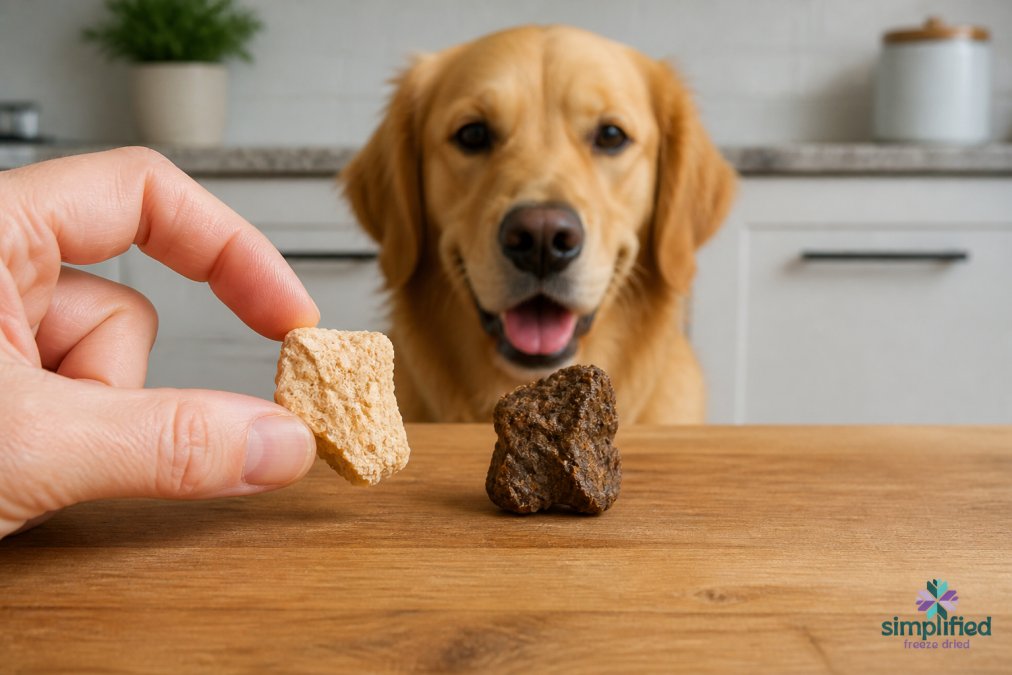
This guide from Simplified Freeze Dried breaks down both methods, side by side.
| Factor | Freeze Dried | Air Dried |
|---|---|---|
| Moisture removal | Sublimation (ice to vapor) | Evaporation (heat + airflow) |
| Temperature used | Low, below freezing | Warm, typically 100-160°F |
| Nutrient retention | High | Moderate |
| Texture | Light, crisp, crumbles easily | Dense, chewy, leathery |
| Shelf life | Long, sealed | Long, sealed |
| Best for training | Yes, breaks into small pieces | Possible, but harder to split |
How Freeze Drying and Air Drying Remove Moisture
Moisture removal is the whole ballgame. Water is what lets bacteria grow, so the more thoroughly you strip it out, the longer a treat stays safe on the shelf. The two methods get there in completely different ways.
The Freeze-Drying Process
Freeze drying, also called lyophilization, is a preservation method that freezes the raw ingredient solid, then lowers the surrounding pressure so the frozen water turns directly into vapor without ever becoming liquid. That process is called sublimation.
How Air Drying Works
Air drying relies on dehydration through warm, moving air. The ingredient sits in a drying chamber while heated air pulls moisture out through evaporation, usually over several hours.
Nutrient Retention and Digestibility in Freeze Dried vs Air Dried Treats
Nutrient retention is where the two methods diverge most, and the reason comes down to temperature. Heat accelerates oxidation and denaturation, so the longer and hotter the drying step, the more the original nutrient profile shifts.
Here's what actually happens to specific nutrients:
- Water-soluble vitamins (B-complex, vitamin C): These are the most heat-sensitive. Air drying at 100-160°F for several hours degrades a meaningful share of them. Freeze drying, which never exceeds freezing during the drying phase, keeps far more intact.
- Fat-soluble vitamins (A, D, E, K): More stable under heat but still vulnerable to oxidation over long drying cycles. Freeze drying limits oxygen exposure during sublimation, which slows that breakdown.
- Enzymes and amino acids: Enzymes are proteins, and proteins denature with heat. Air drying reduces enzyme activity; freeze drying largely preserves it. Amino acids survive both methods reasonably well, though prolonged heat can reduce bioavailability of certain ones.
- Minerals: The most heat-stable nutrient class. Calcium, phosphorus, and trace minerals survive both methods at similar rates.
- Protein content: Measured protein stays high in both, but 'protein on the label' and 'protein your dog can use' are different numbers.
Matching the Method to Your Dog's Health Profile
This is the part most comparisons skip. The 'better' method depends on what your dog is dealing with:
- Pancreatitis or fat-sensitive conditions: Fat content matters more than drying method. Single-ingredient organ treats like beef liver are naturally rich, so portion size is the lever. Freeze-dried liver crumbles easily, which makes it simpler to feed a very small amount. If your dog has a history of pancreatitis, talk to your vet before adding any rich organ treat, regardless of how it was dried.
- Dental health: Air-dried treats tend to be chewier and denser, which gives more mechanical scraping action against the teeth. Freeze-dried treats are crisp and crumble, so they offer less chewing resistance. If dental cleaning is your goal, a tougher air-dried piece may do more work.
- Senior dogs or dogs with few teeth: The opposite applies. Freeze-dried pieces soften fast in warm water and break apart without much jaw pressure, which is easier on aging mouths.
- Food sensitivities or elimination diets: A single-ingredient freeze-dried treat is easier to audit and easier to reintroduce one variable at a time.
Benefits of Freeze Dried Dog Treats for Health-Conscious Owners
The benefits of freeze dried dog treats center on three things: nutrient density, clean ingredient lists, and convenience. For owners managing allergies or supporting long-term wellness, those advantages compound.

- Beef Liver Treats made from 100% American beef liver, never imported and never denatured
- Pumpkin Biscuits made from 100% American pumpkin sourced from the Midwest
- Magic Dust Beef Liver Topper ground into a fine powder for picky eaters
Single-Ingredient Dog Treats: Why Ingredient Sourcing Matters
Sourcing transparency separates a genuinely clean treat from one that just markets itself that way. Single-ingredient dog treats are only as good as the ingredient inside them, and origin is the part most brands gloss over.


Ask three questions before you buy:
Simplified Freeze Dried Beef Liver →
- Where does the meat come from? Domestic sourcing means the supply chain falls under U.S. oversight. Simplified Freeze Dried uses only 100% American beef liver and refuses imported beef entirely.
- Is the meat human-grade? Denatured meat is meat deemed unsafe for people because of disease or infection, and it's legal to route into some pet products. Human-grade means the same standard you'd expect on your own plate.
- How much processing happened? Minimal handling preserves more nutrition. Our beef liver is cut once, then freeze dried. No grinding, no blending, no additives.
The Best Treats for Dog Training: Texture, Size, and Convenience
The best treats for dog training are small, easy to break apart, and low enough in value that you can repeat them twenty or thirty times in a session without filling your dog up. Texture and size matter more than most owners expect, because they directly control your reward rate.
Here's how the two textures play out in practice:
- Freeze-dried texture: Light, crisp, and snaps cleanly. You can pinch off a smaller portion on the spot without a knife. That split-ability is the single biggest training advantage freeze-dried treats have.
- Air-dried texture: Denser and chewier, closer to jerky. Harder to split by hand, slower for a dog to finish. Fine for a single reward, awkward when you need twenty in a row.
A Practical Training-Treat Checklist
Before you commit a treat to your training pouch, run it through these questions:
- Can you split it by hand in under two seconds? If not, it will slow your reward rate.
- Is one piece small enough to repeat 20-30 times without satiety? If your dog starts refusing rewards mid-session, the pieces are too big.
- Does it leave residue on your fingers? Greasy or sticky treats make fast delivery harder and can distract a dog that's targeting your hand.
- Does it hold up in a pouch? Freeze-dried pieces stay crisp in an airtight container; air-dried pieces can soften and get tacky.
- Is it low enough value to use for easy behaviors? Save the highest-value treats for hard tasks and use lower-value pieces for repetition.
Convenience tips that hold up in practice:
- Pre-break treats into a training pouch before you start, so you're not fumbling mid-session
- Keep a sealed bag in the car for impromptu practice
- Use a topper like Magic Dust to add value to regular kibble when you're rewarding at mealtime
- Store treats in an airtight container to protect crispness
Conclusion
Choosing between freeze dried and air dried comes down to what you're optimizing for. If nutrient retention, clean labels, and training-friendly texture top your list, freeze drying wins. If you're comparing options at the register, air drying usually comes in lower, though you're trading away some nutritional value to get there.
Frequently Asked Questions
Which is better for your dog, freeze-dried or air dried?
It depends on your priorities. Freeze-dried treats retain more nutrients because the low-heat process preserves vitamins, minerals, and enzymes that air drying can degrade. They also rehydrate easily and have a longer shelf life. Air-dried treats are often chewier and may be more affordable. For owners focused on nutrition and ingredient purity, freeze-dried is the stronger choice.
How does nutrient retention compare between freeze-dried and air-dried treats?
Freeze-drying removes moisture through sublimation at very low temperatures, which keeps heat-sensitive vitamins and essential fatty acids largely intact. Air drying uses sustained heat, which can reduce levels of certain vitamins and enzymes. If your dog has food sensitivities or you want maximum nutritional value from a single-ingredient treat, freeze-dried options preserve more of the original raw ingredients.
Are freeze-dried treats safer for dogs with sensitive stomachs?
Freeze-dried treats made from a single ingredient, like beef liver or pumpkin, are often easier on sensitive stomachs because they contain no fillers, grains, or artificial preservatives. The freeze-drying process also reduces bacterial load while keeping the food shelf-stable. Always introduce any new treat slowly and consult your vet if your dog has a diagnosed condition.
What should I look for in single-ingredient dog treats for training?
Look for a short ingredient list with no binding agents, preservatives, or added flavors. Freeze-dried single-ingredient treats work well for training because they are lightweight, mess-free, and highly palatable. For small dogs and puppies, choose mini or kibble-sized pieces so you can reward frequently without overfeeding. Simplified Freeze Dried offers beef liver and pumpkin treats in both regular and small kibble-sized pieces.
Do freeze-dried treats need refrigeration or special storage?
No. Freeze-dried treats are shelf-stable when kept in an airtight container away from moisture and direct sunlight. Their low moisture content prevents spoilage, making them convenient for training sessions, travel, and everyday rewards. If you rehydrate them with water, use them within a short period and refrigerate any leftovers.