


Table of Contents
- Why Online Pet Supply Shopping Goes Wrong
- How to Choose Healthy Pet Treats Without Getting Fooled
- Reading Pet Food Ingredient Labels the Right Way
- Choosing the Right Size Treats for Training
- Mistakes That Put Your Pet at Risk
- Subscription Traps and Data Privacy Risks in Pet Supplies Online Shopping
- Eco-Friendly Pet Shopping and Return Policies
- Conclusion
- Frequently Asked Questions
Last Updated: September 22, 2026
Why Online Pet Supply Shopping Goes Wrong
Shopping for pet supplies online is convenient, but it comes with real risks most buyers don't see until something goes wrong. This guide from Simplified Freeze Dried covers the most common mistakes when shopping for pet supplies online, from misreading labels to subscription traps.
How to Choose Healthy Pet Treats Without Getting Fooled
Learning how to choose healthy pet treats starts with ignoring the front of the package. Claims like "natural," "premium," and "vet-approved" carry little legal weight. The back label is where the real story lives.
Single-Ingredient vs. Multi-Ingredient: What Matters
Single-ingredient treats are one item, nothing else. Multi-ingredient treats blend proteins, grains, binders, and preservatives. Neither is automatically better, but single-ingredient options remove guesswork, which matters most for pets with allergies or sensitive stomachs.
Red Flags in Treat Marketing Claims
Watch for these warning signs on any product page:
- Vague sourcing ("sourced globally" tells you nothing)
- No ingredient list shown in the photos or description
- Claims without proof like "human-grade" with no explanation of what that means for the product
- Stock photos only, no actual images of the treat or packaging
- No physical address or contact information for the seller
Reading Pet Food Ingredient Labels the Right Way
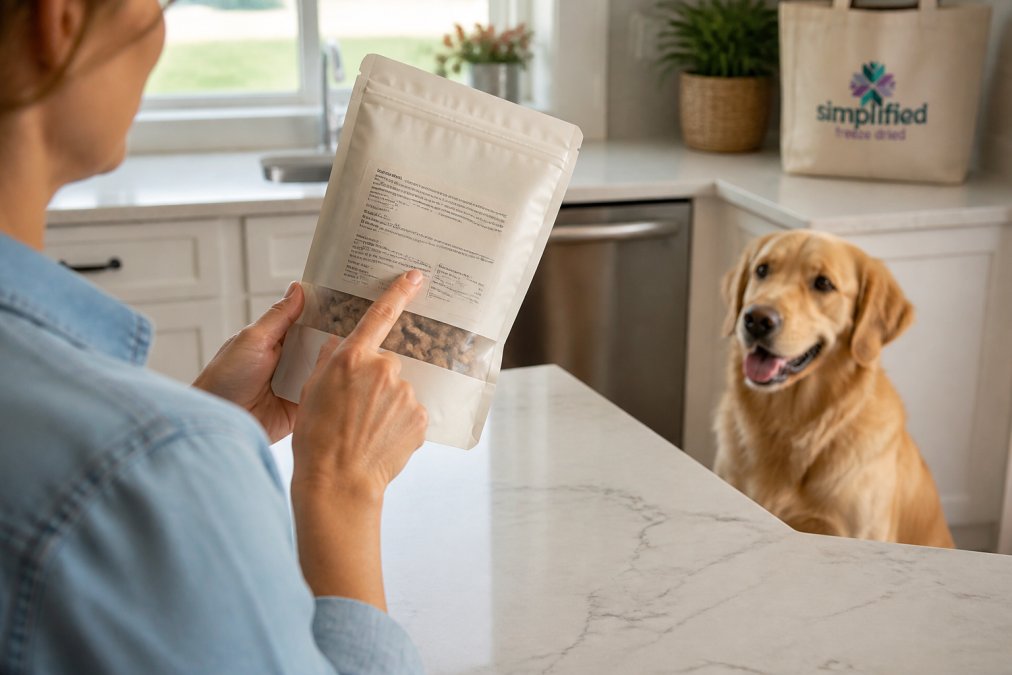
Reading pet food ingredient labels means reading top to bottom, not just the first line. Ingredients are listed by weight, so the first three or four items tell you what the product mostly is.
What the Guaranteed Analysis Doesn't Tell You
The guaranteed analysis shows minimum protein and fat, and maximum fiber and moisture. It doesn't tell you nutrient quality, digestibility, or sourcing. Two treats can show identical protein percentages while one uses fresh muscle meat and the other rendered by-products.
Choosing the Right Size Treats for Training
Choosing the right size treats for training comes down to one rule: smaller is better, and more repetitions beat bigger rewards. A thumbnail-sized treat takes several seconds to chew and fills a dog up fast; a mini kibble-sized piece delivers the same reward value in a fraction of the time.
Mistakes That Put Your Pet at Risk
Some online shopping mistakes are annoying; others are dangerous. The two biggest risks are counterfeit products and spoiled inventory, both far more common on third-party marketplaces than most buyers realize.
Counterfeit Products and Third-Party Sellers
Counterfeit pet products exist, and they're hard to spot from a photo. Fake treats and supplements may use cheaper fillers, wrong dosages, or contaminated ingredients. The listing looks identical to the real thing.
Expiration Dates and Storage Conditions
Freeze-dried and dry treats lose quality over time, and heat speeds that up. A product that sat in a hot warehouse for months may arrive stale or rancid even if the date looks fine.
Subscription Traps and Data Privacy Risks in Pet Supplies Online Shopping
Subscription models are convenient until they aren't. Most pet retailers present auto-ship as a discount, then quietly renew at full rate after the introductory period. The Federal Trade Commission's Negative Option Rule (the "click-to-cancel" rule) requires sellers to disclose recurring charges clearly, get express informed consent before billing, and make cancellation as easy as signup. Burying cancellation behind a phone call while letting you subscribe with one click is a rule violation, not a quirk.
How Auto-Ship Traps Actually Work
Three patterns show up again and again:
- Pre-checked consent boxes at checkout that enroll you in recurring delivery unless you uncheck them.
- Introductory pricing that applies only to the first one or two shipments, with the renewal rate disclosed in fine print or not at all.
- Cancellation friction, requiring a phone call, a chat with a retention agent, or a mailed written notice instead of a self-serve cancel button.
Before you check out, screenshot the cart and confirmation email, note the renewal date and amount, and set a calendar reminder three days before the first renewal so you can cancel without being charged. If a seller refuses to cancel, file a complaint with the FTC at ReportFraud.ftc.gov, the agency uses those reports to build enforcement cases.
Payment Methods and Data Privacy
A few habits reduce the damage:
- Use a unique password for each retailer. Password reuse is how one breach becomes five.
- Pay with a credit card, not a debit card. Under the Fair Credit Billing Act, credit card charges over $50 can be disputed, and your liability for unauthorized use is capped at $50. Debit cards pull money directly from your bank account and resolving fraud takes longer.
- Skip "save my card" on any site you don't order from regularly. Stored payment data is the first thing attackers go after.
- Watch for lookalike domains. Typosquatters register misspellings of popular pet retailers and harvest credentials at checkout.
Federal Trade Commission guidance on negative option and auto-renewal subscriptions
Eco-Friendly Pet Shopping and Return Policies
Sustainable pet shopping is growing, but "eco-friendly" on a label means little without specifics. A treat shipped in a plastic-lined pouch from overseas carries a very different footprint than one shipped in a recyclable paper mailer from a domestic facility. If sustainability is part of why you're buying, know what you're actually getting.
What to Look For (and What to Ignore)
- Packaging you can actually recycle. Look for the How2Recycle label or a clear resin code. "Compostable" claims only hold up if your municipality accepts that material, most curbside programs do not accept bioplastics.
- Domestic sourcing. Shorter shipping distances mean lower transport emissions, and domestic facilities fall under U.S. manufacturing and labeling rules that overseas sellers may not.
- Published sourcing details. A brand that names its farms, ranches, or co-packers is easier to verify than one that says "responsibly sourced."
- Ignore vague seals. A leaf icon or the word "green" on a package is marketing, not a certification. Third-party certifications (USDA Organic, Non-GMO Project) mean something; self-designed badges usually don't.
Counterfeit Products: How to Spot Them Before You Buy
Counterfeit pet food and medication are a real problem on third-party marketplaces, and the packaging is often close enough to fool a casual buyer. A few tells separate the real thing from a knockoff:
- Blurry or misaligned printing on the label, especially around the logo or the guaranteed analysis panel.
- Missing lot codes or expiration dates stamped on the bag or can. Legitimate manufacturers always print both.
- Slightly off brand colors or a font that looks almost right but not quite.
- Seller names that don't match the brand. If the listing says "Sold by [random string]" and ships from a warehouse you've never heard of, verify before you buy.
- Prices that are too good. Deep discounts on premium brands are the single most common counterfeit signal.
Return Policies: Read Before You Order
Return policies matter as much as the product. Freeze-dried treats can arrive crushed, and a strict no-return policy leaves you holding the loss. Before ordering, check four things:
- The return window, 14 days and 30 days are very different.
- Condition requirements, many sellers refuse returns on opened food or treats for safety reasons, which is reasonable but limits your recourse if the product itself was bad.
- Who pays return shipping, a "free returns" badge often excludes food and perishables.
- Refund vs. store credit, some sellers only offer credit, which locks you into buying from them again.
| Mistake | What It Costs You | How to Avoid It |
|---|---|---|
| Buying on price alone | Cheap fillers, poor quality | Compare ingredient lists, not just totals |
| Ignoring the ingredient label | Allergic reactions, wasted money | Read the full list, check sourcing |
| Skipping size checks | Choking hazards, overfeeding | Match treat size to pet and purpose |
| Missing auto-ship enrollment | Unwanted recurring charges | Check for pre-checked boxes at checkout |
| Buying from unknown sellers | Counterfeits, no recourse | Buy direct or vet the seller first |
| Skipping the return policy | No recourse on spoiled orders | Read window, condition, and shipping terms |
Conclusion
Online shopping for pet supplies rewards a little caution. Read the label, check the seller, watch for subscription traps, and match treat size to the job at hand. Those four habits prevent nearly every mistake on this list.
Frequently Asked Questions
How can I tell if an online pet store is legitimate?
Check for a physical business address, a working customer service phone number, and clear return policies. Look for third-party seller badges on marketplaces and read recent reviews beyond the first page. Legitimate stores list ingredients, sourcing, and manufacturing details. If a site only shows stock photos and vague claims, treat it with caution. You can also verify business registration through state databases or check if the brand is listed with the Better Business Bureau.
What should I look for when buying pet treats online?
Start with the ingredient list. Look for named proteins like beef liver or pumpkin, not generic terms like meat meal or by-products. Check for artificial preservatives such as BHA, BHT, or ethoxyquin. Verify the expiration date is clearly stated. For training, choose small kibble-sized pieces so you can reward frequently without overfeeding. Single-ingredient treats work well for pets with allergies because there are fewer variables to trigger reactions.
Are generic pet supplies safe for my dog or cat?
Not always. Generic or unbranded products may skip quality assurance steps or use lower-grade ingredients. They might contain toxic materials in toys or incorrect dosages in supplements. Without regulatory compliance documentation, you cannot verify safety. Stick with brands that disclose sourcing, manufacturing locations, and third-party testing. For treats, single-ingredient products with human-grade meat and no denatured additives are safer choices for pets with sensitivities.
How do I check the ingredient quality of pet treats online?
Read the full ingredient panel, not just the front label. Ingredients are listed by weight, so the first few matter most. Avoid items with unnamed proteins, artificial colors, or preservatives like BHA and BHT. Look for specific sourcing claims, such as 100% American beef liver or Midwest-sourced pumpkin. Check if the brand explains its processing method. Freeze-dried single-ingredient treats retain more nutrition than heavily processed alternatives.