


Table of Contents
- Why Freeze Dried Pumpkin Works for Dog Digestion
- Pumpkin for Dogs With Diarrhea
- Pumpkin for Dog Constipation
- How to Serve Pumpkin to Dogs
- How Much Pumpkin to Give a Dog
- When Pumpkin Is Not the Right Choice
- Conclusion
- Frequently Asked Questions
Last Updated: October 12, 2026
Why Freeze Dried Pumpkin Works for Dog Digestion
Freeze dried pumpkin is a shelf-stable, single-ingredient form of pumpkin that keeps the fiber and nutrients of fresh pumpkin intact. For dogs with loose stools or hard stools, it works because pumpkin is gentle, bland, and high in soluble fiber. At Simplified Freeze Dried, we make our pumpkin treats with 100% American pumpkin, sourced from the Midwest, and freeze dried to lock in flavor and nutrition.

So why does it help? Pumpkin is mostly water and fiber. That fiber does two jobs at once, and that is the whole trick.
Soluble Fiber and Bowel Regulation
Soluble fiber is the part of a plant that turns into a gel when it meets water. In the digestive tract, that gel adds bulk to loose stool and softens hard stool. One food, two opposite problems.
Pumpkin also acts as a mild prebiotic, feeding the good bacteria in the gut. Better gut bacteria means steadier bowel regulation over time, not just for one day.
Soluble vs. Insoluble Fiber: Why the Ratio Matters
Most guides lump "fiber" into one bucket. That's a mistake, because the two types do opposite jobs in the gut.
- Soluble fiber dissolves in water and forms a gel. It slows transit, absorbs excess water in the colon, and feeds gut bacteria. This is the fraction that firms loose stool and softens hard stool.
- Insoluble fiber does not dissolve. It adds physical bulk and speeds transit. Too much of it, without enough water, can actually make loose stool looser and hard stool harder.
Pumpkin's advantage is its ratio. It is soluble-fiber-dominant, which is why it can help both diarrhea and constipation without pushing either problem the wrong way. A food that is mostly insoluble fiber, many bran products, for example, does not have that flexibility.
Why Freeze-Drying Preserves the Fiber and Nutrients
Freeze-drying works by freezing the pumpkin and then pulling the water out under a vacuum, so the ice turns directly into vapor without ever passing through a liquid stage. That matters for three reasons:
- Heat-sensitive nutrients survive. Vitamins A, C, and E, plus beta-carotene, degrade with heat. Canning and dehydrating both use heat. Freeze-drying does not.
- Fiber structure stays intact. The soluble fiber matrix that does the gelling work is not cooked or broken down, so it rehydrates back into roughly the same gel-forming state it had fresh.
- No added liquid, no spoilage clock. Canned pumpkin is wet and needs refrigeration once opened. Freeze-dried pumpkin is light, dry, and stable at room temperature, so you are not racing a can to the back of the fridge.
What most guides miss: it's not that canned is bad. It's that canned is messy, spoils fast, and is easy to over-serve. Freeze-dried pieces let you control the serving exactly, which matters when you're trying to fix a sensitive stomach.
Pumpkin for Dogs With Diarrhea
Pumpkin for dogs with diarrhea works because soluble fiber absorbs extra water in the stool. Many pet owners see firmer stools within a day or two of adding a small amount to meals.
A few ground rules:
- Start small. A teaspoon for small dogs, a tablespoon for large dogs.
- Mix it into their normal food, not on its own.
- Skip rich treats and table scraps while the gut settles.
- Call your vet if diarrhea lasts more than a day or two, or if your dog seems weak or in pain.
Pumpkin is a support tool, not a cure. If your dog is vomiting, lethargic, or showing blood, that is a vet visit, not a bowl of pumpkin.
Pumpkin for Dog Constipation
Pumpkin for dog constipation works the same way, just in reverse. The fiber pulls water into the colon and adds bulk, which helps move things along.
Signs your dog may need help:
- Straining with little or no result
- Hard, dry stools
- Going less often than usual
Add a small serving of pumpkin to one meal a day and watch for changes over 24 to 48 hours. If nothing shifts, or if your dog yelps while going, stop and call your vet.
How to Serve Pumpkin to Dogs
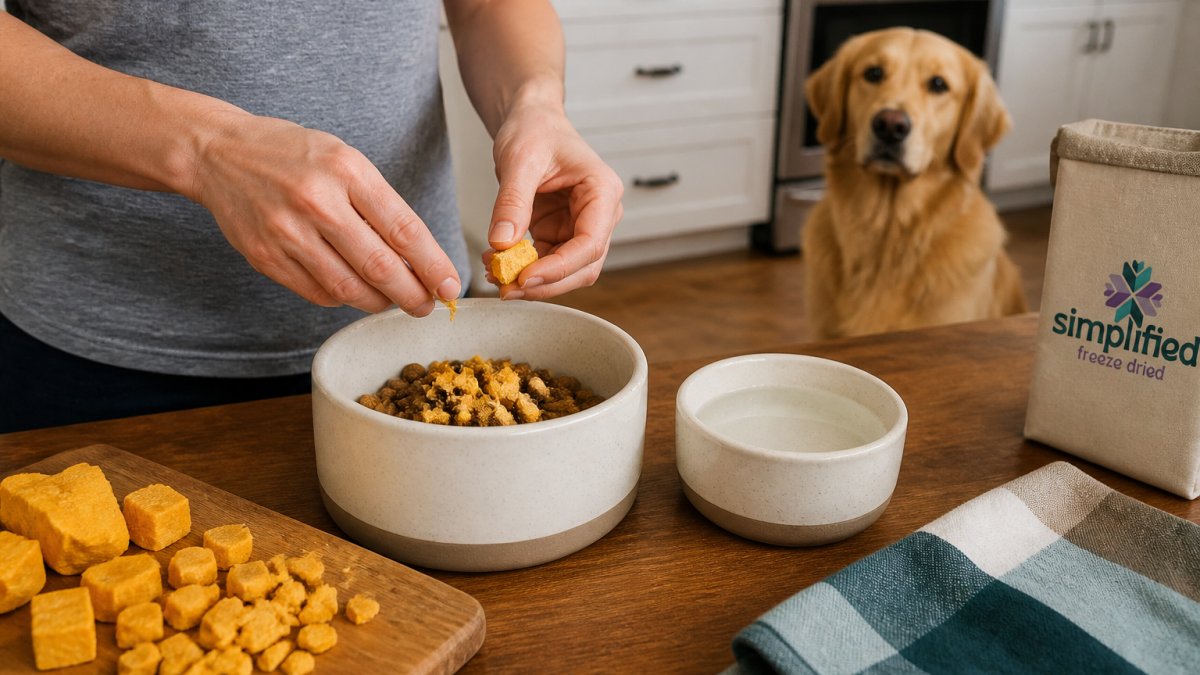
Serving freeze-dried pumpkin is simple, and that is the point. Crumble the piece over your dog's food, or rehydrate it with warm water first.
Ways to serve it:
- Crumble dry over kibble
- Rehydrate into a soft paste and mix in
- Break off a small piece as a training reward
- Freeze the rehydrated paste into small cubes for hot days
For training, our mini-sized pieces are the right call.
Simplified Freeze Dried Pumpkin Biscuits Treats for Cats & Dogs →
Rehydration Ratios for Freeze Dried Pumpkin
A simple starting ratio is one part freeze-dried pumpkin to two parts warm water by volume. Let it sit for a few minutes until it forms a soft paste.
Adjust from there:
- Thicker paste: less water, good for mixing into kibble
- Thinner mix: more water, good for dogs who need extra hydration
- Dry crumble: no water, good for sprinkling or training
Use warm water, not boiling. Boiling water can degrade some of the heat-sensitive vitamins you paid for when you chose freeze-dried over canned. Warm tap water is enough to rehydrate the pieces in two to three minutes.
Always add the water, not just the powder. The fiber needs moisture to work.
Troubleshooting: When Your Dog Won't Eat It
A few common patterns and what tends to work:
- Dog sniffs and walks away. Try a thinner paste mixed thoroughly into wet food rather than sitting on top of kibble. Texture matters more than taste for many picky eaters.
- Dog eats it once, then refuses. Rotate the delivery: crumble dry over food one day, mix as a paste the next. Novelty helps.
- Dog eats it fine but stools get looser. You may be over-serving. Cut the amount in half for two or three days and watch.
- Dog eats it fine but nothing changes. Give it 24 to 48 hours. If there is no shift, the issue may not be diet-related, and a vet visit is the right next step.
How Much Pumpkin to Give a Dog
How much pumpkin to give a dog depends on size, not on the scoop you happen to grab. Start small and adjust based on how your dog responds.
| Dog Size | Starting Amount | Frequency |
|---|---|---|
| Small (under 20 lbs) | 1 teaspoon | Once daily |
| Medium (20-50 lbs) | 1 tablespoon | Once daily |
| Large (over 50 lbs) | 2 tablespoons | Once daily |
Treat pumpkin as part of your dog's daily food, not extra on top. If you add a lot, cut back slightly on regular food to avoid weight gain.
Weight management is another reason owners reach for pumpkin. The fiber helps dogs feel full, which supports satiety and can help with metabolic health over time.
When Pumpkin Is Not the Right Choice
Pumpkin is safe for most dogs, but not all of them. If your dog has a pumpkin allergy, skip it. Signs include itching, hives, or stomach upset right after eating.
Other cases where pumpkin may not fit:
- Dogs on a vet-prescribed diet for a specific condition
- Dogs with a history of blockages or strictures
- Puppies under a few months old, unless your vet says otherwise
If your dog has a sensitive stomach or a known allergy, introduce any new food slowly and watch for reactions. When in doubt, ask your vet first.
Conclusion
Fixing a dog's digestion takes patience, and guessing at serving sizes makes it harder. Simplified Freeze Dried makes single-ingredient pumpkin treats for dogs and cats, freeze dried fresh and available in regular or mini kibble-sized pieces. Our pumpkin is 100% American pumpkin, sourced from the Midwest, with nothing else added. Get started with Simplified Freeze Dried and give your dog a simple, clean way to support better digestion.
Frequently Asked Questions
Why is freeze dried pumpkin good for dogs with diarrhea?
Freeze dried pumpkin contains soluble fiber that absorbs excess water in the digestive tract, which helps firm up loose stool. It also adds prebiotic fiber that supports the gut bacteria responsible for bowel regulation. Because freeze-drying removes only the water, the fiber and nutrients stay concentrated, so a small amount goes further than fresh or canned pumpkin. If diarrhea lasts more than a day or comes with vomiting, lethargy, or blood, call your veterinarian.
Can freeze dried pumpkin help a dog with constipation?
Yes. The same soluble fiber that firms loose stool also adds bulk and moisture to the colon, which can help move a backed-up bowel. Rehydrate the freeze dried pumpkin with warm water before serving so your dog takes in extra fluid along with the fiber. Mild constipation often responds within a day or two. If your dog strains repeatedly, cries, or has not passed stool in more than two days, that is a veterinary issue, not a treat issue.
How do you serve freeze dried pumpkin to a dog?
You can serve the pieces dry as a training reward, or crumble them over your dog's regular food. For digestive support, rehydrate the pieces in warm water for a few minutes until they soften, then stir the mixture into the bowl. Always keep a separate bowl of fresh water nearby. For training, use the mini-sized pieces. Introduce any new food slowly over several days.
How much pumpkin can you give a dog for digestive issues?
Start small. A teaspoon mixed into a meal is a reasonable starting point for most dogs, and you can adjust based on your dog's size and how they respond. Freeze dried pumpkin is concentrated, so you need less of it than canned or fresh pumpkin to get the same fiber. Work with your veterinarian on an amount tailored to your dog, especially if your dog is on a prescription diet or has a chronic condition.