


Table of Contents
- How Freeze Dried Pumpkin Supports Cat Digestion
- Benefits of Pumpkin for Cat Digestion
- Signs of Cat Digestive Issues to Watch For
- Why Freeze Dried Cat Treats for Sensitive Stomachs Work
- How Much Freeze Dried Pumpkin to Give Your Cat
- When Pumpkin Treats Aren't Enough: Medical Warnings
- Pros and Cons of Freeze Dried Pumpkin Treats
- Cons:
- Frequently Asked Questions
Last Updated: September 16, 2026
How Freeze Dried Pumpkin Supports Cat Digestion
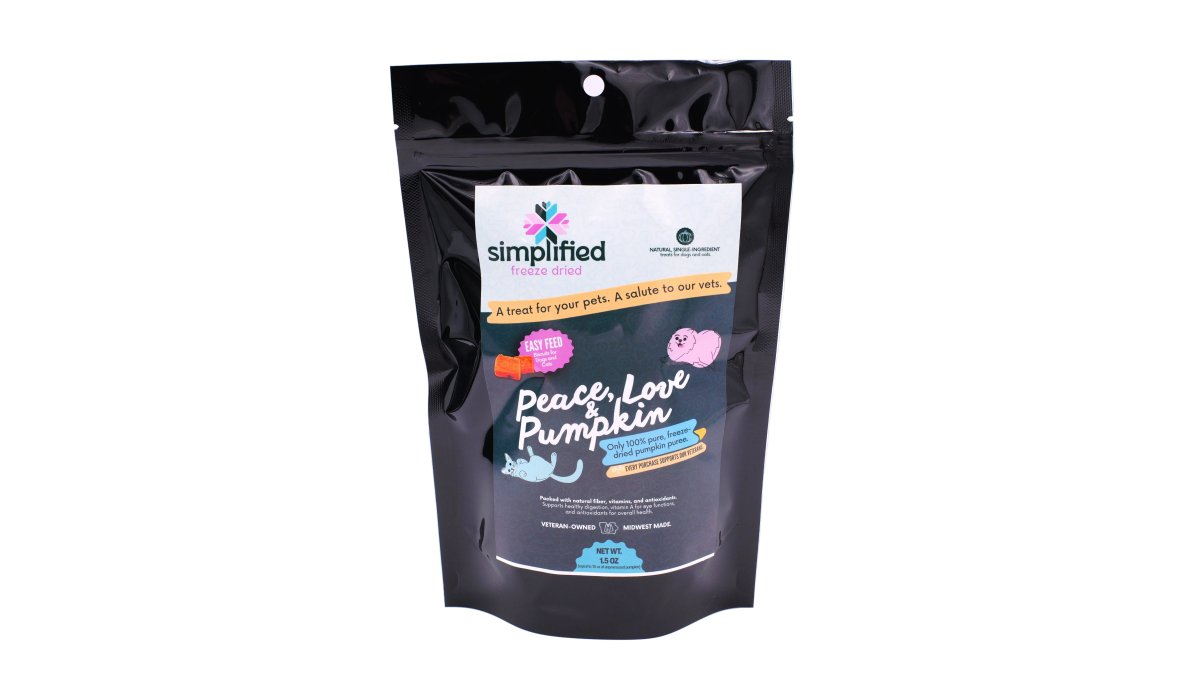
Freeze dried pumpkin treats are good for cat digestion because they deliver concentrated soluble fiber and natural prebiotic compounds in a lightweight, shelf-stable form. This guide from Simplified Freeze Dried explains why that matters for your cat's gut.

Soluble Fiber and Stool Consistency
Soluble fiber is the part of a plant that dissolves in water and forms a gel. In the digestive tract, that gel is what regulates stool consistency: it holds water when things are too loose and adds soft bulk when things are too firm.
Natural Prebiotics for Gut Health
Pumpkin also supplies prebiotic fiber, which feeds the beneficial bacteria already living in your cat's gut. A healthier bacterial population supports nutrient absorption and general gastrointestinal health over time.
Benefits of Pumpkin for Cat Digestion
The benefits of pumpkin for cat digestion come down to fiber, moisture balance, and gentleness. Most cats tolerate plain pumpkin well, which is why vets often suggest it before trying anything stronger.
- Fiber content that regulates stool consistency without harsh stimulants
- Prebiotic support for the gut's existing bacteria
- Gentle on sensitive stomachs, unlike many rich or fatty treats
- Low calorie density, so it fits into a weight-management plan
- Palatability that most cats accept without a fight
Signs of Cat Digestive Issues to Watch For
The signs of cat digestive issues are usually subtle before they become obvious. Cats hide discomfort well, so watch the litter box and the food bowl rather than waiting for your cat to act sick.
- Diarrhea or stool that shifts consistency day to day
- Straining in the litter box or passing hard, dry stool
- Vomiting after meals, especially repeatedly
- Refusing food or eating noticeably less
- Weight loss, low energy, or a dull coat
- Gas, gurgling, or visible abdominal discomfort
Why Freeze Dried Cat Treats for Sensitive Stomachs Work
Freeze dried cat treats for sensitive stomachs work because freeze drying removes water without heat, concentrating the nutrients instead of cooking them off. The result is a light, shelf-stable treat with a short ingredient list.
Freeze Drying vs. Canned Pumpkin
Canned pumpkin is the traditional option, and it works. But it comes with trade-offs that matter for daily use.
| Factor | Freeze Dried Pumpkin | Canned Pumpkin |
|---|---|---|
| Ingredients | Single ingredient | Often single, check label |
| Storage | Pantry, resealable | Refrigerate after opening |
| Serving | Kibble-sized pieces | Measured spoonfuls |
| Mess | Dry, no residue | Wet, can stain |
| Portability | Travels anywhere | Home use mainly |
| Shelf life | Long, unopened | Days once opened |
How Much Freeze Dried Pumpkin to Give Your Cat
Start small. For a cat trying pumpkin for the first time, begin with a single kibble-sized piece and wait a full 24 to 48 hours before offering a second. That pause is the whole point: it lets you see how the stool responds before you add more fiber on top of an already unsettled gut.
A Step-by-Step Introduction Protocol for Picky Eaters
Most guides assume the cat will eat the treat. In practice, a meaningful share of cats sniff, walk away, and leave the owner guessing. This protocol is built for that cat.
- Day 1, scent only. Let your cat sniff an unopened bag or a single piece on a plate. No pressure to eat. Reward any curiosity with praise.
- Day 2, crumble and dust. Crush one piece into a fine powder and dust it over a teaspoon of the food your cat already loves. The familiar smell carries the new one.
- Day 3, rehydrate. Crumble a piece into a tablespoon of warm water and let it sit for two to three minutes until it becomes a soft paste. Many cats accept the texture more readily than a dry piece.
- Day 4, half piece, whole piece. Offer a half piece as a standalone treat, then a whole piece if the half disappears.
- Day 5 and beyond, build slowly. Add one piece every other day until you reach the maintenance amount, watching stool consistency the entire time.
Training Use
For training, our mini-sized pieces are the right call. The regular size pieces are for treats only, since they're too big for training. Mini pieces let you reward quickly without breaking a cat's focus or overloading the stomach during a session.
Practical Rules
- Introduce one piece at a time over several days
- Watch stool consistency for 48 hours after the first serving
- Keep pumpkin a small part of the daily diet, not a meal replacement
- Crush pieces over food or rehydrate them if your cat prefers wet textures
- Pause and reset if you see loose stool, gas, or a sudden refusal to eat
If your cat has a diagnosed condition, ask your veterinarian before adding anything new. Cats on a prescription diet, especially one formulated for kidney or urinary support, should not have any new food introduced without a veterinary green light.
When Pumpkin Treats Aren't Enough: Medical Warnings
Pumpkin is supportive nutrition, not treatment. It will not resolve a blockage, an infection, a parasite, an allergy, or inflammatory bowel disease.
Call your veterinarian if you see:
- Diarrhea lasting more than 48 hours
- Blood or black, tarry stool
- Vomiting that repeats or comes with lethargy
- A cat that stops eating for more than 24 hours
- Any weight loss you can't explain
Pros and Cons of Freeze Dried Pumpkin Treats
Pros:
- Single-ingredient options with no fillers or preservatives
- Works for both diarrhea relief and constipation management
- Dry and mess-free, ideal for training and travel
- Long shelf life without refrigeration
- Suitable for both cats and dogs in most homes
Cons:
- Some cats prefer wet food textures
- Not a substitute for veterinary care
- Easy to overfeed if you treat freely
When Pumpkin Is Not the Right Choice
Most guides stop at 'pumpkin is safe.' That is incomplete. There are real situations where adding pumpkin works against you, and knowing them is the difference between helping your cat and delaying care.
- Suspected blockage. If your cat is straining, vomiting, and producing little or no stool, fiber adds bulk to a problem that may already be obstructed. This is an emergency, not a treat moment.
- Diabetes or a prescription diet. Pumpkin contains natural sugars and carbohydrates. Cats on a veterinarian-managed diabetic or renal diet should not have any new food, including a single-ingredient treat, without approval.
- Known food sensitivity to squash or related plants. Rare, but if your cat has reacted to pumpkin or a related ingredient before, do not retest it at home.
- Post-surgical or post-illness recovery. A gut that is healing from surgery, pancreatitis, or a severe GI episode needs a controlled diet, not a new fiber source.
- Cats on fiber-restricted diets. Some prescription gastrointestinal diets are already fiber-adjusted. Adding more can tip the balance the wrong way.
Storage and Shelf Life
Freeze drying removes water, but it does not make the product indestructible. The two enemies are moisture and oxygen, and both degrade the fiber and flavor over time.
- Keep it sealed. Reseal the bag fully after every serving, pressing out excess air. A clip or an airtight container works better than a folded bag.
- Keep it dry. Do not store the bag near a sink, a kettle, or a humid bathroom. A single exposure to steam can soften pieces and invite spoilage.
- Keep it dark and cool. Direct sun and heat accelerate nutrient loss. A pantry shelf away from the stove is ideal.
- Watch the clock after opening. Unopened, freeze-dried pumpkin holds its quality for many months. Once opened, aim to finish the bag within four to six weeks for best texture and potency.
- Check before serving. Soft, clumping, or off-smelling pieces mean moisture got in. Discard them rather than risk a stomach upset.
Frequently Asked Questions
Does pumpkin act as a laxative for cats?
Pumpkin works both ways because of its soluble fiber. It absorbs excess moisture in the digestive tract to firm up loose stools, and it adds bulk to help move hard stools through. That dual action is why freeze dried pumpkin is often used for both diarrhea relief and constipation management. Start with a small amount, about a quarter teaspoon of rehydrated pumpkin for an average cat, and adjust based on stool consistency over a few days.
How much freeze dried pumpkin should I give my cat for digestive support?
A general starting point is one to two small kibble-sized pieces per day for a cat, or about a quarter teaspoon of rehydrated pumpkin. Because freeze dried pumpkin is concentrated, it contains less water than canned pumpkin, so you can crumble it over food or add a few drops of water to rehydrate it. Watch your cat's stool consistency for the first week and adjust the amount up or down with your veterinarian's guidance.
Are freeze dried treats safer than canned pumpkin for cats?
Freeze dried pumpkin is often a better choice for cats with sensitive stomachs because it is single-ingredient and free of the added sugars, spices, or preservatives sometimes found in canned pumpkin pie filling. Freeze drying removes excess moisture while preserving nutrients and flavor, so you get concentrated soluble fiber without fillers. Always check that the label lists pumpkin as the only ingredient, and avoid any product meant for baking.
Can freeze dried pumpkin help with hairballs?
The soluble fiber in pumpkin can support healthy digestion and help move swallowed hair through the digestive tract, which may reduce hairball formation over time. It is not a cure for frequent hairballs, though. If your cat vomits hairballs often or shows other signs of cat digestive issues like appetite loss or weight change, talk to your veterinarian to rule out underlying gastrointestinal problems.
A cat with a sensitive stomach needs consistency more than it needs variety, and that's hard to deliver with treats that change formula or hide fillers in the ingredient list. Simplified Freeze Dried makes single-ingredient pumpkin treats with 100% American pumpkin, available in regular pieces for treats and mini-sized pieces for training. If you want a clean, simple way to support your cat's digestion, start with a bag of Simplified Freeze Dried pumpkin biscuits and see how your cat responds.