


Table of Contents
- What Makes a Hypoallergenic Pet Snack Truly High Quality
- Single-Ingredient Pet Treats Benefits for Sensitive Pets
- Pet Food Allergy Symptoms in Dogs and Cats
- How to Read Pet Treat Labels for Allergens
- Freeze-Dried vs. Other Treat Formats for Hypoallergenic Snacks
- Why Cats and Dogs Need Different Nutritional Approaches (But Can Share Treats)
- Top Hypoallergenic Pet Snack Options for Both Species
- Conclusion
Last Updated: August 28, 2026
What Makes a Hypoallergenic Pet Snack Truly High Quality
High-quality hypoallergenic pet snacks are single-ingredient treats with zero fillers, synthetic additives, or preservatives that could trigger allergic reactions. At Simplified Freeze Dried, we use only 100% American beef liver and American pumpkin, never imported ingredients or denatured meat. Our beef liver is minimally processed, cut once, then freeze-dried, to preserve maximum nutrition and bioavailability.

A truly high-quality hypoallergenic pet snack works across species because it respects both dogs' and cats' metabolic needs without compromise. Premium means the ingredient list is shorter than your pinky finger, with no mystery "meal" or "by-products," and every component traceable to its source.
Single-Ingredient Pet Treats Benefits for Sensitive Pets
Single-ingredient treats are the gold standard for pets with food sensitivities because they eliminate ingredient complexity. When a pet has a reaction, you know exactly what caused it, no guessing or weeks of vet bills.
For diagnosed allergies, single-ingredient treats simplify elimination diet protocols. If your dog reacts to chicken but you're testing beef tolerance, a single-ingredient beef treat tells you whether beef is safe without confounding variables like grain binders or soy lecithin.
Single-ingredient treats mean zero synthetic additives, which sensitive pets struggle to process. Pets with compromised digestive systems often see improvement when their treat rotation shifts to minimally processed, single-source snacks.
Pet Food Allergy Symptoms in Dogs and Cats
In dogs, the most common signs include chronic itching around the ears, paws, and face, with excessive scratching, licking, or chewing (the American Academy of Dermatology). Skin inflammation, redness, and secondary yeast infections often follow. Gastrointestinal distress appears as diarrhea, vomiting, or soft stools. Repeated ear infections can signal food allergies rather than ear mites.
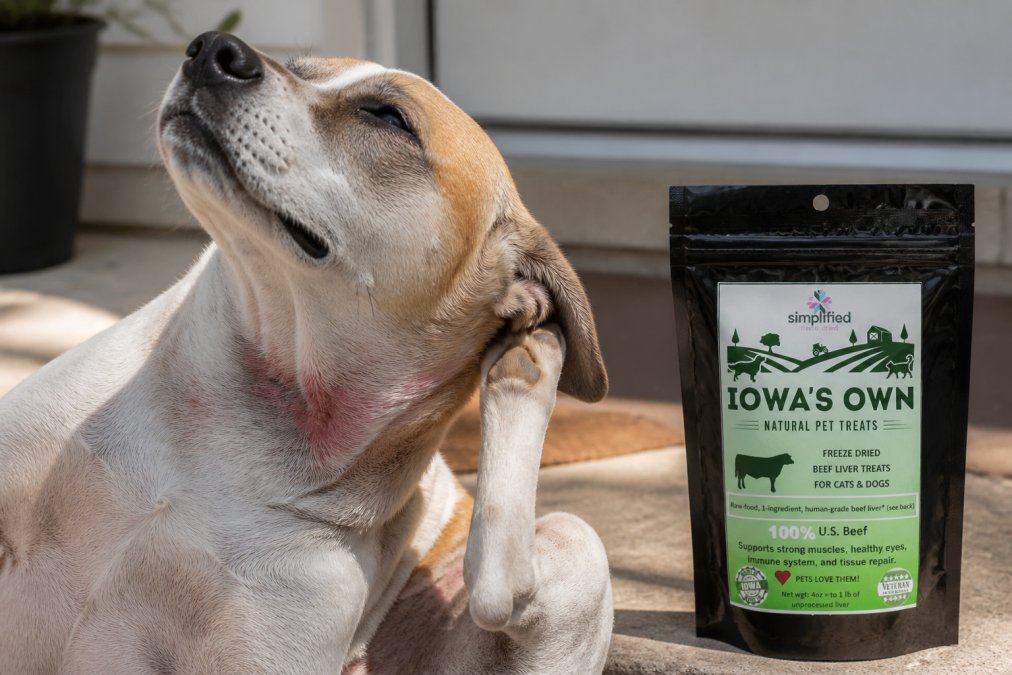
Cats present differently. They're less likely to show digestive symptoms and more prone to dermatological responses. Excessive grooming leading to hair loss, particularly on the face and neck, is a hallmark sign. Cats may develop miliary dermatitis (tiny scabs across the skin) or show pruritus through overgrooming. Gastrointestinal symptoms are often subtle: occasional vomiting, reduced appetite, or changes in litter box habits. Some cats develop respiratory symptoms like sneezing or wheezing, often mistaken for environmental allergies.
Both species can experience anaphylaxis in severe cases, requiring immediate veterinary attention. The key distinction: dogs tend to itch; cats tend to overgroom. If your pet shows any combination of these signs, especially if symptoms persist across multiple treat brands, consult your veterinarian about elimination diets and hypoallergenic alternatives.
How to Read Pet Treat Labels for Allergens
Start with the ingredient list, it should be short. If you see more than five ingredients, that treat isn't truly single-ingredient or minimally processed.
Look for specificity in protein sources. "Meat meal" or "poultry by-products" are red flags. Compare that to "beef liver" or "chicken breast", you know exactly what you're getting. This specificity matters for pets with known protein sensitivities.
Check for synthetic additives and preservatives like BHA, BHT, ethoxyquin, and artificial colors. These can trigger inflammatory responses in sensitive pets. Clean-label treats list no preservatives; freeze-drying naturally preserves the product without chemical intervention.
Watch for hidden allergens in binders and fillers. Treats often contain corn, wheat, soy, or cellulose. Single-ingredient freeze-dried treats don't need binders. If they do, that's a sign the product isn't what it claims.
Cross-contamination warnings matter. A treat labeled "beef" but manufactured in a facility processing chicken could be unsafe for a chicken-allergic dog. Simplified Freeze Dried's single-ingredient approach eliminates this risk.

Freeze-Dried vs. Other Treat Formats for Hypoallergenic Snacks
Freeze-drying preserves nutrition without chemical intervention by removing moisture while keeping protein, vitamins, and minerals intact. This means maximum bioavailability.
Baked treats expose ingredients to high heat, degrading certain vitamins and amino acids. They also require binders and fillers, complicating the allergen picture. Soft or semi-moist treats rely on glycerin or sorbitol, additives that can trigger digestive distress and make it impossible to identify true allergens.
Raw treats carry food safety risks for both pet and owner. Freeze-drying eliminates this risk by removing the moisture bacteria need to survive, without cooking the protein. You get nutritional benefits of raw with the safety profile of processed food.
Kibble-sized freeze-dried treats offer practical advantages: they're portion-controlled, convenient for training, and don't leave residue on your hands or furniture.
Why Cats and Dogs Need Different Nutritional Approaches (But Can Share Treats)
Dogs are facultative carnivores and can survive on plant-based diets. Cats are obligate carnivores requiring taurine, which they can only obtain from animal protein (aafco.org). They also have higher protein requirements overall.
A truly high-quality single-ingredient treat like pure beef liver works for both species because it provides dense animal protein and essential amino acids without complexity that causes problems. Beef liver contains the amino acids both species need, the taurine cats require, and the protein density dogs benefit from.
Where species differences matter most: portion size and frequency. Treats should comprise no more than 10% of daily caloric intake for either species (aafco.org). For a 15-pound cat eating 200 calories daily, that's 20 calories from treats. For a 60-pound dog eating 1,200 calories, that's 120 calories. The same treat works nutritionally; the serving size adjusts.
Top Hypoallergenic Pet Snack Options for Both Species
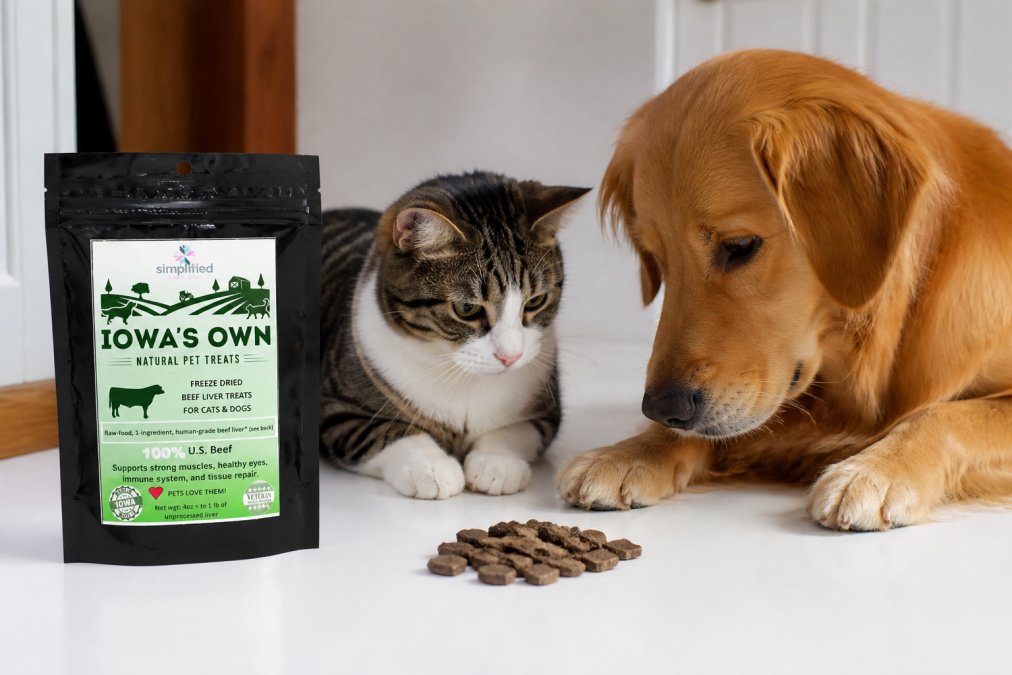
Simplified Freeze Dried Beef Liver Treats are 100% American beef liver, nothing else. Human-grade beef liver, minimally processed (cut once, then freeze-dried), with zero synthetic preservatives. For dogs, these work as training rewards; the kibble-sized option is portion-controlled. For cats, they're equally effective with adjusted portions. At $11.99, they're competitively priced for the quality delivered. The differentiator is sourcing commitment: no imported beef, no denatured meat, no shortcuts.
Simplified Freeze Dried Pumpkin Biscuits offer an alternative for digestive support or variety. 100% American pumpkin, freeze-dried to preserve nutrients. Pumpkin is naturally hypoallergenic and supports digestive health without being a protein source, making it ideal for rotation with protein-based treats. At $11.99, they're particularly valuable for pets with chronic gastrointestinal distress or those in elimination diet phases.
Simplified Freeze-Dried Magic Dust (beef liver topper) is 100% freeze-dried beef liver powder. Sprinkle it over kibble or wet food to entice picky eaters or boost nutritional intake. At $19.99, the versatility justifies the cost. Use it as a training reward, meal topper, or hydrating gravy. For multi-pet households with picky eaters, this is invaluable.

The Trio (Small Dogs and Cats) bundles three products: Magic Dust, kibble-sized beef liver treats, and pumpkin treats. At $39.58, it offers variety and trial access to all three formats, the smart entry point for households new to premium single-ingredient treats.
What these options share: they're all single-ingredient, minimally processed, and suitable for both dogs and cats. They eliminate guessing around hidden allergens or cross-contamination.
Conclusion
Choosing high-quality hypoallergenic pet snacks for both dogs and cats means rejecting the false choice between premium and practical. Simplified Freeze Dried proves you don't have to compromise. Our single-ingredient beef liver and pumpkin treats deliver the nutritional density and allergen clarity your sensitive pets need, available in formats that work for both species. With 100% American sourcing, human-grade ingredients, and minimal processing, every treat supports long-term wellness without hidden triggers. Start with our Beef Liver Treats or explore The Trio bundle to find the right fit for your household.
Frequently Asked Questions
Q: Are there treats that both cats and dogs can eat safely?
A: Yes. Single-ingredient freeze-dried treats like beef liver and pumpkin are safe for both species when sourced from human-grade ingredients and minimally processed. The key is avoiding fillers, binders, and synthetic additives that affect cats and dogs differently. Look for treats with no added preservatives or grain-based ingredients. Always introduce new treats slowly and watch for any signs of digestive upset or allergic reactions in either pet.
Q: What defines a truly hypoallergenic pet snack?
A: A truly hypoallergenic pet snack contains a single ingredient with no fillers, binders, preservatives, or synthetic additives. It should be minimally processed to retain nutrients and come from a verified, human-grade source. Hypoallergenic treats avoid common allergens like chicken, grains, and artificial flavors. Freeze-dried formats preserve nutritional content without heat processing that can trigger sensitivities. Transparency in sourcing and processing is essential, reputable brands disclose their ingredient origins and manufacturing methods.
Q: Why are single-ingredient treats recommended for pets with allergies?
A: Single-ingredient treats eliminate hidden allergens and fillers that complicate allergy diagnosis. When a pet reacts to a multi-ingredient treat, you cannot identify which component caused the problem. Single-ingredient options allow owners and veterinarians to perform elimination diets accurately. They also reduce gastrointestinal distress by limiting unnecessary additives and synthetic ingredients. This simplicity is especially important for pets with documented food sensitivities or those undergoing dietary trials to identify allergen triggers.
Q: How do I know if a freeze-dried treat is actually high quality?
A: Check for human-grade sourcing, single-ingredient composition, and transparent processing details. High-quality freeze-dried treats are minimally processed, typically cut once and then freeze-dried to preserve nutrients and bioavailability. Verify the brand sources ingredients domestically and avoids denatured or imported proteins. Reputable brands openly discuss their sourcing, processing methods, and ingredient origins. Veteran-owned or family-operated businesses often provide detailed supply chain information to build trust with health-conscious pet owners.
Q: What ingredients should I avoid in hypoallergenic pet snacks?
A: Avoid treats containing grains (wheat, corn, soy), artificial preservatives (BHA, BHT, ethoxyquin), synthetic flavors, and fillers. Common allergens include chicken, beef by-products, and dairy. Skip treats with multiple ingredients, especially if sourcing is unclear. Avoid anything with carrageenan, cellulose, or gums as binders, these can trigger digestive issues. Steer clear of treats with added sugars or salt. For cats specifically, avoid treats with excessive carbohydrates or plant-based proteins, as felines require amino acids from meat sources. Always read ingredient labels carefully and ask brands for full sourcing transparency.
This article was written using GrandRanker