


Table of Contents
- Start With Your Pet's Actual Health Needs
- Request an Itemized Veterinary Estimate Before You Commit
- Questions to Ask a Veterinarian About Treatment
- How to Compare Veterinary Treatment Plans Side by Side
- Mobile Vet Versus Clinic: What Changes in the Cost Comparison
- Emergency, Urgent, and After-Hours Fees
- Payment Options and Financial Assistance
- Frequently Asked Questions
Last Updated: October 13, 2026
Start With Your Pet's Actual Health Needs
Learning how to compare veterinary clinic service costs starts with one honest question: what does your pet actually need right now?
Veterinary care pricing varies widely by clinic, region, and case complexity.
Before you call a single clinic, write down the basics:
- Your pet's species, breed, age, and weight
- Current symptoms or the reason for the visit
- Vaccination history and any ongoing medications
- Whether this is routine, urgent, or emergency care
This list keeps every quote you collect tied to the same need.
At Simplified Freeze Dried, we hear from pet parents every week who are juggling vet bills and treat budgets at the same time.
Request an Itemized Veterinary Estimate Before You Commit
An itemized veterinary estimate is a written breakdown that lists each service, product, and fee separately instead of one lump sum.
A lump-sum quote hides where the money goes. An itemized one shows you exactly what you're paying for, so you can compare clinics fairly and spot padding.
Request the estimate in writing, by email if possible. Verbal quotes get fuzzy fast, and you want a record you can review at home without pressure.
What Belongs on a Complete Itemized Estimate
A complete estimate should separate every line item so nothing hides inside a bundle. Check that yours includes:
- Exam or office visit fee, listed on its own
- Each diagnostic test, named individually
- Medications with dosage and quantity
- Any procedure or surgery fee, plus anesthesia
- Follow-up visits and recheck exams
- Taxes and any facility or disposal fees
If a clinic won't break it down, that's information too. Transparency is a fair thing to expect before you commit.
Questions to Ask a Veterinarian About Treatment
The questions you ask a veterinarian about treatment shape both the care plan and the final bill. Good questions surface costs before they land on your statement.
Start with the plan itself. Ask what the recommended treatment does, how long it takes, and what happens if you wait. Then move to money.
Here's a short script you can use on the phone:
- "Can you send a written itemized estimate before we schedule?"
- "Which of these tests are essential versus optional right now?"
- "Is there a lower-cost alternative that still treats the problem?"
- "What does a recheck cost, and is it included?"
- "If my pet needs after-hours care, how is that billed?"
Write the answers down next to each clinic's name. Patterns show up fast. One clinic explains trade-offs, another just quotes a number.
How to Compare Veterinary Treatment Plans Side by Side
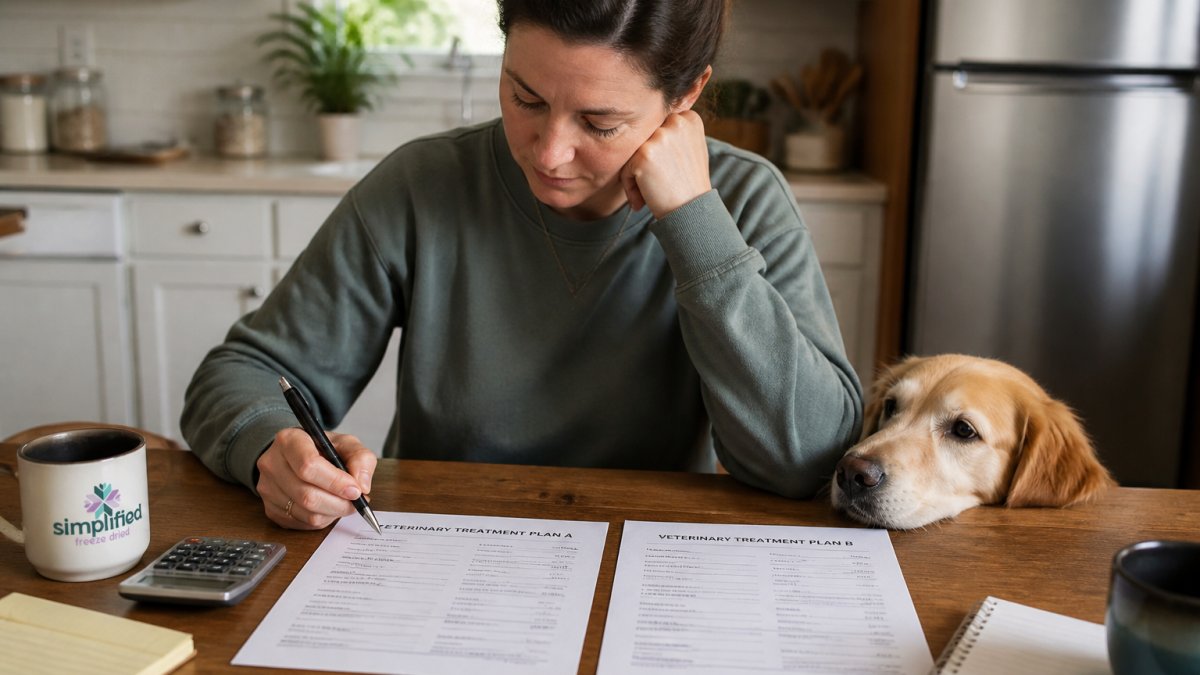
To compare veterinary treatment plans fairly, line up the same services across every clinic and check what each price actually covers. Same service, same detail level, same time frame.
This is where most pet owners go wrong. They compare a bare exam fee at one clinic against a full package at another and assume the cheaper one wins.
Build a Like-for-Like Comparison Grid
Take a sheet of paper or a spreadsheet and give each clinic its own column. Down the left side, list the exact same line items for every clinic. If a clinic's estimate doesn't name a line, write "not stated" rather than leaving it blank, a blank hides a gap, "not stated" exposes it.
Use these rows for every clinic:
- Consultation type and scheduled length (a 15-minute wellness exam is not the same product as a 30-minute problem visit)
- Exam or office visit fee, listed on its own
- Each diagnostic test, named individually (blood panel, urinalysis, fecal, X-ray, ultrasound)
- Whether the test is in-house or sent to an outside lab, and the expected turnaround
- Medications with drug name, strength, and quantity dispensed
- Any procedure or surgery fee, plus anesthesia and monitoring as separate lines
- Follow-up visits and recheck exams, with the number included and the window they cover
- Taxes and any facility, disposal, or biohazard fees
- Exclusions, what the estimate explicitly does not cover
The Five Details That Change the Total
Two estimates can look identical on the headline number and diverge sharply once you read the fine print. Check these five things on every quote:
- Consultation length. A shorter exam slot may mean less time for history-taking and a higher chance of a return visit. Ask how long the appointment is scheduled for.
- Test scope. "Bloodwork" can mean a basic screen or a full panel. Ask which specific tests are included and whether results are reviewed by an in-house vet or an outside specialist.
- Medication quantity. A quote that covers three days of medication is not comparable to one that covers fourteen. Ask how many days the dispensed supply is meant to last.
- Follow-up window. Some clinics bundle a recheck within a set number of days; others bill every visit. Confirm the window and what happens if the pet isn't improving.
- Exclusions. Ask directly: "What is not covered by this estimate?" Common exclusions include anesthesia complications, overnight hospitalization, prescription diets, and specialist referrals.
A Like-for-Like Comparison Checklist
Use this checklist for every clinic you contact. Score each one on the same criteria:
- Exam fee listed separately from treatment
- Every diagnostic test named with its own line
- In-house versus outside lab stated
- Medications itemized by name, strength, and quantity
- Follow-up and recheck costs stated up front
- Emergency or after-hours rates disclosed
- Exclusions listed in writing
- Written estimate provided before you commit
- Payment plans or financial help explained
| What to Compare | Why It Matters | Red Flag |
|---|---|---|
| Itemized estimate | Shows each service and fee | Only a lump sum given |
| Consultation length | Affects thoroughness and return visits | Length not stated |
| Test scope | Reveals what the price covers | Vague "bloodwork included" |
| Medication quantity | Changes the real supply you receive | Days of supply not stated |
| Follow-up window | Affects total cost of care | Recheck fees unstated |
| Exclusions | Prevents surprise add-ons | "Everything included" with no list |
| After-hours policy | Changes emergency pricing | No written policy |
| Payment options | Spreads cost over time | No plan offered at all |
The total cost of care matters more than any single fee. A clinic with included rechecks, a longer consultation, and a clear exclusion list can offer better value by the end of an episode of care than a clinic that looks less comprehensive on the first line.
When you call, ask the front desk to email the estimate as a PDF. A written document is easier to compare line by line than a verbal quote, and it gives you something to reference if the final bill drifts from the original plan.
Mobile Vet Versus Clinic: What Changes in the Cost Comparison
Mobile vet versus clinic pricing rarely compares cleanly, because a house-call visit bundles travel and convenience into the fee.
A mobile practice often charges a trip or house-call fee on top of the exam.
Clinic visits tend to cost less per service but add your own time and travel.
When you compare, ask both types the same three things: the visit fee, what's included, and how follow-up care works. Then judge the total, not the headline number.
Emergency, Urgent, and After-Hours Fees
Emergency and after-hours fees run higher than daytime rates at nearly every practice, and those fees are the ones pet owners forget to budget for.
Emergency hospitals staff around the clock, so their base fee reflects that overhead. Urgent care clinics sit in the middle: faster than a regular appointment, cheaper than a true emergency room. Your regular vet may offer limited after-hours phone triage but usually cannot see a critical patient overnight.
The Three Tiers, Side by Side
| Tier | Typical Availability | What to Ask Before You Need It |
|---|---|---|
| Regular clinic | Weekday business hours | Do they hold same-day slots for sick pets? |
| Urgent care | Evenings and weekends | Is the exam fee credited toward treatment? |
| 24-hour emergency | Around the clock | Is a deposit required at intake, and is it refundable? |
What Actually Drives the After-Hours Bill
A higher exam fee is only part of the story. Ask each clinic how these items are handled, because they are the ones that move the total most:
- Emergency exam fee. Ask whether it is a flat triage charge or credited toward the treatment plan if the pet is admitted.
- Overnight hospitalization. Many emergency hospitals bill per night, with monitoring, fluids, and medications as separate lines. Ask for the nightly structure, not just a single number.
- Deposit at intake. Some hospitals require a deposit before treatment begins. Ask whether it is applied to the final bill and what happens to any unused portion.
- Specialist or on-call surcharge. If a board-certified specialist is called in after hours, that may be billed separately.
- Transfer fees. If your pet is stabilized at an emergency hospital and transferred back to your regular vet the next morning, ask who bills for what.
Build an After-Hours Contact Card
Keep a short list on your fridge or in your phone: your regular vet, the nearest urgent care, and the closest 24-hour hospital. Next to each name, note the after-hours exam structure, whether a deposit is required, and the fastest route to get there. Update it once a year, because clinic hours and ownership change.
Payment Options and Financial Assistance
Payment options and financial assistance can change which clinic is truly affordable for your budget, even when the quoted prices look similar.
Common options to ask about:
- Payment plans or installment billing through the clinic
- Pet health insurance, and whether the clinic bills directly
- Care credit or third-party medical financing
- Nonprofit or shelter-based assistance programs in your area
- Discounts for rescue pets, seniors, or military families
Get the details in writing. Ask about interest, fees, and due dates before you sign anything.
One more thing worth knowing: preventive care usually costs less than treating a problem after it starts.
That's also where smart treat choices help.
Frequently Asked Questions
Are mobile vets more expensive than vets at a clinic?
Mobile vets often offer the convenience of bringing equipment and staff to your home, which can reduce stress for anxious pets and save you travel time. Some clinics also have a separate exam fee, while mobile practices may include this in a single visit charge. The only reliable way to know is to request an itemized estimate from both and compare the total for the same service, not just the headline visit.
Why can veterinary clinics charge different amounts for the same service?
Veterinary clinic offerings vary because of overhead, equipment, staffing, location, and the level of care included. A clinic with a boarded surgeon and advanced imaging provides a different level of service than a general practice, even for a similar procedure. What gets bundled also differs: some quotes include pre-anesthetic bloodwork, monitoring, and follow-up visits, while others list them separately. Comparing itemized estimates rather than single totals shows you what you are actually receiving.
What should I compare when reviewing veterinary treatment estimates?
Compare the same procedure line by line. Check whether anesthesia, pain medication, lab work, imaging, hospitalization, and follow-up care are included or billed separately. Look at who performs the procedure and whether a specialist is involved. Also compare the range given: a low-to-high estimate signals uncertainty, so ask what drives the difference. A lower estimate that omits monitoring or medication is not a better deal.
How can I ask a veterinary clinic for an itemized estimate?
Call or email the clinic and say you are comparing treatment plans and would like a written itemized estimate before scheduling. Ask for each service, medication, and lab fee listed separately, plus any follow-up visits included. Most practices will provide this for planned procedures. For emergencies, ask for a written estimate as soon as your pet is stable, and request updates if the plan changes during treatment.