


Table of Contents
- What Is a Protein Allergy in Dogs?
- Skin and Coat Symptoms of Protein Allergies
- Gastrointestinal Symptoms and Digestive Upset
- Ear Infections and Other Signs
- Common Protein Triggers and Elimination Diets
- Single-Ingredient Dog Treats for Allergy Management
- How Protein Allergies Are Diagnosed
- Frequently Asked Questions
Last Updated: October 1, 2026
What Is a Protein Allergy in Dogs?
A protein allergy in dogs is an immune system reaction to specific proteins found in food. Unlike food intolerances, which affect digestion, true protein allergies trigger an immunological response that can manifest across skin, digestive, and respiratory systems. When a dog's immune system misidentifies a protein as a threat, it releases histamine and other inflammatory compounds, leading to the common symptoms of protein allergy in dogs that owners notice over weeks or months.
The condition develops when a dog's body becomes sensitized to a particular protein source, often beef, chicken, or dairy. Many dogs eat the same protein for years before developing an allergy. Once the immune system recognizes that protein as an invader, subsequent exposure triggers increasingly visible reactions.
The key challenge is distinguishing protein allergies from environmental allergies, which present similarly but require completely different management approaches.
Skin and Coat Symptoms of Protein Allergies
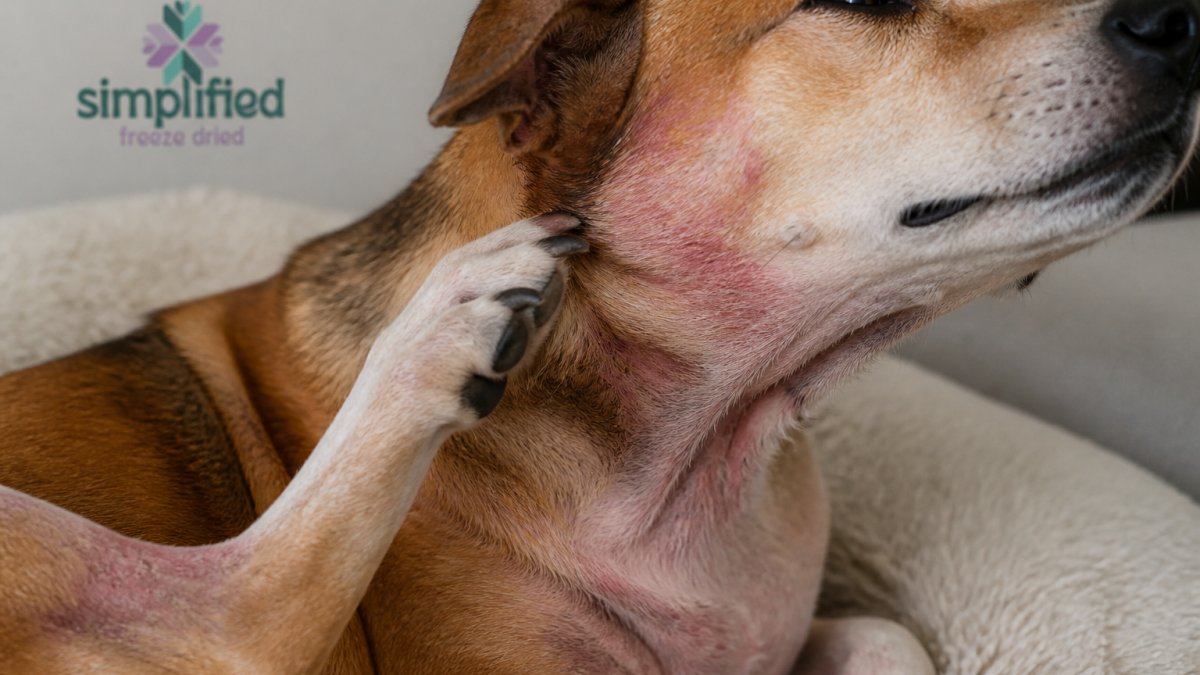
Skin problems are often the first sign owners notice when a dog develops a protein allergy. The immune response triggers inflammation in the skin, leading to visible discomfort and behavioral changes that are hard to ignore.
Itching and Dermatitis
Persistent itching is the hallmark sign of protein allergies in dogs. Dogs may scratch, bite, or lick their skin excessively, often focusing on paws, ears, face, and belly, sometimes to the point of self-injury.
Dermatitis, inflammation of the skin, follows closely behind. The skin becomes red, inflamed, and sometimes develops a sandpaper-like texture. Secondary bacterial infections commonly develop when constant scratching breaks the skin barrier.
Hair Loss and Hot Spots
Alopecia, hair loss, frequently accompanies protein allergies in areas the dog licks or scratches most, particularly paws, legs, face, and tail.
Hot spots (acute moist dermatitis) are localized areas of severe inflammation that develop rapidly when a dog focuses intense licking or scratching on one spot. While not caused directly by the protein allergy, they're a common secondary consequence when the allergic itching is severe.
Gastrointestinal Symptoms and Digestive Upset
Vomiting is a common gastrointestinal response to protein allergies, reflecting the immune system's inflammatory response in the digestive tract.
Diarrhea and loose stools are equally common. The inflamed intestinal lining doesn't absorb nutrients properly, and chronic diarrhea can lead to dehydration and nutritional deficiencies if the allergy goes unmanaged.
Flatulence and excessive gas often accompany protein allergies as undigested proteins ferment in the colon.
Lethargy can develop secondary to poor nutrient absorption, leading to weight loss, reduced energy, and a dull coat.
Ear Infections and Other Signs
Protein allergies don't stop at skin and digestion, they often trigger a cascade of secondary problems that can persist long after the primary allergic reaction. Understanding these downstream effects helps you recognize when a protein allergy is the root cause rather than treating symptoms in isolation.
Chronic and Recurrent Ear Infections
Ear infections are one of the most frustrating complications of protein allergies in dogs. The inflammation from the allergic response extends into the ear canal, creating a warm, moist environment where yeast and bacteria flourish. Allergic ear infections follow a predictable cycle: inflammation → microbial overgrowth → infection → temporary treatment response → recurrence within weeks.
Dogs with allergic ear infections typically show head shaking, ear scratching, and a foul odor from the ear canal. The ear canal may appear red, swollen, or filled with waxy or crusty discharge.
A veterinarian prescribes antibiotics or antifungals, the infection clears temporarily, and within 3-6 weeks the same problem returns. This cycle repeats because the underlying allergic inflammation is never addressed. Treating the infection without eliminating the protein allergen is like mopping up water without turning off the faucet.
Yeast overgrowth (Malassezia) is particularly common in allergic ears. Some dogs develop a distinctive sweet or musty odor from yeast colonization. Bacterial infections (often Pseudomonas or Staphylococcus) can follow or occur simultaneously.
Facial Swelling and Localized Reactions
Some dogs experience facial swelling or puffiness around the eyes, muzzle, or lips during allergic reactions, which can indicate a more severe allergic response and warrants veterinary attention.
Face rubbing and muzzle licking are behavioral signs that often accompany facial inflammation and can intensify skin irritation.
Behavioral and Systemic Changes
Chronic discomfort from protein allergies changes your dog's behavior and overall quality of life:
Restlessness and anxiety: Dogs may pace or display signs of anxiety, as the constant itch makes relaxation difficult.
Lethargy and withdrawal: Some dogs become withdrawn and lethargic from chronic inflammation and poor nutrient absorption, showing reduced interest in play and interaction.
Sleep disruption: Itching often worsens at night, disrupting both the dog's sleep and the owner's.
The Secondary Infection Cycle
- Allergic inflammation breaks down the skin barrier and creates inflammation in mucous membranes.
- Constant scratching and licking create entry points for bacteria and yeast.
- Microbial overgrowth occurs in inflamed, compromised tissue.
- Clinical infection develops, requiring antibiotic or antifungal treatment.
- Recurrence happens as soon as treatment ends, because the underlying allergy persists.
Breaking this cycle requires addressing the root cause: the protein allergy itself. Once you eliminate the allergen, secondary infections typically resolve and stop recurring.
Common Protein Triggers and Elimination Diets
Beef, chicken, and dairy are the most common protein allergens in dogs. A dog can develop an allergy to a protein it's eaten without problems for years.
An elimination diet removes the suspected allergen protein completely and replaces it with a novel protein the dog has never eaten before, such as venison, duck, kangaroo, or fish.
A proper elimination diet lasts 8-12 weeks minimum to allow the intestinal lining to heal and the immune system to stop reacting. Many owners see improvement within 2-4 weeks, but complete resolution takes longer.
The challenge with elimination diets is strict adherence. Every treat, every table scrap, every flavored medication must be free of the suspected allergen.
Single-ingredient treats become invaluable during an elimination diet. When managing a protein allergy, treats need to be simple and transparent. At Simplified Freeze Dried, we offer single-ingredient freeze-dried treats that work perfectly for dogs on elimination diets.
Single-Ingredient Dog Treats for Allergy Management
When a treat contains only beef liver or only pumpkin, you know exactly what your dog is consuming. There are no binding agents, no preservatives, no mystery ingredients that might trigger a reaction.
How Protein Allergies Are Diagnosed
Diagnosis begins with your veterinarian taking a detailed history about symptom onset, foods eaten, and dietary changes. The real challenge is determining whether the allergy is food-related or environmental, because the symptoms look nearly identical but the treatment paths diverge completely.
The Environmental vs. Food Allergy Distinction
A dog itching from pollen, dust mites, or mold will scratch just as intensely as one reacting to beef or chicken. Without proper differentiation, owners spend months on an elimination diet that won't help, or they treat an environmental allergy as a food problem and never find relief.
Key differences to watch for:
Diagnostic Testing: Blood Tests and Skin Tests
Blood tests and skin tests for food allergies exist, but their reliability is debated within veterinary medicine.
The Elimination Diet: The Gold Standard
The elimination diet remains the gold standard for diagnosing food allergies because it's based on clinical response, not antibody levels.
When to Suspect Environmental Allergy Instead
If your dog completes an 8-12 week elimination diet with strict adherence and shows no improvement, the allergy is likely environmental, not food-related. Your veterinarian may recommend:
- Allergy testing for environmental allergens
- Immunotherapy (allergy shots or sublingual tablets) to desensitize your dog to environmental allergens
- Management strategies like air filtration, frequent bathing, and omega-3 supplementation
- Symptomatic treatment with antihistamines or occasional steroids during high-allergen seasons
Frequently Asked Questions
What is the most common protein that triggers allergies in dogs?
Beef, chicken, and dairy are the most frequent protein culprits in dog food allergies. These proteins appear in many commercial pet foods, making them common triggers. Some dogs develop allergies to multiple protein sources over time. Novel proteins like duck, venison, or fish are often used in elimination diets to identify the specific trigger causing your dog's symptoms.
How long does it take to see improvement after switching to a dog food elimination diet?
Most dogs show noticeable improvement within 4 to 6 weeks of starting an elimination diet, though some take up to 12 weeks. Skin symptoms typically improve before gastrointestinal signs resolve. Consistency is critical, avoid treats, table scraps, and flavored medications that may contain the problematic protein. Single-ingredient dog treats made from a novel protein source can support the elimination process without triggering reactions.
Can a dog suddenly develop a protein allergy later in life?
Yes, dogs can develop protein allergies at any age, even if they've eaten the same food for years without problems. Repeated exposure to a protein can trigger an immune response over time, or environmental factors may increase intestinal permeability. This is why some owners rotate protein sources or introduce novel proteins periodically. If your dog suddenly develops symptoms, consult your veterinarian to rule out other causes.
What should I avoid feeding a dog with a suspected protein allergy?
Avoid the suspected protein source entirely during diagnosis. This means checking all treats, supplements, and flavored medications for hidden ingredients. Many commercial treats contain beef, chicken, or dairy even if labeled for other purposes. Stick to single-ingredient dog treats made from a protein your dog hasn't eaten before. Read ingredient labels carefully, cross-reactivity means some proteins trigger reactions in dogs allergic to similar proteins.